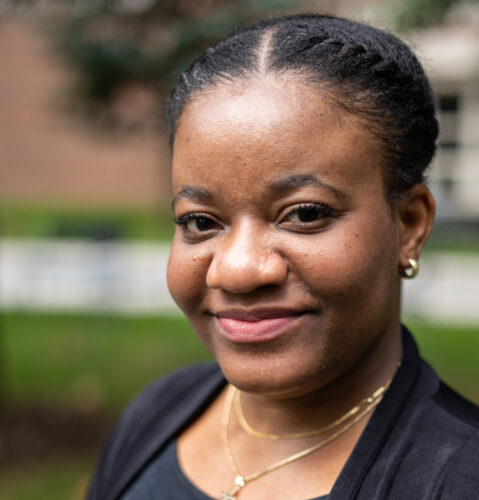
Gloria Yayra A. Ayee
Adjunct Lecturer in Public Policy


How can we find justice and accountability through truth and reconciliation?
How can societies address past harms? How can they foster truth-telling and enable reconciliation?
The Ash Center, through efforts like the Global Processes of Justice, Truth–Telling and Healing Research Initiative at the Institutional Antiracism and Accountability Project, is helping to uncover what works — and what doesn’t — in achieving restorative justice.
We encourage you to explore our latest events, research, and writing below.
Adjunct Lecturer in Public Policy

Ford Foundation Assistant Professor of Public Policy
Commentary
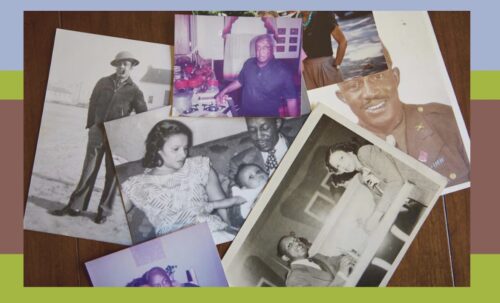
As we commemorate 100 years of Black History Month, it is worth remembering that progress was not driven by headlines alone. Beyond the monuments and courtrooms, everyday people took risks to demand dignity and fairness. Among them was my great uncle, whose pursuit of a promotion became a catalyst for change.
Feature
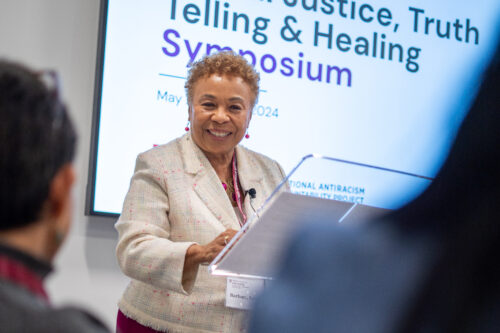
At the Global Justice, Truth-Telling, and Healing Symposium, Lee speaks on how we can interrupt the cycle of inaction when it comes to reparative justice in the United States.
Video
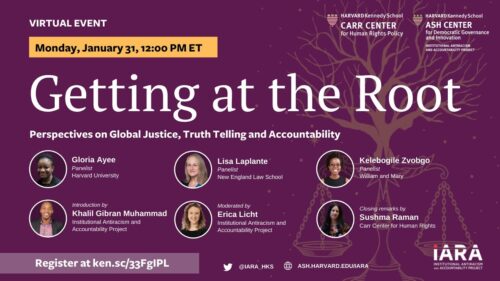
The Institutional Antiracism and Accountability Project and the Carr Center for Human Rights hosted a discussion with scholars studying processes and practices of global truth telling, repair, and justice from the fields of law, government, and political science.
Video
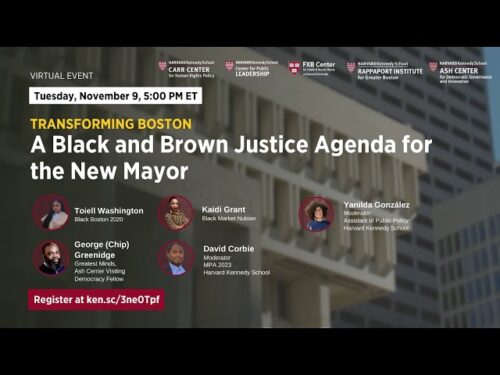
The Ash Center, Carr Center for Human Rights Policy, Center for Public Leadership, FXB Center for Health and Human Rights, and the Rappaport Institute for Greater Boston hosted a discussion focusing on urgent issues—from economic and climate justice to immigration and mass incarceration —that the next Mayor of Boston must address to rectify structural inequities and support Black and Brown communities.
Video
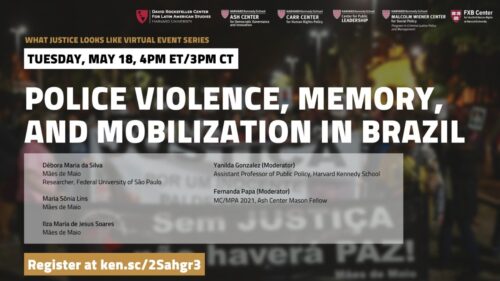
The Ash Center’s event featured members of Mães de Maio (Mothers of May), a collective of mothers whose children were killed by police in May 2006 in one of the largest police massacres in Brazilian history.