Feature
Podcast
Check out the podcast episodes from the Allen Lab for Democracy Renovation’s Conference on the Political Economy of AI to glean insights from each panel.
Feature

Additional Resource
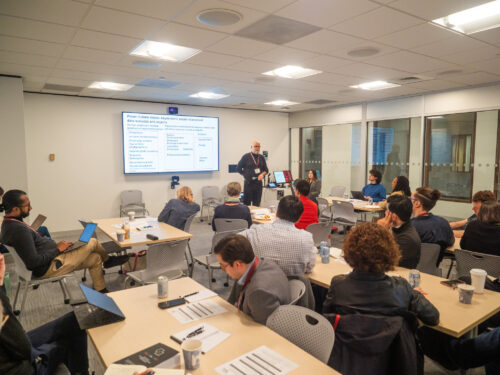
On campus last week, Allen Lab Fellow Joshua Darr shared his recent report, From Questions to Evidence, with Allen Lab members and Harvard’s Nieman Lab (A new report argues newsrooms need to do more experiments — like, the kind with randomization and results). Darr is the director of the Local NExT Lab at Syracuse University.
Commentary
Engaged California is the nation’s first state-run deliberation program, and a new law aims to make it last.
Additional Resource
In a recent guest essay for The New York Times, Allen Lab Democracy Stack Fellow Beth Noveck argues for putting A.I. behind every public servant.
Commentary
Engaged California is the nation’s first state-run deliberation program, and a new law aims to make it last.
Additional Resource
In a recent guest essay for The New York Times, Allen Lab Democracy Stack Fellow Beth Noveck argues for putting A.I. behind every public servant.
Media Release