Supply Skeptics or Abundance Acolytes? Mayoral Views on the Housing Crisis
Economists and policy analysts broadly agree that more housing needs to be built in order to reduce costs in America’s most expensive cities. Using a novel survey of mayors of mid-sized and large cities to explore mayors’ views on the roots of America’s housing crisis and what solutions they believe will most effectively address their constituents’ housing challenges, the authors summarize mayors’ attitudes and perceptions on key issues related to expanding the housing supply, reporting how well these views correlate with mayors’ assessments of their own cities’ supply needs.
Across the United States, housing affordability has reached crisis levels. In many cities, home prices and rents have far outpaced wages, while housing supply has failed to keep up with demand. In the Greater Boston area alone, 36 municipalities now have a median home price above $1 million. Yet other cities offer a counterpoint: Minneapolis and Austin, for example, have permitted substantially more housing construction in recent years, and rents have fallen relative to inflation. But if building more housing stabilizes prices, why don’t more cities do it?
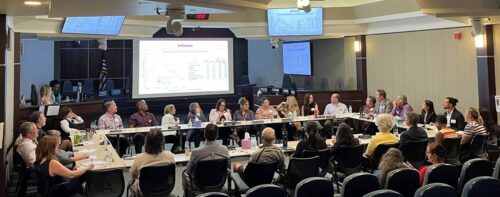
That question took center stage at a recent presentation in the American Politics Speaker Series, hosted jointly by the Ash Center for Democratic Governance and Innovation and the Center for American Political Studies. On November 21, 2025, Katherine Levine Einstein, associate professor of political science at Boston University, presented research examining mayors’ views on the roots of America’s housing crisis, and what solutions they believe will be most effective.
Dana Guterman is a copy editor and writer with the Ash Center for Democratic Governance and Innovation.
The views expressed in this article are those of the authors alone and do not necessarily represent the positions of the Ash Center or its affiliates.
How Well Do Voting Choice Policies Represent Investor Preferences?
Asset managers face increasing political risk stemming from concerns that they prioritize their own interests when voting on behalf of investors. Using survey evidence and structural estimation, Pablo Montagnes of Emory University provides early evidence on how well asset managers represent their investors by studying the ideological alignment between the two in the initial implementation of “voting choice policies.”
Funding Women’s Human Security: The Interaction of State Domestic Violence Policies and Federal Grants
Domestic violence is one of the most pervasive threats to women’s human security in the United States, yet it remains among the least visible. It cuts across age, income, race, and education, with one in four women and one in nine men experiencing severe abuse from an intimate partner. Despite the scale of the crisis, responses to domestic violence vary widely across states.
How Do Legislators Think Democracy Should Work? Evidence from the United States and Germany
What kind of democracy do legislators want? This question was at the center of a recent discussion with Melody Crowder-Meyer, associate professor of political science at Davidson College, as part of the American Politics Speaker Series.
Tova Wang, director of research projects in democratic practice at the Ash Center, shares her top picks for summer reads focused on making democracy more resilient, responsive, and inclusive.
Allen Lab Fellow Spotlight: City Charters Are Deliberative Democracy’s Friends
Allen Lab Fellow Tyler Fisher examines the untapped potential of city charters as a vehicle for deliberative democracy, arguing that advocates should work to embed tools like citizen assemblies, participatory budgeting, and town meetings directly into the governing architecture of cities, institutionalizing deliberative democracy one municipality at a time.
Work in the Age of AI: Reflections from After Neoliberalism
Allen Lab member Charlie Covit reflects on the After Neoliberalism conference and examines the intersection of artificial intelligence and the future of work, arguing that AI forces a democratic reckoning with the meaning of labor itself and that an economy which generates abundance while stripping citizens of purpose and dignity undermines the very foundation of democratic life.