

Book  

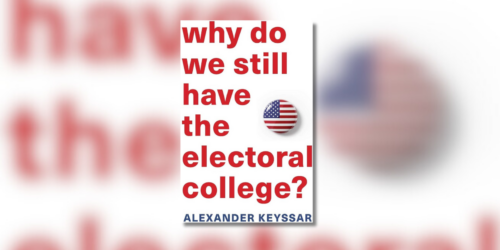
Why Do We Still Have the Electoral College?

In Why Do We Still Have the Electoral College?, Alexander Keyssar explores the institution’s origins and persistent survival despite widespread public opposition, showing how partisan interests and constitutional barriers have repeatedly derailed reform.

Learn more about the book

With every presidential election, Americans puzzle over the peculiar mechanism of the Electoral College. The author of the Pulitzer finalist The Right to Vote explains the enduring problem of this controversial institution.

Every four years, millions of Americans wonder why they choose their presidents through the Electoral College, an arcane institution that permits the loser of the popular vote to become president and narrows campaigns to swing states. Most Americans have long preferred a national popular vote, and Congress has attempted on many occasions to alter or scuttle the Electoral College. Several of these efforts—one as recently as 1970—came very close to winning approval. Yet this controversial system remains.

Harvard University Press, 2020

More on this Issue

Terms of Engagement Summer Reading List
A collage of book and report recommendations from the Terms of Engagement summer reading list.

Feature

Terms of Engagement Summer Reading List

Books, reports, and articles exploring the front lines of American politics and democracy, as featured on the Terms of Engagement podcast.

Reimagining Democracy 2026 Summer Reading List
A collage of book covers, podcasts, and reports from the Reimagining Democracy summer reading list.

Feature

Reimagining Democracy 2026 Summer Reading List

Tova Wang, director of research projects in democratic practice at the Ash Center, shares her top picks for summer reads focused on making democracy more resilient, responsive, and inclusive.

Allen Lab Fellow Spotlight: City Charters Are Deliberative Democracy’s Friends

Commentary

Allen Lab Fellow Spotlight: City Charters Are Deliberative Democracy’s Friends

Allen Lab Fellow Tyler Fisher examines the untapped potential of city charters as a vehicle for deliberative democracy, arguing that advocates should work to embed tools like citizen assemblies, participatory budgeting, and town meetings directly into the governing architecture of cities, institutionalizing deliberative democracy one municipality at a time.