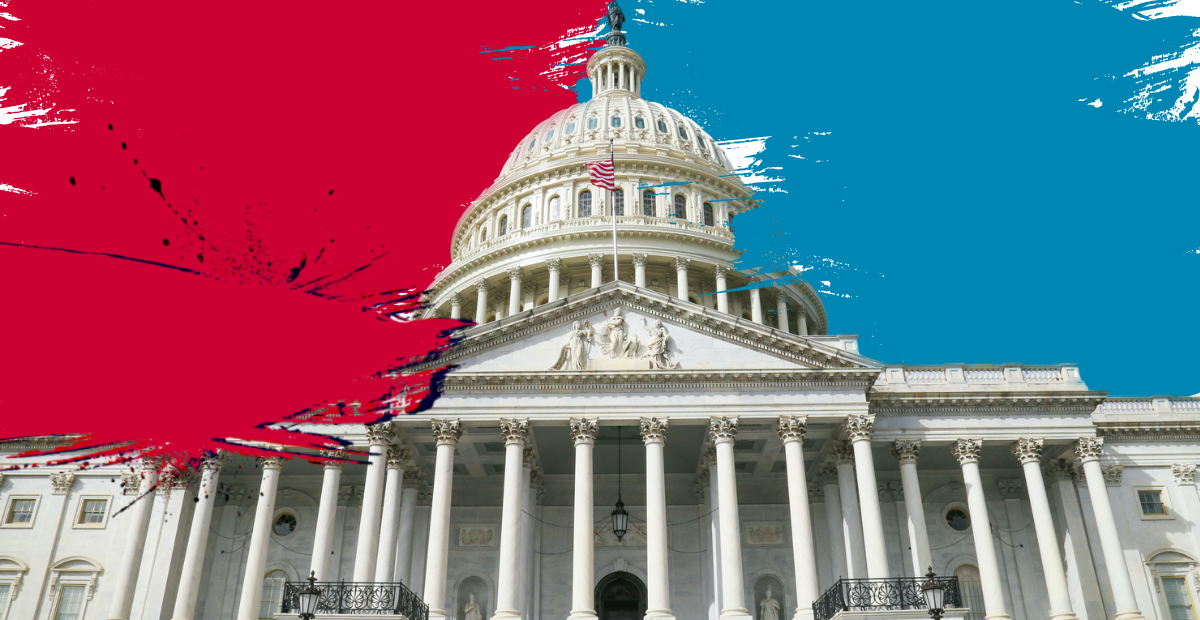
The Capitol building with red and blue splattered in the background.

American Politics Speaker Series

A seminar series bringing together scholars researching today’s most important questions around democracy and politics in the U.S.

Contact Info

The United States is at a crossroads.

In today’s drastically polarized society, how can Americans continue to connect with each other in productive and meaningful ways? What are the causes and consequences of our nation’s historic levels of partisan polarization? Just how far can democratic backsliding go before we reach a point of no return?

The American Politics Speaker Series (APSS) brings together scholars who are researching and addressing these and other important questions. Hosted jointly with the Center for American Political Studies and chaired by Professors Benjamin Schneer and Justin de Benedictis-Kessner, each session highlights a scholar whose research is at the forefront of the study of American politics.

APSS hosts events in both the fall and spring academic semesters. Any upcoming seminars will be listed below.

All seminars are hosted from 12-1:30 PM. Locations to be announced.

  • February 27, 2026 – Seth Hill, University of California (San Diego)
  • March 27, 2026 – Chris Berry, University of Chicago
  • April 3, 2026 – Avi Acharya, Stanford University
  • April 17, 2026 – Diana Mutz, University of Pennsylvania

Upcoming Events


The latest news, resources, and research


Filter by

  • Format

Filters

Close

Filters

Format

Supply Skeptics or Abundance Acolytes? Mayoral Views on the Housing Crisis
Image of city buildings

Article

Supply Skeptics or Abundance Acolytes? Mayoral Views on the Housing Crisis

Economists and policy analysts broadly agree that more housing needs to be built in order to reduce costs in America’s most expensive cities. Using a novel survey of mayors of mid-sized and large cities to explore mayors’ views on the roots of America’s housing crisis and what solutions they believe will most effectively address their constituents’ housing challenges, the authors summarize mayors’ attitudes and perceptions on key issues related to expanding the housing supply, reporting how well these views correlate with mayors’ assessments of their own cities’ supply needs.

Does Ranked Choice Voting Create Barriers for Minority Voters?
Vote Here placard at polling station

Commentary

Does Ranked Choice Voting Create Barriers for Minority Voters?

Ranked choice voting (RCV) aims to expand voter choice and improve representation, but Nolan McCarty’s research warns it could have unintended negative effects on minority communities’ representation and influence.