
Research & Resources

Through our books, case studies, journal articles, papers, and surveys, the Ash Center is home to some of the world’s most advanced research and publications on issues related to democratic governance and self-governance.

To explore all research authored by Ash Center faculty, please visit the Harvard Kennedy School website. You can view the Ash Center’s open access policy here.

Captiol building with trend graphic

Additional Resource

How Americans Navigate Voting Information Ahead of the 2026 Midterm Elections

The Shorenstein Center’s 2026 Voting Information Trends project—developed in collaboration with the National Internet Observatory at Northeastern University, the Ash Center for Democratic Governance and Innovation’s Program on Democracy and the Informed Public, and The Civic Health and Institutions Project—provides new insights into the voter information landscape in the United States ahead of the 2026 midterm elections.

Among the resources, an interactive dashboard maps where Americans are finding voting information and learning about key aspects of the voting process—from sourcing polling locations to voter registration. Also included are a series of trends reports gauging perceptions of voting in the lead up to the 2026 midterm elections.


Read The Story

Filter by

  • Issue Areas
  • Programs
  • Format

Filters

Close

Filters

Issue Areas
Programs
Format

254 Items

of 29

Newest

Recovery Act Transparency: Learning from States’ Experience
Woman inspecting documents

Paper

Recovery Act Transparency: Learning from States’ Experience

Recovery.gov let anyone track $275 billion in stimulus spending, project by project, in real time — the boldest transparency experiment the federal government had ever tried. Francisca M. Rojas dug into six states to see who actually used all that data, and the answer wasn’t quite the army of “Citizen Inspector Generals” reformers had imagined.

Targeted Transparency
Bulls-eye target with magnifying glass

Article

Targeted Transparency

A letter grade in a restaurant window changed diners’ behavior overnight. A federally mandated water-quality report, mailed quarterly, mostly ends up in the trash. David Weil digs into why some transparency policies reshape behavior and others just generate paperwork — and into the cases where governments have good reason to keep the curtain closed.

Suggestions for Improving Transparency Policies
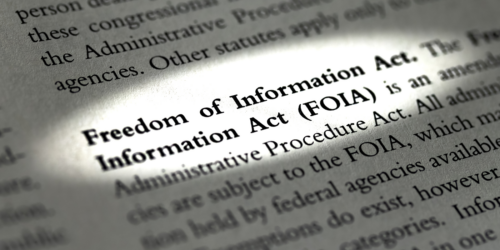
Freedom of Information Act in a dictionary

Suggestions for Improving Transparency Policies

FOIA “doesn’t work very well for anyone,” write Archon Fung, Mary Graham, and David Weil — so instead of waiting on records requests, why not just publish everything? Their memo to federal policymakers lays out concrete fixes, from stimulus-spending dashboards to an eight-point test for whether a disclosure law will actually work.

Disclosing Contaminants to Improve Drinking Water Safety
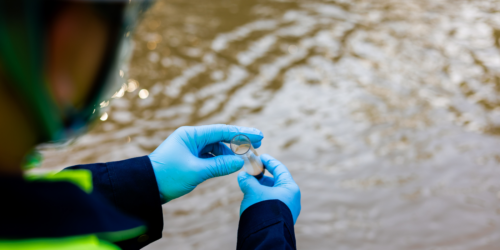
Worker testing contaminants in the water

Case Study

Disclosing Contaminants to Improve Drinking Water Safety

After cryptosporidium-contaminated water killed more than fifty people in Milwaukee in 1993, Congress required water utilities to mail customers an annual report on what’s in their tap water. Three decades, a Flint, and a Newark later, the reports still don’t catch the thing that matters most: lead leaching from century-old pipes between the treatment plant and the faucet, invisible to any test performed at the source. A 2018 study found tens of millions of Americans drinking from systems that violated federal standards — many without ever being told.

Disclosing Nutritional Information to Reduce Chronic Diseases
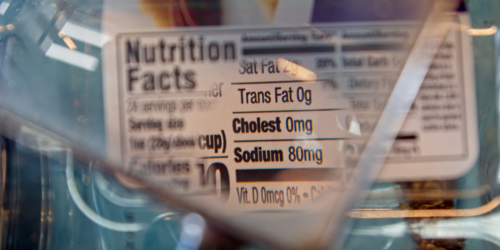
Microscope of a nutritional label

Case Study

Disclosing Nutritional Information to Reduce Chronic Diseases

When Congress mandated nutrition labels in 1990, it was hailed as the biggest change in food policy in fifty years — standardized facts on every can and package, for the first time letting shoppers compare what they were actually eating. But the label that promised transparency also carved out exemptions covering nearly half of what Americans buy, and the science it reported lagged years, sometimes decades, behind what scientists already knew. Now online grocery and delivery apps are opening a new gap.

Disclosing Toxic Releases to Reduce Pollution
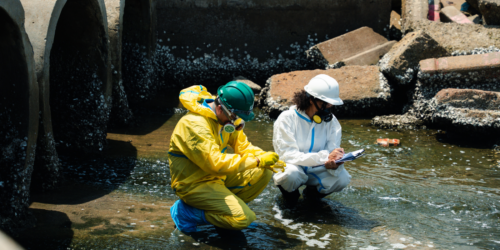
Workers testing chemicals

Case Study

Disclosing Toxic Releases to Reduce Pollution

After the 1984 Bhopal gas leak killed thousands, Congress forced American factories to report, chemical by chemical, exactly how much toxic pollution they released into the air, water, and ground. The agency meant to run it initially saw the whole thing as paperwork. Within a decade, the numbers alone had pushed companies to voluntarily cut their toxic releases almost in half — without a single new regulation telling them to.