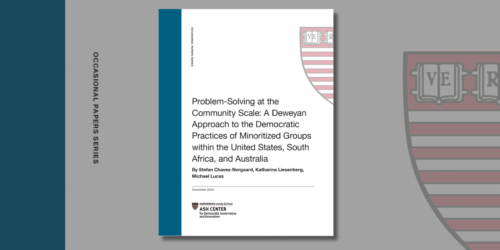
Problem-Solving at the Community Scale: A Deweyan Approach to the Democratic Practices of Minoritized Groups within the United States, South Africa, and Australia
The democratic “recession” across the globe is emerging as a political hallmark of the 21st century. This is evidenced by the incremental breakdown of formal, political democratic practices and institutions among many nations, including in the North Atlantic states, as well as by the fear or anticipation of democratic erosion. This paper uses a pragmatist approach to demonstrate how, in the face of democratic breakdowns, resilient democratic practices are taking form in remarkably varied ways in the common structural context of settler-colonial nation-states that are nominally in stages of advanced democratic consolidation.
Katharina Liesenberg is a Democracy Visiting Fellow at the Ash Center for Democratic Governance and Innovation.
Michael Lucas is a Democracy Visiting Fellow at the Ash Center for Democratic Governance and Innovation.
Stefan Chavez-Norgaard is a Teaching Assistant Professor of Public Policy at the Korbel School’s Douglas and Mary Scrivner Institute of Public Policy.
The views expressed in this article are those of the author(s) alone and do not necessarily represent the positions of the Ash Center or its affiliates.
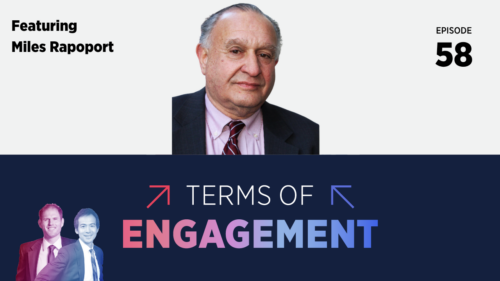
Terms of Engagement: Should Voting Be Mandatory in the U.S.?
On this week’s episode of “Terms of Engagement,” Miles Rapoport, former Senior Practice Fellow in American Democracy at the Ash Center, joins cohosts Archon Fung and Stephen Richer to discuss universal voting in the United States.
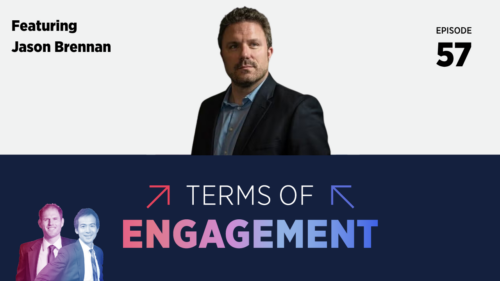
High voter turnout is often celebrated as a sign of a healthy democracy, with election officials viewing strong participation as evidence of public engagement and political legitimacy. On Terms of Engagement, Professor Jason Brennan joins cohosts Archon Fung and Stephen Richer to examine whether higher turnout actually strengthens democracy.
We Surveyed 50,674 Americans. This Is What Brings Them Together.
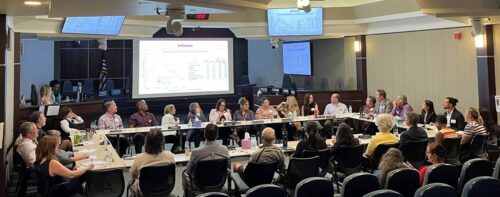
In this opinion piece, Audrey Feldman, Todd Rogers and Ben Valenta — participants in the Sports, Democracy and Civic Health project — describe their findings showing that shared fandom can soften partisan animosity and make political opponents more willing to connect.
Allen Lab Fellow Spotlight: City Charters Are Deliberative Democracy’s Friends
Allen Lab Fellow Tyler Fisher examines the untapped potential of city charters as a vehicle for deliberative democracy, arguing that advocates should work to embed tools like citizen assemblies, participatory budgeting, and town meetings directly into the governing architecture of cities, institutionalizing deliberative democracy one municipality at a time.
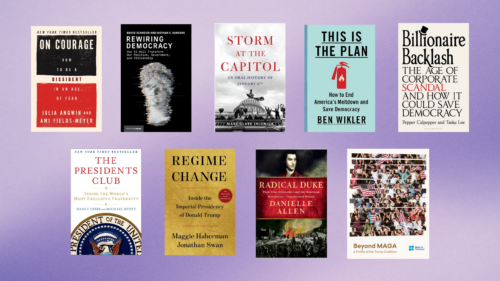
Tova Wang, director of research projects in democratic practice at the Ash Center, shares her top picks for summer reads focused on making democracy more resilient, responsive, and inclusive.