
Podcast
Beyond MAGA: What Trump’s Coalition Really Looks Like
Drawing on new data from more than 10,000 Trump voters, this episode of Terms of Engagement unpacks the diverse constituencies behind the MAGA label.

Podcast
Jonathan Rauch joins the podcast to discuss why he now believes “fascism” accurately describes Trump’s governing style.
Few political labels are as charged as “fascism,” a term often used as an insult rather than an analytic category. But recent developments under the Trump administration have prompted a growing number of scholars and commentators to revisit the term and what it actually means, and to argue that it may be a fitting label for what’s happening in American politics today.
In this episode, Archon Fung and Stephen Richer are joined by journalist Jonathan Rauch to discuss his recent essay, “Yes, It’s Fascism,” in which he details why he ultimately concluded that the label fits Trump’s governing style. They discuss what changed Rauch’s thinking, what distinguishes fascism from other forms of authoritarianism, and what’s at stake for democracy.
Coming soon!
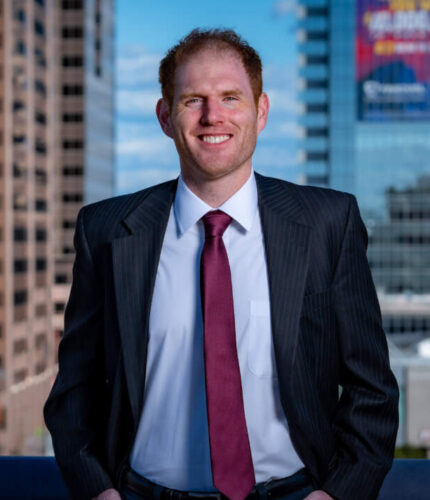
Jonathan Rauch is a senior fellow in the Governance Studies program and the author of nine books and many articles on public policy, culture, and government. He is a contributing writer of The Atlantic and recipient of the 2005 National Magazine Award, the magazine industry’s equivalent of the Pulitzer Prize.
His many Brookings publications include the 2021 book “The Constitution of Knowledge: A Defense of Truth,” as well as the 2015 ebook “Political Realism: How Hacks, Machines, Big Money, and Back-Room Deals Can Strengthen American Democracy.” He has also authored research on political parties, marijuana legalization, LGBT rights and religious liberty, and more.
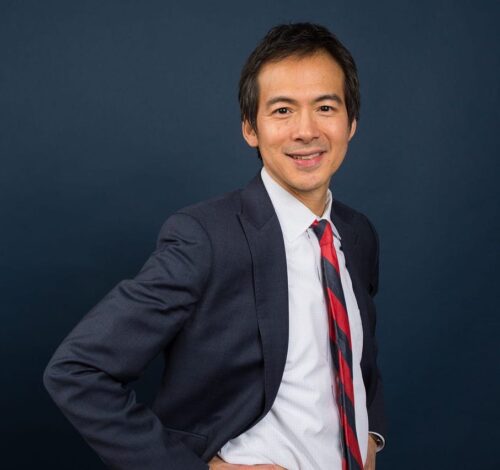
Archon Fung is the Winthrop Laflin McCormack Professor of Citizenship and Self-Government at the Harvard Kennedy School and the Director of the Ash Center for Democratic Governance and Innovation. His research explores policies, practices, and institutional designs that deepen the quality of democratic governance with a focus on public participation, deliberation, and transparency. He has authored five books, four edited collections, and over fifty articles appearing in professional journals. He received two S.B.s — in philosophy and physics — and his Ph.D. in political science from MIT.
Stephen Richer is the former elected Maricopa County Recorder, responsible for voter registration, early voting administration, and public recordings in Maricopa County, Arizona, the fourth largest county in the United States. Prior to being an elected official, Stephen worked at several public policy think tanks and as a business transactions attorney. Stephen received his J.D. and M.A. from The University of Chicago and his B.A. from Tulane University.
Stephen has been broadly recognized for his work in elections and American Democracy. In 2021, the Arizona Republic named Stephen “Arizonan of the Year.” In 2022, the Maricopa Bar Association awarded Stephen “Public Law Attorney of the Year.” In 2023, Stephen won “Leader of the Year” from the Arizona Capitol Times. And in 2024, Time Magazine named Stephen a “Defender of Democracy.”
The views expressed on this show are those of the hosts alone and do not necessarily represent the positions of the Ash Center or its affiliates.
Archon Fung: Hey, everyone, you’re listening to Terms of Engagement. This is episode 26 already. I’m Archon Fung, a professor at the Harvard Kennedy School and the faculty director of the Ash Center for Democratic Governance and Innovation.
Stephen Richer: And I’m Stephen Richer. I’m the former elected Maricopa County recorder, and I’m now a senior fellow at the Ash Center.
Fung: And as always, we’re speaking as individuals, not on behalf of Harvard University, the Harvard Kennedy School, or any subpart thereof.
Richer: And as always, also, we welcome your comments. So please put them in the chat. We’d love to integrate them into the conversation. We’ve got a really exciting conversation that stirred up a lot of sub-conversations. And we’ve got the author of a really interesting piece that was recently published in The Atlantic. So Archon, do you want to tee us up for the discussion?
Fung: Yeah, so the discussion, Jonathan Rauch wrote, well, let me do a couple news items first, really briefly. First, yesterday, the New York Times reported that the administration and Harvard in their discussions about a deal that the administration was demanding 200 million dollars, but that that was no longer a demand. And I said, “yay,” because I’ve got like $20 here that I was going to contribute to the fund. I may still contribute to the fund. But they said that money was off the table.
But then just last night, President Trump on Truth Social posted that he is now demanding Harvard pay $1 billion because strongly anti-Semitic Harvard University has been feeding a lot of nonsense to the failing New York Times. We’re now seeking $1 billion dollars in damages and want nothing further to do in the future with Harvard University. So that’s local news.
National news, of course. Last week, the FBI raided election administration offices in Fulton County, Georgia, and seized, among other things, all of the ballots from 2020. That’s my understanding. The raid was super —
Richer: See, this is beautiful for me because I feel like this is job security. As long as elections remain in the news, then people will keep asking me to talk. So, you know, of course, it was alarming, the situation. But I also was like, oh, give me something to read about to discuss.
Fung: Yeah, and we’ll be discussing that a lot. Somewhat unusually, DNI Director of National Intelligence Tulsi Gabbard reportedly supervised the raid. And then after the raid, President Trump spoke directly with the FBI field agents who were on site. And then on Monday, just yesterday, in an interview with former FBI deputy director and podcaster Dan Bongino, President Trump called on the Republican Party to nationalize elections. He said, quote, “the Republicans should say we wanna take over. We should take over the voting, the voting at least in as many as 15 places. The Republicans ought to nationalize voting,” the president said. So Stephen, as a former election director, what do you think of the president’s proposal?
Richer: We’re rocking and rolling this week as far as elections. Immigration had been taking the top spot lately, but I feel like this past week has been really strong for election administration. It is highly unusual, to put it mildly, to say that the federal government should take over the administration of elections. Of course election administration is one of the last true vestiges of federalism in that our elections are administered at the local level, often at the county level, and state law is usually the determinative factor in terms of how those elections are administered, so this would be a sea change if the president were to try to act on this.
Fung: Right. And we’ll see whether he does and how he does. He’s talked, of course, about similar directional kind of things, getting rid of vote by mail at the national level, etc. We will be tracking that very closely because it’s kind of core in our wheelhouse there, especially Stephen’s.
So today’s topic is about what President Trump and this administration is. And we’re going to dive deep into an article by Jonathan Rauch from a couple of weeks ago that made a big stir. And the title of that article is “It’s Fascism.” And so we’re going to be talking about whether it is or not and whether that matters. And Stephen, you know Jonathan, so let me hand it over to you for the introduction.
Richer: “Yes, It’s Fascism,” and I want to read from the first paragraph. Quote, “Until recently, I resisted using the F word to describe President Trump. For one thing, there were too many elements of classical fascism that didn’t seem to fit. For another, the term has been overused to the point of meaninglessness, especially by left-leaning types who call you a fascist if you oppose abortion or affirmative action. For yet another, the term is hazily defined, even by its adherents. From the beginning, fascism has been an incoherent doctrine, and even today scholars can’t agree on its definition. Italy’s original version differed from Germany’s, which differed from Spain’s, which differed from Japan’s.”
But nonetheless, Jon has decided that, yes, it’s now time to call the Trump administration fascism. So we’re going to bring Jon on. Jon Rauch is a senior fellow in the Governance Studies program and the author of nine books. He is at the Brookings Institution. He is also a contributing writer at The Atlantic, where this piece was published. He has recently published the book Cross Purposes: Christianity’s Broken Bargain with Democracy, which was excellent, and I highly recommend for the exchange between especially evangelical America and American democracy. And he also wrote in 2021, the Constitution of Knowledge: A Defense of Truth, which was very relevant for my field and I think for anyone who thinks critically about democracy today. He is a graduate of Yale College, so we won’t hold that against him here at Harvard. But and sort of especially for me, Jon’s been a friend for the past about 20 years and is somebody who has offered me a lot of advice and wisdom at different times. And so it’s my privilege to welcome Jon Rauch.
Jonathan Rauch: Hey, guys. Nice to be here.
Fung: Hey, thanks for joining.
Rauch: Where did you say you are again? Is it University of Massachusetts, Cambridge?
Fung: It’s a small liberal arts school on the Charles River in Massachusetts.
Rauch: You know, in all seriousness, I have so admired Harvard’s resolute stand in dealing with this administration.
Richer: And it has not been without its challenges. Archon would certainly know better than I, but has caused a lot of consternation and difficulties within the school. And, you know, obviously some people have lost their jobs as a result of some of the federal funding cuts as well. And so some of those decisions, some people, I think, like to say, well, of course you should resist or of course you should do this. I think that those are harder decisions than people immediately understand.
Rauch: It’s really hard. They’ve got a bazooka right in your face.
Fung: Yeah, absolutely. That’s true. So why don’t we get right to your article? “Yes, It’s Fascism.” It’s gotten an enormous amount of attention. As you said, other people, plenty of other people have called President Trump and this administration fascist before, you resisted the term. What were you hoping to accomplish by writing the article and what changed your mind about the label and its appropriateness?
Rauch: Well, in reverse order, no one thing changed my mind, but over the course of the past several months and especially past several weeks, so many of the elements began to come into focus that I had not seen in the first term. Those include the deployment of a national paramilitary police force using violence and given a safe conduct pass to do so reporting directly to the president. It’s completely incompatible with our form of liberal democracy and policing.
Another was the flat-out statement by the most important aide in the White House that might makes right and force is the way of the world. Another was the statement by the same person in September that the president’s enemies are nothing, that they are wicked, kind of absolutist rhetoric that we saw out of fascist Europe.
Another was the redoubling of the attacks on the news media. Now we’ve seen the arrest of four reporters, including Don Lemon, for going into a church to cover a protest, completely unprecedented.
And of course, there are the territorial ambitions, the Lebensraum, which is, of course, a lot of American presidents who use military force. And we’ve kidnapped foreign leaders before; George H.W. Bush did that in Panama. But never, to my knowledge, has a leader come right out and said, we want their stuff, we want their land, we’re strong, and we’re taking it. And that, too, is right out of the 1930s playbook. So my approach is a checklist approach. Fascism does not have a precise definition. But when you’ve got a yes for all 18 of the items on my list, you either call it fascism or you invent a new word with the same meaning.
Was it worth doing? Well, I would ask you, Archon, it’s controversial and some people say you’re just alienating people with the label unnecessarily. I think there are a couple of reasons to do it. One is it’s accurate and it helps you understand what’s going on. Why are they in the streets pulling, dragging Americans out of cars? This is not to get votes. And it’s not what they ran on, but it is part of the fascist agenda. Fascism is ideological, aggressive, and in its early stages, revolutionary. The second reason is that Trump is so good at creating the outrage of the day, or the two or three outrages of the day, that we forget where we are. We lose orientation. We don’t even remember that a month ago, he was getting ready to send troops to Greenland. People need conceptual balance to understand where we are. And fascism is that box.
Fung: Have you gotten much pushback? Because I remember on several episodes of our discussions, people comment, oh, Archon’s got Trump derangement syndrome and you’re losing touch and in the blue bubble. Have you gotten pushback for using the word for incivility or unreality?
Rauch: I thought I would. I haven’t. The most substantive pushback, the only person who’s kind of worked through my list to analyze it is you. And so I’m eager to have that conversation. But the reception has kind of been that all 18 of the items on this list are true and well documented, number one. And number two, they are consistent with fascism and inconsistent with liberal democracy. And so far, no one’s disputed that.
Richer: So you expressed this want, this need for a taxonomy, for a description, to put it in a box. And about, I don’t know, maybe a year ago, you wrote an interesting article calling it something different, calling it, I think, patrimonialism. And so, one, what is patrimonialism? And two, is it just that more of those boxes got checked that inspired you to now call it fascism versus patrimonialism?
Rauch: Yes, the system can be and often is both. And yes, more boxes got checked. Yeah, a year ago, February, I wrote an article that said the system that he’s putting in place is patrimonialism. And that’s … the short way to say it is that’s the system of government or social organization in which the state is the personal property and family business of the guy in charge. And the way it operates, it’s not a form of government per se, a system of government, it’s a style of governing in which you take whatever is the organizational structure and you go through it and you get rid of the bureaucrats, the experts, and the rule of law people, and you replace them with personal loyalists.
It’s the oldest form of government. You can see it in monarchies. You can also see it, for example, in gangsters, the mafia. You see it in cults. You see it in old-fashioned corrupt political machines. It’s not ideological and it’s not — it can be layered on top of a liberal democracy, at least for a while by doing what he does, which is go to the FBI and say, anyone who’s not loyal to me is out. And what it’s really all about is corruption and control and being the big guy and then making yourself rich. So we were certainly seeing that; that’s become an uncontroversial statement. Archon will correct me if I’m wrong, but I don’t think anyone would say that he’s not a patrimonialist at this at this stage.
Richer: I mean, many of his supporters might push back on that.
Rauch: They haven’t. I don’t think they’re ashamed of it, Stephen. Interestingly, I’ve never heard Trump actually say he’s not a fascist, which you would think someone in his position would at least have his press secretary do. I think they want us to see what they’re doing. I think we internally are the only people who have felt a need to deny what’s going on because they don’t.
Richer: Well, I think that fascism has such a negative connotation, especially in the American context, that maybe they would push back against that. But I think strongmanism is a term that they would certainly embrace. Trump sees himself as sort of the embodiment of all government force and bristles at any type of constraints that try to impede his progress, whether it’s the legislative body or whether it’s the judicial body or whether it’s norms and so on and so forth. And so certainly strongmanism.
Rauch: Well, let’s put it this way. I don’t think they will adopt the word fascism to describe themselves. I don’t think they mind my using it and people thinking it.
Fung: So I want to, Colette, if you could put up this clip. This is an interview with Donald Trump from Playboy magazine back in 1990. And this came to my attention maybe a year and a half ago or a little bit more. And I was pretty surprised that that kind of political view goes so far back. This is 1990 after in the wake of the Tiananmen Square massacre, which was on June 4, 1989, the June Fourth Movement, in which the number of people that the Chinese government killed on that day is hotly disputed. But I think the low estimates are probably in the thousands. And so this is Playboy interviewing Donald Trump. And he doesn’t like the Soviet Union very much because he views it as a very weak state. But then he speaks very highly of China. And the interviewer says, you mean a firm hand as in China? And then Donald Trump says, “When the students poured into Tiananmen Square, the Chinese government almost blew it. But they saved themselves. Because they were vicious, they were horrible, but they put it down with strength. This shows you the power of strength. Our country is right now perceived as weak, as spit on by the rest of the world.”
So this kind of at least strong man, maybe quite a bit more, is a pretty consistent trend or thought or impulse in Donald Trump back then. He was far from any kind of politician, but it’s been in his impulse for quite a long time.
Richer: So before I do want to push back a little bit more on the term, but before we, you know, maybe stepping aside for a second from that one, I appreciate the questions that are starting to come in. Please post your questions. But what does this accomplish? What does calling a spade a spade and then accomplish? And does it, especially within the pages of The Atlantic, what does it accomplish?
Rauch: Well, I guess I’d go back to what I said earlier, which is people need a conceptual box to understand what’s going on. Otherwise, it’s a bloom and buzz and confusion of daily events and outrages. And things start to make sense when you understand that, for example, Laban’s round territorial aggression. Why is he doing that? People say again and again, you can get everything you want in Greenland under existing treaties. We have unlimited use of that place. Why is he saying he wants it? He wants the resources. So these are all things that are consistent with fascism. And I think it’s important to understand what’s going on. And then it’s important to name what’s going on if you’re going to confront it.
A lot of the things he’s doing that seem otherwise mysterious because they don’t make electoral sense in a democracy, like dragging people out of cars on the street or shooting them or harassing the media, for example, those don’t make sense unless there’s a reason. And that reason seems to be an aggressive, ideological, and revolutionary ambition. And we’ve got a name for that.
Fung: So on the categorizations and the topology or the ontology, I think, Jonathan, you are very eager to push back against the most benign interpretation of what’s happening, which is that President Trump was elected through a free and fair process and now he’s pushing some buttons that you don’t like that push the edges of rule of law and other things. But lots of other people have pushed those buttons, too. Certainly, Wilson pushed those buttons. Richard Nixon had an enemies list. Obama punished many whistleblowers. And so it’s within that normal range of behavior and that our institutions are solid. So I think you definitely — I don’t think that’s what’s going on — but I think a lot of people would characterize it that way.
Rauch: What I’m really thinking at this point — I think maybe eight months ago, Archon, you saw reputable people saying, I don’t think we’re seeing that anymore. I don’t think anyone looked at what happened to Alex Pretti and said, well, you know, Theodore Roosevelt did something like that in the year, and they’re not talking about the Palmer Raids, and they’re not talking about the pursuit of Pancho Villa across Mexico. This is really different, and I think we all know it.
Richer: Who do you think of sort of intellectual integrity? Do you think anyone of intellectual integrity has pushed back? So, for instance, maybe eight months ago, a lot of people will say, well, Obama deported way more people than President Trump.
Rauch: Which is true.
Richer: Or this is, you know, he was democratically elected, you know, sort of thing. But I don’t know. Is there like an Adrian Vermeule or someone like that who’s making it still making that case? Or do you think that things have fundamentally changed?
Rauch: Maybe. I don’t know. You’re as widely read as I am, but I have not seen a counter argument. And as I said, I don’t really think they’re all that interested in making a counter argument. I think, you know, folks at the Kennedy School are squeamish about making this identification, but I don’t think the MAGA movement actually is. I think they’re trying to make a point.
Fung: Yeah. I agree that people at the Kennedy School, many people are squeamish about making this argument in part because the institution and the university is so committed to ideological inclusion and civil discourse and calling someone a fascist is received as uncivil, right? But it may be true is what we’re talking about.
Richer: But also just when we invoke that term, we so quickly jump to millions of people being killed, whether by Pol Pot, Hitler, or Stalin. And we obviously don’t have that. And so I think that there is such a spectrum within the definition of the term, as Jon has laid out, that it’s hard for people to sort of say it is that because it has these elements, even if it hasn’t reached that magnitude.
Rauch: Well, that’s an important point because the imprint in people’s mind for fascism has become Nazi Germany at its peak. People forget that Franco’s version was not like that. Mussolini’s version was not at all like that. The Japanese version we can argue about. Versions that we see today, something like Hungary, it’s a much softer touch. I was careful in the article to make a point that it’s a little hard to convey, but it’s super important. And that’s the distinction between what we do have, which is a fascist president and a fascist movement, but what we don’t have, which is a fascist state or a fascist society.
And the reason for that is that although Trump is a fascist and his behavior is, I think, organizationally and doctrinally fascist, he does not control, and I think will not control, enough of the levers of the institutions in our state and society to successfully impose fascism on America. In fact, he’s failing already. What we do have right now is a hybrid state, weirdly combining a fascist leader with a liberal constitution.
And that’s what we see in the streets in Minneapolis, right? One group of people saying, we’ve got a constitution, we’ve got our rights, we’re here to defend that. And the leader saying, oh, no, you don’t. That’s the tension that’s playing out. And I suspect, I believe, and I hope that he loses that battle and is losing already.
Fung: Yeah, good. Hey, before we go on, I just wanted to put this a little bit of a framework on the table for us to talk about and some of the viewers might be interested in it. And if you could throw up that grid, that’s the third kind of graphic. So I kind of took, Jonathan, the indicators that’s in the bottom row there that you talk about so well in your article. And I try to make this distinction, it’s Jean Kirkpatrick’s distinction from back in the 80s. And she doesn’t use the word fascism. Her concept is totalitarianism versus just regular authoritarians. And for her, the difference is regular authoritarians, they don’t really care what happens in society so long as they get to stay in power, perhaps enrich themselves and their families. So authoritarianism is very compatible with patrimonialism, not compatible with free and fair elections, because what the authoritarian really wants to do is stay in power. Whereas she said what distinguishes that from totalitarianism is that the totalitarian really wants to run your life because they have a whole vision of how society should go. So totalitarianism is the opposite of liberalism and because liberals think there’s all kinds of ways people should live their lives.
And then so I wanted to put this up there here to see what you think and to see if you think it makes a difference whether Trump and the administration is authoritarian or fascist. I think it makes a big difference. And my own view is we kind of can’t tell quite yet, but I just kind of want to open this up for some of your reflections here.
Rauch: Well, I think we can tell. And the reason for that includes those five items on the bottom left. Authoritarianism, I mean, we can do taxonomy all day. I personally don’t think it’s very important or interesting in the context of helping ordinary people understand where the country is. I understand that for academics it’s important, but fascism is a variety of authoritarianism. But fascism has particular traits that are ideological. Which some forms of authoritarianism don’t have and they include, for example, blood and soil nationalism, you know, we hear that now from J.D. Vance, the kind of bloodline idea of citizenship; there’s no reason authoritarians have to do that white Christian nationalism, the embrace of politics is war.
The creative, the fascist ideologist Carl Schmitt, the idea of government as a permanent revolution, that’s certainly not how authoritarians run things when they’re heavily bureaucratized. It’s not how China’s run, for example. I think glorification of violence, which is something you saw in fascist regimes, but a lot of authoritarian regimes will try to keep the violence to a minimum, actually. They don’t send a film crew and then put it on social media and use it as a recruiting tool. The dehumanizations. You know, some authoritarian regimes do that, some don’t. But I think a lot of those things on the left, when you take them as a cluster, I think they signal more than just a technique of governing. I think they signal something more ideological.
Fung: Yeah, I agree. And so one reason why this makes a difference to me, I mean, I do think the distinctions are important as a political scientist, but it makes a difference how institutions interact with the regime. So Harvard University, many universities, as you know, at least in my view, have cramp down on speech and inclusion a little bit and so I don’t I think it’s very you won’t find an administrator who says the words diversity, equity, and inclusion in a row now because it’s disfavored by the administration among other reasons and I could kind of see, squint and see, justifying that if it’s an authoritarian regime because what you’re doing is you’re trimming your sales to keep out of the way of the authoritarian and maybe they won’t be as mean to you.
But if you really think it’s a fascist regime and a core part of the program is white nationalism or blood and soil nationalism, then what you’re doing as an institution is being complicit in organizing that program. And so I think it makes quite a bit of difference which regime you think you’re operating in.
Rauch: Well, remember, Archon, that one of the demands the administration made, I think, of Harvard initially, I think later they who knows what they’re demanding now, but they didn’t just say you’re going to do what we tell you across the board. They also wanted ideological representation of the political right, their friends, I believe they said in every department, right? They wanted to go through the university and put in people who are ideologically right-wing. And I think that marks you as something more than just, we want control of universities.
Richer: We’ve got a few interesting questions that are in the comments and I want to start with a question from Greg and he says, “Even at his lowest approval rating points, which I think is currently, you know, there are still at least 35, 40% of Americans approve of the job that President Trump is doing in the United States. Do you think that those 35, 40% of people are OK with fascism or do you think that they are just defining it differently, seeing these events differently?”
Rauch: Well, I think some of them are watching news channels which are giving a distorted view of what’s happening, some are really worried about the border and about prices which is the reason he got elected and are not really it’s just not all that material to their lives what the specifics are, and so no, I’m certainly not saying that anyone who voted for him is a fascist, but the fact that his approval ratings are dropping like a rock to I think all-time lows now, is that right, Stephen? Lower than ever in his first term.
Fung: I think that’s right.
Rauch: And he’s doing things that are making him so unpopular and are so inconsistent with his mandate. One reason — you asked earlier why is it important to call this fascism? He’s not doing this to be popular, to broaden his coalition and win votes. This has got to be some kind of ideological crusade, right? So, no, I don’t think the electorate is on board with that. I think that’s why he’s sinking, and I think it’s why it will fail.
Richer: I was going to say, Mark asks that this piece published concurrent or shortly after the latest killing in Minnesota. And he says, “Was that just a tactical misstep rather than another data point on the path towards fascism? And is it a tactical misstep that maybe they want to correct because they do still care about sort of their popular appeal and democratic notions?”
Rauch: One of the reasons that I expect he will fail is — I’m not sure of it, please, anyone, don’t be complacent — but one reason I think he will fail is that America is still a country where public opinion matters. And the lower President Trump’s approval ratings go, the less maneuvering room he has to pressure Congress and others to accept his will. And he knows that. And so there are going to be tactical retreats. I hope there are tactical retreats. I don’t think he’s changed fundamentally in his view. And I certainly don’t think Stephen Miller and Vice President Vance and Russell Vought and Kristi Noem and Greg, what’s his name? Bovino. I don’t think any of those people have had a come to Jesus moment about, gee, maybe what we’re doing is morally wrong and we want to be liberal pluralists after all. I think they’re just sensing the constraints that are beginning to close in on them and which I hope will close in on them a lot more. By the way, Stephen Richer was one of those constraints. He is a national hero. Can I say that?
Fung: No question about that. Of course you can say that.
Richer: Absolutely. I’m just pushing back, not because I disagree, but honestly, I’m a little bit, I recognize a little bit, I am captured by my ecosystem. I’m captured by my lived experience. And so the reason why I want to test this is because it does conform with a lot of what I’m reading, with a lot of what I’m seeing. And it’s hard to know. I would imagine even in some of the most extreme versions of this throughout history, I would imagine it’s hard to know you’re in that moment when it starts.
Rauch: And often you never do know. You know, the theory of the dual state. And that’s where we are now. So the dual state idea, it was coined by a guy, a lawyer named Fraenkel in the Third Reich. The way fascism and authoritarianism work is you don’t have a switch that goes off when you’re suddenly a liberal democracy and then, oops, now you’re a fascist. They set up a dual structure so that for most people, most of the time, life is quite ordinary. So if you have to sue your neighbor or you’re convicted of petty theft, you go through the courts and everything seems normal. But at any moment, the state can come in and switch you to track two, and track two is total control of the state.
And that’s where the president gives an order saying Archon Fung is going to be prosecuted. Go find something and get him in jail. And Archon Fung is suddenly an alternative system which doesn’t touch most people. But that’s what happened to Alex Pretti. He’s standing there on the street holding a cell phone, operating under the normal state, thinking, I’m a citizen with my rights. They can’t do anything to me. Fifteen seconds later, he’s on the ground, swarmed by agents, disarmed, and about to be shot. He’s made that sudden transition to the compulsory state. That’s the tension in our country right now, and that’s why it’s so important that liberal forces, liberal broadly defined, people who believe in liberal democracy, prevail.
Fung: Yeah, I definitely, I thought the dual state kind of discussion arising now is really, really important. My own view of the videos of Alex Pretti and Renee Good really echo what you just said. It really seems like from the video, like seconds before they died, they were certain that they were in the normative state, just like me going to Whole Foods or something like that. They just don’t realize that all of the ICE agents around them are operating in the prerogative state. And it’s just this complete mismatch and I guess lack. That’s a harsh word, but lack of situational awareness about which environment you’re actually in.
Rauch: Well, this is why just to circle back. This is why I don’t think they’re very interested in disguising or denying what they do. They want to advertise the fact that at any moment, Stephen Richer, Jonathan Rauch, Archon Fung, or any of the viewers of this program could find themselves in the compulsory state.
Fung: So I think it’s difficult for any of us to really understand the dynamics inside the administration, but it’s some, I don’t know why, it’s a little bit easier for me to think that Donald Trump himself is patrimonial and more interested in the ballroom and golf courses, etc. But many people around him are more fascist in the way that we’ve been just talking about it, have a revolutionary view of what America should look like. I’m looking at you, Stephen Miller, but not just him. So what do you think about that distinction and does it matter?
Rauch: That might matter a little, but the slide that you showed 20 minutes ago about what Trump said in 1990. I think we have to recontextualize some of the things that we’ve known about him and switch our mental model from, well, the guy is kind of a jerk and he has authoritarian tendencies because he doesn’t know better to looking at what he’s doing in his second term, which is pretty systematic and the people he’s empowering who are pretty hardcore, and say it’s time to switch our mental model to whatever his motivations, the agenda he’s filling out looks a lot more like fascism than liberal democracy.
Richer: What constrained him during the first term? Because as you tell it, he’s had these impulses and this instinct all along. But you wouldn’t have characterized the first term as fascist. You didn’t even characterize it as fascist until recently in the second term.
Rauch: It wasn’t. The first term wasn’t.
Richer: So what do you think the constraints were that aren’t present now?
Rauch: Well, you were the constraint. You plural, but he was surrounded by people of the federal government and including some extremely brave Republicans at the state and local level. The governor, oh, help me, governor of Georgia, Governor Kemp of Georgia, Brad Raffensperger, Bill Gates, the Maricopa County Commissioner Stephen Richard, the Maricopa County Recorder, the people in his administration who were grownups. His attorney general, I didn’t love Bob Barr. I had a lot of problems with him. Bill or Bob? But under Bill Barr, it was not going to happen that the president would order an illegal prosecution, and the Justice Department would do it. That’s now happened. So those constraints are gone. Plus, I think he’s older. He’s more crazy. His mental balance is poor. And he’s angrier.
He was deeply angered by the events that happened while he was out of power. And we all predicted, I think you guys predicted, it was obvious that the second term would not be like the first. But you tell me what’s going on with them, because I don’t know. I think you made him mad, Stephen Richer. You made him mad.
Fung: The institutionalists like Stephen Richer are no longer present on the inside.
Richer: I mean, I think that one of the reasons why we keep revisiting 2020 is just because it’s so antithetical to how he envisions himself and that he is very angry that we didn’t accept that, you know, that he’s a blessing unto the United States and that he was rejected in 2020. And I do think that this is motivating a lot of what’s happening in the second term. And I don’t think if he had had concurrent terms that we would have been witnessing even one-third of the things that are now seem like daily sensational phenomenon.
Rauch: I hadn’t thought of that, but that seems right. You know, if he had been reelected with an electoral college, I’m sorry, a popular vote majority, I think, I think it would have been more normal. Who knows?
Fung: So Greg asks in the chat or comments in the chat, one of the reasons for Trump to be elected was to deport the illegals, which is what he’s doing now. So how can you say it is not popular with his voters that were the majority of the voters? And that’s why he was elected. And maybe I’ll add a sentence to that. I think there’s two reasons, kinds of things. Well, first, populist fascists can be very popular, as can authoritarians for sure. But I think there’s two different issues that we’re trying to gauge popularity on here, right?
One is immigration policy. And are there too many immigrants in the country, undocumented and documented or in varying states, et cetera? So there’s the immigration question. And then there’s an implementation question, do you do it in this way where you’ve created a set of paramilitaries and ICE that’s now, I think, the fourth or fifth most well-funded military force in the world? Or do you do it the ordinary way that past administrations and including Trump One did it? And so I don’t know, it feels to me like, yes, Greg, the immigration policy issue is an enormously important one. The majority of people did vote for less immigration. That was a signature policy proposal of Donald Trump’s. But then the decline in in public opinion for Donald Trump on the immigration issue, I think, is on number two is people don’t like, by and large, how it’s happening, which is not to be taken for granted. I can imagine a different timeline in which a large majority of Americans really do like the militarized, jacked up, body armored version. But I think the evidence so far is that’s not the America a lot of people want.
Rauch: Yeah, that would be exactly my answer. And it goes to what you or Stephen said earlier. Barack Obama deported a whole heck of a lot of people and actually had a lot of critics on the left part of the Democratic Party. But he did it within the law. Now, if you want to deport people in an efficient way, you don’t drive them underground. So they’re in their houses all day and not going to work or school. And actually, you go where the illegal immigrants are. And the last time I checked, that was not Minneapolis, Minnesota. They’re going there and doing this stuff to do performative acts of law enforcement to scare and intimidate immigrants and the American public. And the American public didn’t vote for that.
Richer: I think that’s a great point. Minneapolis and then I think Maine is one of the next tour stops.
Rauch: Yeah, we’re hearing Spokane, Washington. What? And by the way, they’re going to blue areas, right? And they’re explicit. Trump has said that his deployment in Minnesota was retribution for the left-wingers there. So that’s not about immigration.
Richer: Okay. I’ve got a few more questions, but I want to, we don’t have much time. So I’m first going to give you a question from Yvette, who’s a master’s of public policy graduate of the Kennedy School from 1987. She asks, “Has the United States operated as a dual state under the theory that you nicely laid out in historic historically previously?”
Rauch: Yes. Jim Crow. Very, very different kind of situation. But I’m 65 years old and we’ve only been a true liberal democracy, in my opinion, for the last 60 years since the Civil Rights Act was passed.
Fung: So, Jonathan, an issue that comes up a lot in a fellows seminar that I organize is maybe this is the generalization of a dual state that’s always been there. And so this is from not only but frequently from scholars of Black politics. And, you know, very familiar with the talk in which parents, African American parents have the talk with young Black men about how to be very, very careful if they’re stopped for a broken headlight by law enforcement because it could go south at any moment.
Rauch: And where did Hitler get a lot of his inspiration for the racial laws that he enacted in the 1930s?
Richer: From the Klan.
Rauch: More than the Klan, from Southern segregation. The Nazis studied the laws of the American South.
Fung: Yeah. And so this here, the dual state idea is that, well, even after Jim Crow, up until five minutes ago and through the present, a section of the population has always been subject to the prerogative state, namely African Americans and communities of color. And now why you guys in Minneapolis and on this podcast are so freaked out is that the prerogative state is being generalized to a larger group of people, that it’s more easy for Jonathan and Archon and Stephen to empathize and identify with.
Rauch: Well, I don’t want it to be the case, Archon, that liberal democracy in America started in 1965 and ended 2026. I don’t want to live through that.
Richer: So for people who just heard that and feel similarly, what is the path forward? What is a helpful thing? I guess we often hear, what can I do? And in the elections context, I always say, well, one, I say, you know, I’m honor bound to say you got to work in elections. You got to work the polls. And then two, I crib from you and from your Constitution of Knowledge book. And I say, be a touchstone for truth. Be somebody who’s going to identify facts, be somebody who’s going to politely push back when there are obvious lies about the election administration. But in this broader context, somebody who bemoans and agrees that we are slipping into fascism, what would you say to those people that they can do?
Rauch: Well, first, those two things, be an election worker, see how the system works, contribute to its integrity, and yes, as Solzhenitsyn said, the line may triumph, but not through me. And a third thing to do is the peaceful protests are really making a difference. What authoritarians of all kinds, fascists, communists, you name it, want to do is make people feel isolated and helpless so they’ll stay home and they won’t resist the power of the state.
Going out on those streets does two things. It shows people where other people are and that there are a lot of us and that we’re prepared to take action. And second, it slows down the authoritarians when they meet this resistance. So Minneapolis has done the whole country a favor. Ordinary citizen activism, peaceful, of course, but peaceful, lawful, ordinary citizen activism, that will make all the difference in the world.
Richer: And I’ll point out that they were doing it in sub-zero temperatures with windchill as well. So really, really, you know, obviously very motivated people. And I don’t mean to make sort of make light of the situation, but it is an extraordinary time. All right, Archon, any final questions?
Fung: No, just to second that, I mean, I think Minneapolis is doing all of American democracy and maybe democracy more broadly a huge favor by demonstrating how ordinary people can look after people in their communities and that they can exercise a great deal of courage and unfortunately, a level of courage that’s been absent in a lot of other sectors. So it’s quite inspiring to see.
Rauch: So I think if you’re a Harvard alum, if you’re a Harvard faculty member, support Harvard in its efforts to stop the administration from commandeering the world’s greatest university.
Fung: Yeah, we’re trying.
Rauch: And that’s coming from a Yale guy. We’re number two, but we try harder.
Richer: All right. Well, thank you very much, John. We really appreciate your time. We recommend the article to anyone who hasn’t read it yet; it is published in The Atlantic, which I think you get a few free articles, so you don’t have to have a subscription, and if you just type “Yes, It’s Fascism, The Atlantic,” you can pull it up. It’s a longer article but I think very, very readable.
And as always, if you have any recommendations for things that we should be reading and discussing in the future, we welcome readings on a variety of different topics. Obviously, last week we did a detailed breakdown of the Trump voter coalition and who is MAGA, that was the More in Common report, and we’re going to do a whole bunch of different stuff in different areas in coming weeks.
Fung: And so send those suggestions to info@ash.harvard.edu. Huge thanks to Jonathan for joining us for this discussion. And thank you especially for the production team, Colette, Courtney, Dana, and Evelyn.
Richer: All right. We’ll see you all next week.
Fung: All right. Have a great afternoon, everyone.
Podcast
Drawing on new data from more than 10,000 Trump voters, this episode of Terms of Engagement unpacks the diverse constituencies behind the MAGA label.

Podcast
As Venezuela grapples with authoritarian collapse and a controversial U.S. operation that removed Nicolás Maduro, Freddy Guevara joins the podcast to discuss what Venezuelans are feeling and what democratic renewal might actually look like.
Podcast
In the season 2 premiere of Terms of Engagement, Archon Fung and Stephen Richer revisit January 6 with journalist Mary Clare Jalonick to examine what the January 6 Capitol attack reveals about democratic trust, accountability, and political violence.
Article
Economists and policy analysts broadly agree that more housing needs to be built in order to reduce costs in America’s most expensive cities. Using a novel survey of mayors of mid-sized and large cities to explore mayors’ views on the roots of America’s housing crisis and what solutions they believe will most effectively address their constituents’ housing challenges, the authors summarize mayors’ attitudes and perceptions on key issues related to expanding the housing supply, reporting how well these views correlate with mayors’ assessments of their own cities’ supply needs.
Podcast
Drawing on new data from more than 10,000 Trump voters, this episode of Terms of Engagement unpacks the diverse constituencies behind the MAGA label.
Podcast
As Venezuela grapples with authoritarian collapse and a controversial U.S. operation that removed Nicolás Maduro, Freddy Guevara joins the podcast to discuss what Venezuelans are feeling and what democratic renewal might actually look like.