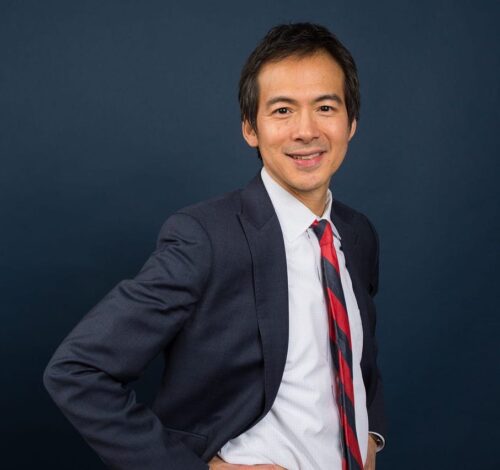
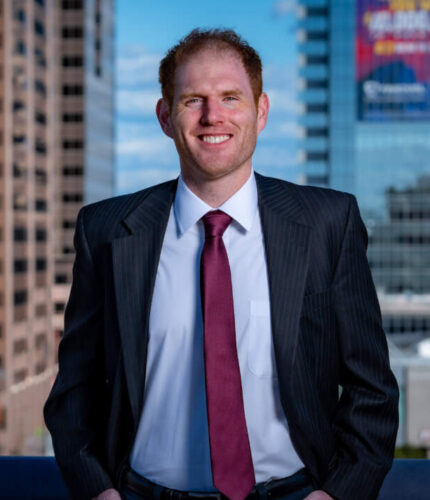
Archon Fung: Hey everyone, this is Terms of Engagement. I’m Archon Fung, a professor at the Harvard Kennedy School and director of the Ash Center for Democratic Governance and Innovation. We’re starting a little bit later than usual today at 12:15. I hope people didn’t get freaked out about that. We looked at the social media, the records, and it looked like a lot of people were signing onto the show at 12:15. So being a democracy show, we go to where the people are. So we’re going to start at 12:15 from now on.
Stephen Richer: Which is a whole interesting conversation because I know you studied a lot with Nom Chomsky, or at least were around him at MIT.
Archon Fung: Yeah. Absolutely.
Stephen Richer: And whether or not audience drives the conversation or whether the elites drive the conversation, which was his model. And yet here we are looking at our statistics and being like, “Okay, we’ll change.”
Archon Fung: We got to respond.
Stephen Richer: Anyhow, I’m Stephen Richer. I’m the former elected Maricopa County recorder, and I’m now a senior fellow at the Ash Center.
Archon Fung: Great. So we’re coming to you live today. So if you’d like to join the conversation, please tune in and type in the chat. And also, we want to give a shout-out to people who can’t join live. This show is available after we do it on YouTube, certainly, but on also most of the podcast platforms.
Stephen Richer: I’m an iTunes person. What is your podcast streaming platform of choice?
Archon Fung: Apple Podcasts is mine, but a lot of people, the third party ones are supposed to be really good too.
Stephen Richer: Yeah. And I guess if you’re under a certain age, you’re supposed to listen to it on YouTube, right?
Archon Fung: Spotify. Oh, YouTube is big. Yeah. Yeah, right, right. I guess Spotify is yesterday.
Stephen Richer: Yes. So please, please, please put your comments in the chat. And if you listen to it afterwards, please shoot us a note, email us your thoughts. We’re always eager to get feedback. And as always, Archon and I are speaking on behalf of ourselves and only ourselves. We are not speaking on behalf of the Ash Center, Kennedy, the school, or Harvard University, of course.
Archon Fung: Great. And today’s topic is one that we have talked about in different ways, which is free speech and inquiry and intellectual diversity, viewpoint diversity, especially on college campuses. And this is an issue that’s been in the news a lot and that at least certainly on this campus and just about every campus I know, people are struggling with it in different ways, trying to do better.
And here on this show, we’re really going to dive into some of the complexities of that. What does doing better even mean? What are some of the barriers to viewpoint diversity? And then what do we need to change? Do we need different people? Do we need students and faculty and staff to have different skills to be able to converse? Do we just need people to be tougher and more courageous about expressing their views? Do we need different kinds of programming? We’re going to dive into all of those questions.
Stephen Richer: And to do that, we have a great guest. His name is Professor Eitan Hersh. And he joins us from Tufts University just up the road from where Archon is, where he is a professor of political science. He’s somebody that I met at a conference at the Hoover Institution a few years ago, and I’ve really enjoyed following both his work and now his leadership as the inaugural director for the Center for Expanding Viewpoints in Higher Education. All right. I think I got it all.
Professor Hersh received his bachelor’s degree from Tufts where he’s sitting now, and he received his MA and PhD in political science from Harvard University. So back where Archon is, though from the school of government, not from the Kennedy School. And he recently wrote an article for the Boston Globe titled, quote, “College Students Are Less Woke Now. It’s a Chance to Improve Campus Culture,” end quote. And that article caught Archon’s eye, caught my eye, and we thought he would make a great guest to come in and tell us what he’s up to and then what he’s making of efforts at ideological, diversity, ideological reform, and the balancing act in today’s political world on university campuses. So Eitan, welcome to the show.
Eitan Hersh: Thank you for having me. It’s fun to be here. I take no responsibility for the title of that article. I wrote the text, but I did not write the headline.
Stephen Richer: The number of times I have people who write to me-
Eitan Hersh: Very common.
Stephen Richer: … because I write for the Arizona Republic and a few places and they’re like, “Good article. Way over the top title.” I’m like, “Okay.” That’s the one thing that the authors never have any say over because they give it to the people who are at the publication and they gin up something that they think will catch a whole bunch of eyeballs. So I guess as with all things, please read the full article.
Eitan Hersh: Right.
Archon Fung: Yeah, please. It’s very readable and it’s very good. So Eitan, for I guess a few years you were teaching a course on American conservativism and Stephen did a great course last year when he was here, last semester, I guess, on reading MAGA. And I sat in on a few sessions. It was just terrific. It was real news to a lot of the students as I imagine your course on American conservativism was. And then after the course, you decide to create this center on expanding viewpoints in higher ed. And so tell us a little bit about that path and then your purposes, what you hope the center will achieve at Tufts, but then also beyond.
Eitan Hersh: Sure. So yeah, the origin story for me is I was mostly teaching courses on the topic that I do research on, which is US elections. But I noticed sort of after the COVID era or mid-COVID era that even in that kind of class, the thing that I was doing, which I thought was very typical for teaching a course on say public policy, in this case election policy, what was I doing? I was saying, “Here’s basically the two sides of the gerrymandering question or voter ID or money in politics. And what’s the legal structure? What’s the value system? Where’s the empirical evidence?” And there was this moment in maybe 2021 where it felt rare to students, the thing that I was doing, that is just trying to help students understand where different people come from on these issues.
And it inspired me in that moment to develop this course on conservatism, which is really a contemporary policy course. So we go through lots of policy topics, family policy and religion and public life and affirmative action and crime and really policy topics to expose students to just a bigger range. Obviously it’s situated in a university where the vast majority of students identify on a sort of progressive left. And the course was just a total delight from like the moment it started, it just took off. I’ve capped the enrollment at 100, but that’s like the max, but it’s a delightful class. And the thing that I realized made it so great and I think that the students are attracted to is not the topic per se. It’s not that it’s about conservatism.
It’s about a vibe that I think we are able to build in this classroom, which is one where we can actually talk about controversial issues of the day. And also, aside from the controversial issues of the day, just the big questions of life. So like when you teach a class on election policy, there are controversies, but it’s not like how to live a life. But a lot of the topics in the course on conservatism, about family, about religion, they do touch on these deeper questions that students, I think, want access to and didn’t have a lot of other places to access that. And so we have this class and then a dozen students come back to office hours and the conversation continues. And so that I wanted to just bottle up and expand. And so the center is really about that. It’s about the vibe, not about the topic.
Stephen Richer: So you said the enrollment was capped at 100. Are you saying that a hundred students were in this class?
Eitan Hersh: They still are. Yeah, this semester right now. Yeah.
Stephen Richer: That’s incredible because Tufts is a pretty small school and obviously not everyone is interested in political science or social sciences. And then this is presumably at a time spot in which there are other classes. So really, that’s an incredible testament to the class. I will say-
Eitan Hersh: And by the way, one thing to add about that, it’s so funny. I put the class at 9:00 AM on Monday mornings. So to dissuade anyone who doesn’t really want to be there, it’s not like a class you would accidentally take.
Stephen Richer: Okay. This shows that I have now some distance from when I was a student, because now I’m thinking 9:00 AM seems great. That’s when you get things done.
Eitan Hersh: No.
Stephen Richer: 9:00 AM on Monday morning. That’s not the right time you want as the student.
Eitan Hersh: No.
Stephen Richer: Okay. And I was going to say, I had a really positive experience with the students at the Kennedy School in the MAGA class. They were grappling with the ideas. They were testing them. They were critically analyzing them. It didn’t just turn into, “Well, I think this is dumb, or I think this is smart.” And so I’m glad that we can both report positive experiences on that. So tell us about the center. I know Archon and I both wanted to know about how that grew out. Thank you for sharing that. But now what is it doing and how’s it going?
Eitan Hersh: Yeah, so it’s going great. I would say I sort of think of the work in three buckets. One is about campus culture, which is providing students and faculty, but with the focus on students, lots of opportunities to just learn wild ideas from all over the place. So as an example of this, every Wednesday at lunch, we have about 50 or 60 students pile into a room. We get them lunch and we have a guest faculty from across the university, we’ve actually had one guest also from Harvard, talk about an article that is not theirs that probably they disagree with. And this can range from art history to politics to religion. And it’s just like an opportunity to learn something totally different.
One of the, I find the conformism problems you see at the university is that a lot of students are just getting their news from one source. If you’re in a course like my courses and you say, “Okay, what’s your main source of news?” The vast majority of students are just reading the New York Times or the Daily. I always sort of was hoping to get interesting insights from students about what crazy wild places they get their news, but they’re like the most normy news consumers you could imagine. And so the center in terms of campus culture is I think providing access to readings and topics that they wouldn’t otherwise encounter. So that’s like bucket one.
Bucket two is about research. So we have across the university, every department has its own or every discipline has its own bubble, its own echo chamber. Sometimes it’s not related to politics at all. It’s just like everyone maybe does the same methodology or everyone has the same kind of focus area. And we want to just make sure that we are pushing ourselves as researchers and teachers to embrace new topics. So just as a quick example that I mentioned this to you earlier, I’m convening a research group this week on the regulation of marijuana, sports betting and pornography. And we’re bringing in scholars from Tufts, scholars from around Boston, but also experts from industry and advocacy.
And what’s interesting about that topic, obviously everyone knows there’s tons of regulatory experimenting happening with these topics, but there’s actually like very little research coming from political science about public policy attitudes. There’s very little opportunity for the person studying gambling to actually talk to the person studying recreational marijuana. So we want to really just like kickstart new conversations about research. That’s number two. And number three is curriculum, which is the more sensitive thing that we’re working on, which is how do we make sure that our curriculum, particularly when it’s on politically sensitive issues, is really doing a good job exposing students to a very well-rounded set of texts to grapple with in the classroom.
Archon Fung: That’s interesting. So in these difficult conversations or learning from people who think differently from you, I kind of think of three different layers of obstacles and kind of on the crime show analogy, you got to have motive, means and opportunity. And so the motive problem is like, do students want to assert the political views that they come in with or do they really want to learn stuff about, like you were saying, about life and other points of view? And on the means, it’s do they have the skills to kind of engage with people who think very differently? Do they have like a thick enough skin to kind of engage in that give and take and push and pull?
And on the opportunity is like, are we as faculty and administrators providing the opportunities for the students and other folks to do those things? It feels like you’re focusing not exclusively, but largely on the opportunity level. So you create this class and the way that you just described it, once you create that space, really good things happen. So we don’t really have to worry that much about the motive or the means, we have to create the opportunity. Are you focused mostly on the opportunity or do you see like motive and means kinds of barriers too, that we really need to be working on?
Eitan Hersh: Yeah. So I think I’m like implicitly nudging the motive a little bit away from something like debate or dialogue and back to what I see as sort of like the core mission of the university of research and teaching. So the thing that I’m doing both in the classroom and in our center’s programming is not really creating like norms for dialogue. And I’m certainly not hosting debates. What I’m doing is putting something in front of everyone, like a text and saying, “What is this person who wrote this text, what are they doing and what are their assumptions? And where is their logic slippery?”
And so I find that, especially on more controversial topics, the thing we’re asking students to do is not to say what their opinion is. On so many issues, the students just like us don’t even have firm opinions, but what we’re trying to do is just like read something carefully. And I think that’s like both better … In some ways, it just takes a pressure off of what we’re doing in these settings and it builds the skills of like critical reading and also I think it’s going to be good for idea generation on the research side too.
Stephen Richer: I’m pleased to know that you encounter some students who don’t have firm opinions on everything, because like I don’t, you’re absolutely right. The vast majority of things, I don’t have that strong of a take because I don’t know that much about, but I spend too much time on social media where boy, you are honor bound to have a firm opinion on everything. I really liked Archon’s framing and it ties in the first component, the motive component. I thought something that you wrote in the article was very cute where you said, there’s not generations as we traditionally understand them in college campuses, there’s not millennial, Gen Z.
There’s four year generation and that today’s students might not even be all that similar to the students who were there during COVID because that’s more than four years ago. They might not have experienced, you said half of your students weren’t on campus when the Hamas, the Gaza, Israel, protests were going on. And so that’s not sort of part of their environment. But you also mentioned, you said, you quote, “That’s not the culture I see right now,” meaning a closed, insulated-
Archon Fung: The hyper-woke culture that … Yeah.
Stephen Richer: Right. And you said, “In this micro-generation, again, a four-year period, there would be more eye rolls than snaps in response to classroom political speechification.” So you cite an improved environment just over the last say five years in terms of what you’re aiming for and I’ll say, what do you attribute that to? And then I’ll remind the audience that if you have any questions, please put them in the chat. So is that correct, that you see an improved environment at Tufts as one example over the last five years? And if so, do you have a cause for it?
Eitan Hersh: Yeah. I’ll start by saying, I think there’s like positives and negatives to the culture we’re in right now. I do think because of essentially fear of sanction in at least some areas of the undergrad population, there’s definitely like a withholding of political views or unwillingness to say something in class, always in class, including in this class. Even though we try super hard, of course, to create an open environment, students are afraid of social sanction. And I think that continues. To just articulate a view, even if the view they’re articulating is, “Here’s what I think this author is saying.” A student might think to themselves, “Oh gosh, if I say that thing, it’s going to make other people think that I agree with this author.”
And so I think there’s a lot happening inside students head that’s true now and it was two or three years ago that they’re afraid of getting in trouble from authorities. They’re afraid of getting in trouble from their peers that does limit how we talk to each other or change how we talk to each other in the classroom environment. I do think a lot of students that I encounter do exhibit a change from what they saw two years ago on campus during those protest movements. In fact, it started almost like the year after. I had done a bunch of writing on campus social tensions in the aftermath of the start of October 7th, and I was giving a talk at a different university that I won’t name, but it was basically the next year after.
And the chaplain from that university said, “I have so many students coming into the chaplaincy who were involved in the protests, but kind of didn’t feel great about that form of civic engagement and now we’re leaning into more dialogue opportunities.” And so I think there are some students who are sort of the older students say now, the juniors and seniors who were freshman, sophomore in that period and are sort of thinking, “Geez, I’m not sure I loved how that all went down, and maybe there’s a better way.” But then I think also the newer generation of students might have a different taste for politics, for left right politics.
I really think that the Trump 2024 election was transformative in one particular way, which was that unlike the previous Trump elections in 2016 and 2020, in 2024, our students knew a lot of other students who voted for Trump. That was not true in 2016 and 2020. In 2024, they knew it. And there’s this obvious sort of male/female split on this, but I think there was a sentiment that, again, I have no detailed evidence of this, but this is just the vibe that I get, that there are a number of students that either like, “I know people who voted for him. I didn’t vote for him, but I can kind of see it.” Something like that. And I think that really did change the culture of our campus.
Archon Fung: Interesting.
Eitan Hersh: That students have to deal with that difference, and then so they want to deal. They need to deal with it. They need to figure out why people, if they’re on the left, think differently than them or went for Trump now, but they didn’t before and so on.
Stephen Richer: Archon, do you share that assessment of the student population 2016 versus 2020 versus 2024?
Archon Fung: It’s so interesting what you say. I just don’t know because I don’t have that much exposure to undergraduates. Most of my exposure is to graduate students in public policy. So my guess, I have no idea. We haven’t done a survey and people, we have the Australian ballot, so we really don’t know what people’s voting patterns are, but I am a little bit surprised, I think in a good way, by what you say, about the Tufts population is that people are having to confront that difference. So that’s pretty interesting.
So maybe we’ll introduce another idea and then we can go back and forth a little bit. So my own perspective is that a bunch of the ideological diversity efforts on campus in a way are addressed to the problem of the 2010s to early 2020s, which is woke peer pressure causing students to self-censor. And then once a conservative view is voiced, whether it’s that student’s view or just a view that they’re articulating, gets smacked down. So you get this very, a big chilling effect, largely from peer pressure. And I think that’s still there, but I think that was the problem a little while ago. And I think it’s only one of the problems now.
And I think you guys may disagree with it, and please speak up. I think the second layer is after October 7th, many university administrators came down quite hard on student protestors, in my view. And then after Claudine Gay and Elizama Gill and others stepped down, I think everybody, students and staff and some faculty got the memo from student leaders or from university leaders on many campuses that views about DEI and pro-Gaza views just are not welcome. And then a third layer is the Trump administration layer, which I think is not shy about its political views and what kinds of speech it wants to hear. And I think that falls most heavily on students who are non-US students and then very recently, very unfortunately on students from the military, especially active duty.
And so I think there are those like three cross-cutting layers of all causing chilling effects. So in a way, I guess I’m thinking that there’s more of a chill on campus speech than there was just even in the COVID period or right after. So I wonder if we can reconcile or we just have different experiences or it’s just our different lenses. Eitan, I hear you think, well, maybe there’s an opening and I’m feeling a little bit more of a chill because the wind is coming from more directions.
Eitan Hersh: Yeah. I mean, like I said, I think there is a chill in the sense that I think students, particularly non-US citizen students are very cautious in their political engagement. And I think, again, a conversation about immigration policy or military free speech policy, I would table that and just say, yeah, there seems to be … I would agree that there’s, I sense a chilling effect there, but the opening is, I think, this increased curiosity-
Archon Fung: Yeah, okay. I think that’s helpful. Yeah.
Eitan Hersh: … to learn more about what the other side thinks from people who are sort of center and center left. At our school, I actually think that it was a bit asymmetric that as students who are more conservative coded, we’re very open to that, but-
Archon Fung: I agree.
Eitan Hersh: .. they have been kind of shunned. The other thing that’s happening that maybe I have more exposure to than other faculty members because of what I teach is, I don’t know if we’re at an actual religious awakening, but I do see many more of our students interested in exploring religious questions, Catholic students, Christian students, Jewish students who are, I would say, a little bit more willing to express a religious perspective than they hadn’t maybe before. And obviously in the context of American politics, of course, on conservatism, a lot of those conversations are tied up in conversations about religion. And so I do see a little bit more overt religious expression on campus than I had in previous years.
And that also, I think, creates a different kind of opening. And the reason, of course, it does is that many students who are religious of any faith with any denomination are sort of accustomed to disagreements within a religious community on core values that are religious questions. And it’s sort of like in a religious space, people know how to deal with certain kinds of debates and discussions, either by not talking about them or by like they have a language to talk about them. And I do think there’s a bit of that coming into the rest of the university, which I find interesting.
Stephen Richer: How much credit does President Trump deserve? I think-
Archon Fung: For tilting the balance and forcing a wedge to open.
Stephen Richer: To be clear, again, we’re not speaking on behalf of Harvard University.
Archon Fung: Yeah, yeah, right. Absolutely.
Stephen Richer: I think what they’re doing …
Archon Fung: We are not.
Stephen Richer: … vis-a-vis a lot of universities is blatantly unlawful, but at the same time, whether correlation or causation, I have seen conversations that say ideological diversity or mixing ideas needs to be more of a thing. And is that just a coincidence or is that prompted? Do you think he deserves, the administration deserves any credit or without [inaudible 00:28:03]-
Archon Fung: He shook up the snow globe. He shook up the snow globe big time.
Eitan Hersh: Yeah. I like to think about the university as existing in a market with other universities. And then within every university, there’s sort of a market for attention and eyeballs and students and butts and chairs, right? So one thing that we’re seeing over time is a dramatic change in what happens in terms of within a university. The computer science major was big, but now it’s taken over by AI and this is big. And my center has a lot of students in it relative to some other programs. And so there’s that happening. There’s a market within the university, but then there’s obviously a market of competition across universities.
And some schools, just setting your question about Trump aside for one second, have planted their flag and saying, “We are not the kind of school that is shutting down speech and where everyone is in some monoculture,” and that’s their brand and they want to differentiate themselves from other schools by that brand. And so that’s affecting the market, right? So you have schools, for example, a lot of schools in the South where there’s governments, state governments are saying, “We’re going to give you $50 million to start some center and hire a bunch of different faculty.” And the schools saying, “Come on down from New York and Boston, you can have a better culture here.” So that’s happening.
At the same time, I think a lot of these schools take a lot of money from a democratically elected government and they have to decide whether they want to play by the rules of that democratically elected government. And a school could of course say, “No, we don’t want money and in exchange, we can do whatever we want.” It’s sort of like a parallel debate to what happens in the art world, right? Do we want the government to fund art? And if we do, it might have a say, it might want to have a say about what counts as the art that it wants to fund.
And you have this big tradeoff between operating just with sort of, the benefactors who are going to pay for art in the absence of government, or do you want to have this deal with the devil? And so I think both the market, market competition, state legislatures and the federal government are all intervening in this market. And I guess we’ll see what happens.
Stephen Richer: So I know Archon, you’re now worried about those very actors that have injected themselves into the marketplace, bringing in a different form of self-chilling, self-censorship, right?
Archon Fung: Big time, big time. This is a little bit related. I want to go to Anthony’s question in the chat and offers me an opportunity to talk about academic freedom a little bit. So he says, “What should there be the role of trustees in overseeing university policies regarding freedom of speech and religion on campus?” And so in a private corporation, the trust, the board of directors gets to make all of the calls, but I don’t know if this is … I still think that this is the right view. I won’t be coy about it. But the tenure process and the right of tenure of tenured faculty not to be fired was established early in the 20th century by the American Association of University Professors, among others.
And it’s really worth going back because the justification of tenure goes to the trustees. And they said, “In a public unit, we need tenure. We can’t have the trustees be firing professors because of academic freedom.” And in a private university, the problem is all of the trustees are super wealthy economic elites. That’s how they got to become trustees. So if a professor has the wrong opinion about regulation or capitalism, they’ll get fired. And that’s a bad thing because we want the university to explore ideas freely.
And then they said, “Well, in a public university, the trustees are basically politicians.” And the problem there is very different because you get the populist problem. And if a professor says something that’s against the big public opinion, they’ll get fired. And so whether it’s public university trustees or private university trustees, you need to kind of insulate from that to allow the kind of free exploration of ideas by students and faculty that Eitan is talking about and that all of us here at universities, campuses value a huge amount.
Eitan Hersh: Yep. It’s very complicated. And you have basically decision makers trying to think in a 10 or 20 year time horizon, and then you have the immediate problems in front of you. And this stuff is very hard.
Archon Fung: Yeah. So Eitan, you’re focusing a lot, I think, on the classroom and campus culture, which is great because I think that’s probably where you, I, faculty, can make the most difference. But what do you think about the larger political debate? And I really like your focus on, okay, I’m not going to try to set up a bunch of debates between faculty or public intellectuals arguing about abortion or tax policy or whatever it is. I’m going to do the classroom stuff where we’re reading a text and focus on students, centering students. That’s really great, but the students and the campuses are in this larger political environment. So what do you do about these other views that are out there? And I’m at the Kennedy School. We bring in a lot of outside people with a lot of different kinds of views.
And I’m kind of landing on the position that when we do that, it’s different for students. My view for students is different, but for these views in politics, I think I’m landing on the view that we should have a lot of ideological diversity, but that when we have that diversity, it’s going to come with less civility. So Greg in the chat says, “Archon, will you finally come out and criticize the antisemitism that fueled a lot of the campus protests?” And to this ideological diversity, I guess I would favor a debate, whatever the presence of a speaker from Hamas, or I would favor the presence of a speaker from the Proud Boys, because that is the actual ideological diversity that we have in the world that we need to come in to grips with.
But I’m not going to be very civil to either of those people because I regard both of their political views, and certainly in the case of Hamas, and maybe in the case of the Proud Boys, the actual actions is pretty reprehensible. And I’m going to say that to them, because I think doing anything else would not be an honest conversation. And I think that the civility thing is people have in their imaginary that we’re in the political spectrum of George W. Bush to the Clintons plus Obama, and that is just not the political spectrum that we’re in right now.
Eitan Hersh: Yeah. So I really have thought a lot about exactly this and what it looks like at a university and what we’re trying to model for the outside. So there are certain decisions that I’ve made here with this center that reflect on this. Number one is almost everything we do is offline. All of my classes have no technology. I’ve never allowed any computers in my class. I don’t use PowerPoints. We are an offline world and most of the center-
Archon Fung: Off the grid.
Eitan Hersh: Most of the center programming is like that. And I think it’s really important. The second thing is-
Archon Fung: Interesting.
Eitan Hersh: … once you are focused on building a community and you have a sort of a community, it could be a classroom that meets twice a week. It could be our programming, we have lunch every week, whatever, and you have trust and you have a sense of understanding of one another and you’re reading something, you can read really, really widely to the extremes and everyone knows why you’re there. You’re not there as an endorser, you’re not there as a persuader, you’re there to understand something.
So last week we had one of our best conversations of the semester, not in my course, but in our center’s lunch series. And it was a piece by Richard Hanania that went viral a couple years ago and the piece is called … I hope this is like a PG-13 thing I’m about to say, but I hope that’s okay.
Archon Fung: Absolutely.
Eitan Hersh: So the piece is called, “Yes, Sydney Sweeney’s Boobs Are Anti-Woke.” And this piece went viral on Substack.
Archon Fung: I missed that one.
Eitan Hersh: The piece is basically advocating for a level of objectification of women in the culture. I’ll just say right out, I don’t endorse the view of Hanania in this article, but the conversation we had among students, it was a big group, 60 people, half men, half women, was amazing. The conversation was amazing. And at the end, one of our students said, “I’m so glad we had this conversation here because if I just had this conversation basically in my WhatsApp March Madness group, it wouldn’t have been as good of a conversation.” And like 100% that’s right. We need to have those conversations in a community and a piece like this really helped us have that conversation. Even if it’s something that probably 90% of the students, it rubbed them the wrong way. Sorry, [inaudible 00:37:46].
Archon Fung: I mean, that might be why it was a great conversation, right? Yeah.
Stephen Richer: Yeah. I do think that offline component is so important.
Archon Fung: Definitely.
Stephen Richer: Because I think that just as soon as the cameras come on, it either, it hushes some people and then some people get into performance mode and we know that saying the most outrageous thing is oftentimes what they’re known for and oftentimes what might spark greater interest. I didn’t want to cut you off. Please continue.
Eitan Hersh: Yeah. So the only thing was say about like these kind of one-off events are much, much trickier in part because it has less of a community trust feel where the audience actually might vary by event to event based on the topic.
Archon Fung: Almost certainly does.
Eitan Hersh: So you get the people raw-rawing for different sides and you don’t have that kind of rapport where the thing we are doing here is learning. And so I think I kind of operate with different rules for guest speakers as I operate with things that we read. Things that we read in the classroom have very few limits in terms of like extremism. I mean …
Stephen Richer: Totally agree.
Eitan Hersh: … if the thing is like roughly truth seeking and somewhat important for us to deal with, then I want to deal in the classroom. But I think the rules are different for public events. And so what I’m trying to do is mostly convert more of those kind of public event type forums to repeated affairs where there is that kind of community trust building.
Archon Fung: Community.
Stephen Richer: I really appreciate the comment about readings because this was one of the things when I was constructing my MAGA class, do you incorporate readings from somebody like Bronze Age Pervert …
Eitan Hersh: Yes.
Stephen Richer: … who was influential in the 2016 MAGA movement, but can’t really be said to be of sort of the, have the normal intellectual trappings-
Archon Fung: Not John Stuart Mill.
Stephen Richer: Yeah. Not John Stuart Mill. And-
Eitan Hersh: By the way, undergrad at MIT, PhD from Yale Political Science, he has [inaudible 00:39:50]-
Stephen Richer: Oh, that’s right. Some of these guys are quite well-educated, but some of them even write in a style that is meant to sort of be provocative, less scholarly in their approach type thing. And if it’s not his writing, then I apologize, but you know what I’m saying as far as when does something sort of gain so much popularity that even if it lacks academic merit, it has academic merit, so to speak. Like I guess Candace Owen-
Archon Fung: It has importance, right? Yeah. Candace Owens or Nick Fuentes.
Stephen Richer: … is an example of that where I find her ideas to not have great intellectual depth that they’re worth sort of discussing, but on the other hand, she’s hugely influential for a lot of Americans thinking about society and politics.
Eitan Hersh: Yeah. So I mean, your first example was Bronze Age’s mindset, which I did put on my syllabus for the first time this year because I thought it had basically grown in relevance over time and the particular focus on sort of like what men need is an important and growing part of, I think, conservative movement politics. I thought we needed to deal with it. So the teacher here, the professor, the convener, always has this gatekeeping role and that’s never going to go away and has to decide. And it really has this big responsibility for deciding what is on the agenda. And so you have to be straightforward about what’s going into that decision making. It’s not something that … It’s not that I endorse everything on this syllabus, right? It’s certainly not that.
Stephen Richer: Of course.
Eitan Hersh: But it is some combination of this thing has a point that I find interesting that I think we should deal with, or this thing is popular in some way within some subset of the electorate that merits attention. Yeah.
Archon Fung: Yeah. So Eitan, it’s such an interesting … So I totally agree that creating community, and especially one that is offline with no cameras, no recording, is really, really helpful, maybe essential for candor today and that kind of exploration that you’re really after. So that’s great for the learning, and now I want to explore the citizenship part of it. So do you have an idea about how somebody in that environment benefits when they go into a public environment? Because one of the things sometimes I say to my students, not very often because it’s pretty tough love, is that if you’re going to be a public person, you can expect a fair amount of abuse these days, kind of verging on the … I mean, Stephen knows this more than anybody, more than most people I talk to, verging on personal assault and threat.
And so if you’re not up for that, don’t be a public person in this environment. And I think that’s empirically the case. Unfortunate. I certainly wish the world were different. I think all of us do. So you’re creating an environment that’s good for learning, better for learning than the environments that we find on my campus, on your campus, which is terrific, but then does it help equip those people for citizenship in a rough and tumble world that doesn’t have those characteristics of community and trust and protection?
Eitan Hersh: Yeah. So a few years ago, I wrote a book called Politics is for Power, that was really dismissing the sort of performative politics, which I call political hobbyism. And what I encourage people to do in this book is to really, even if you’re an ordinary citizen with no official role, but to think of your orientation towards politics as strategic. That is, you are trying to get something done. You’re trying to convince someone to vote a certain way or a lawmaker or to do something. How do you go about that conversation? And I think the right analogy is not something like how you fight with them on Twitter. It is something more like, how do you ask your boss for a raise? And how you ask for your boss for a raise is you figure out what your boss’s incentives are and what goes into their decision making.
And I think that the kind of reading and stuff we’re doing in our center in my class is very much about trying to understand what someone else, who’s not you, how they think about the world. What are their values? What evidence do they consider? And in some areas of politics, I have to say, I find this advice to be very good and in some areas is very bad. So I think at state houses around the country, including in ours, down a few miles in Massachusetts, lawmaking is very much about backroom strategic conversations over a long time.
I actually sent last week my seventh grader and five of his friends, they had a day off, teacher conferences, I sent them down to the state house by themselves to meet with their state rep by themselves. And they got a real lesson in what behind the scenes slow and steady lawmaking looks like. There are other forms of politics, the stuff that I think Stephen saw a lot of over the last few years, which where people are facing legislators and policymakers in a very combative online way. And sometimes, unfortunately, you can get things done that way, but I generally think we inhabit a world still where politics is dominated in some ways by state and local affairs, where you get a lot of power out of really understanding where other people are coming from.
Archon Fung: That’s good.
Stephen Richer: So I’m going to leave the last question for Archon. So hopefully he’ll have something wise and ponderous just to share. But I just want to take one quick rack at Renee’s question from earlier, which was any recommendations professors that might like to incorporate these elements into an existing class? And it sounds like do it offline, develop a rapport, develop a community, and text can be more powerful than guests if I had to distill what you said.
Eitan Hersh: Texting, yes.
Stephen Richer: So one, anything you want to add to that? And then two, you referenced March Madness. So which team did you pick to win it all in either the men’s or the women’s NCAA tournament? Very important.
Eitan Hersh: Okay. So to your first question, the only thing I would add to it is that faculty also need to read really widely. And they cannot just be New York … If you’re teaching something politically adjacent, you can’t just be a New York Times reader who maybe also reads The New Yorker in the Atlantic. You really have to dig-
Stephen Richer: All excellent publications.
Eitan Hersh: No offense. Right. But I think what I see when I am thinking about what we’re doing curricularly in many areas of the university is that there’s just a lot of topics. It could be public health, it could be the study of immigration, where the syllabi are just not reflecting a very wide spectrum. And I’m not talking about Tufts. I mean, we sort of went through a lot of syllabi around the country on a topic like immigration. And I would say you can take an immigration policy class in a lot of universities in this country for 13 weeks and never really get a sense of why people hold a restrictionist position.
I think that’s like a big problem. And I think that comes from, there’s a lot of reasons why that happens, but I think faculty, in addition to setting up things right in terms of being offline and reading carefully and all that, we also have to just broaden our own horizons about research and evidence. I am a Massachusetts … I’m a New Englander from birth, Stephen, and I care a lot about our Celtics and our Red Sox and our Patriots. And as a snobby New Englander, I don’t care at all about college-
Archon Fung: About college, NCAA?
Stephen Richer: I was thinking you were going to tell me UConn or something since they were in the general area.
Archon Fung: There you go. Yeah. Yeah. We’re out of it because my wife is a KU grad, so we had Jayhawks.
Stephen Richer: Archon, anything brilliant?
Archon Fung: Yeah, just last, doesn’t rise to that level, but just maybe going out, if you had a magic wand, one thing that colleges and universities could do to kind of create the more open learning and expressive and ideologically diverse viewpoint diverse environment that you are seeking in your center, what’s like one thing that you’d tell an administrator or a faculty member?
Eitan Hersh: Yeah, it’s good. I mean, it’s a good question. I don’t know if there’s one thing, but I’ll say one thing is like the world around us is way more interesting than I think sometimes we give her credit for it. Even our students, most of my students, like 85% are progressives, want to intern for Elizabeth Warren, but they’re all complicated. You could write a book about every one of them and what their family story is and all of the various cross-cutting values they have. And I think we should take that very seriously and we should take that seriously in ourselves too. And I think when we do that, we are just exposed to a whole bigger world of interesting questions that, as researchers and as teachers, we can engage with.
Archon Fung: Great. Okay. Thank you much.
Stephen Richer: Great. Well, we really appreciate your time and you can check out … The team was kind enough to link to the Boston Globe article at the beginning in the chat, but you can also just Google it with Professor Hersh’s name in Boston Globe. And it was from February 12th. Thank you all very much for joining. Thank you for your comments in the chat.
And Greg, we actually don’t block any comments, and so we welcome your comments as long as they’re civil. So I feel like especially vis-a-vis this conversation, that would be fairly disingenuous if we did otherwise, but we do appreciate those comments. We’ll be back again next Tuesday around the lunch hour, either 12 or 12 …
Archon Fung: 12:15 though.
Stephen Richer: Okay. We’re doing 12:15 now.
Archon Fung: 12:15. Yeah.
Stephen Richer: And as always, thank you for the team helping us produce this. And as always, if you have any comments or suggestions, please email them to us. Archon.
Archon Fung: And if you couldn’t join live, we’re always available after the show on YouTube or your favorite podcast platform. And Eitan, thank you for just this great, great conversation full of insight and things to do to increase and improve the learning environment, which is …
Eitan Hersh: My pleasure. Thanks for having me. Appreciate it.