Policy Brief
Raising Wages by Changing Norms: Work Policy for the Long Game
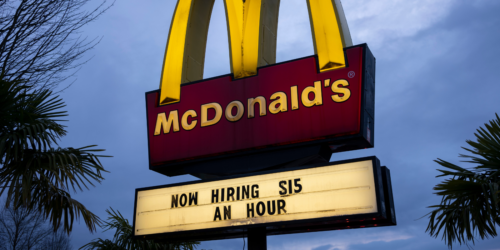
When Amazon announced a company-wide $15 minimum wage in 2018, the obvious assumption was that every competitor fighting for the same workers would have to match it or lose their workforce. They didn’t. Despite dramatic wage jumps at the companies that voluntarily raised their floors — and real cuts to turnover and hiring costs that made the move pay for itself — researchers find zero evidence of wage spillovers to the “poacher” and “feeder” companies competing in the very same local labor markets. The explanation turns out to say less about generosity than about just how much leverage employers hold over workers who have nowhere else to go.