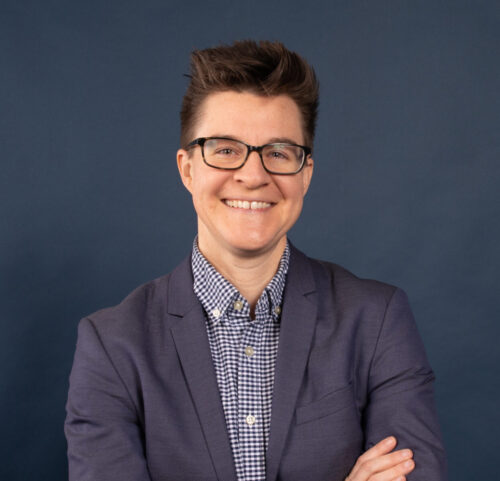
Erica Chenoweth
Frank Stanton Professor of the First Amendment


The Ash Center examines how civil resistance harnesses nonviolent collective action to challenge injustice, drive democratic change, and inform research on strengthening institutions and promoting accountability.
Civil resistance refers to the use of nonviolent methods—such as protests, strikes, boycotts, and organized noncooperation—to challenge injustice, defend rights, and advance democratic change. Grounded in collective action and strategic organization, civil resistance movements have shaped political and social transformations across the globe.
Our scholars research on civil resistance explore how civic mobilization strengthens institutions, promotes accountability, and contributes to more inclusive and resilient democracies.
Frank Stanton Professor of the First Amendment

Lecturer in Public Policy

Assistant Professor of Public Policy

Lead Research Fellow for the Nonviolent Action Lab, AY2025-2027
Research Project Manager, Nonviolent Action Lab
Research Associate, Crowd Counting Consortium
Policy Brief
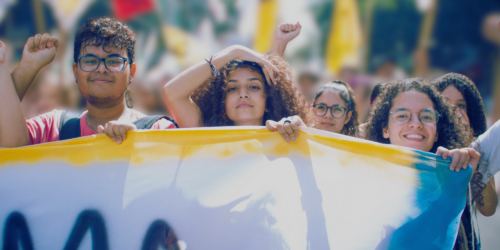
In this essay, originally published in the Journal of Democracy, Erica Chenoweth and Matthew Cebul analyze the global surge of Gen Z-led protest movements, showing how economic insecurity, exclusion from power, and corruption are driving youth mobilization worldwide.
Occasional Paper
In this report, Matthew Cebul, Lead Research Fellow for the Nonviolent Action Lab, examines the effectiveness of nonviolent action movements in supporting democratic resilience globally. Identifying challenges faced by nonviolent pro-democracy movements, Cebul offers key takeaways for combating accelerating democratic erosion in the US and abroad.
Article
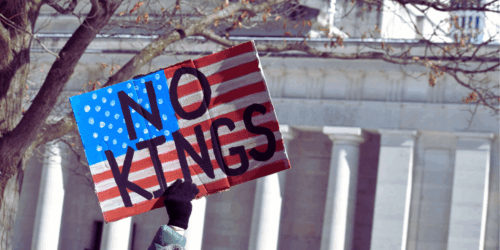
In this op-ed, Liz McKenna examines the second ‘No Kings’ protest on October 18 and offers strategies for translating successful protest movements into influential policy change. She emphasizes the importance of sustained organizational efforts alongside protest activity to engage actors across partisan lines, building a broad coalition and a durable base for the movement.
Article
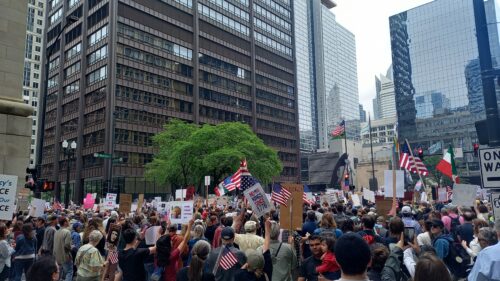
As organizers for No Kings 2 seek historic turnout on October 18, the broader pro-democracy movement has already broken new ground.

Commentary
Feature
As organizers for No Kings 2 seek historic turnout on October 18, the broader pro-democracy movement has already broken new ground.
Commentary
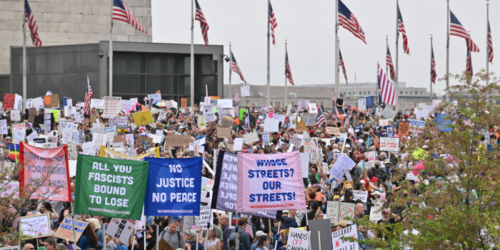
Contrary to conventional wisdom, the size and scale of anti-Trump protests this year have dwarfed those in 2017, and they have been extraordinarily peaceful. This article was originally published in Waging Nonviolence.
Commentary
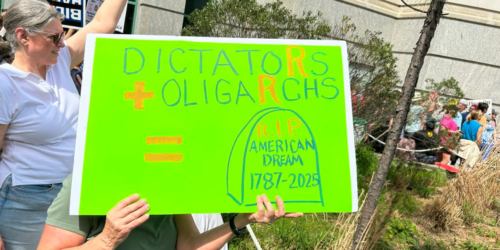
Matthew Cebul and Sharan Grewal explain that dictators around the world have been emboldened by the Trump administration’s abandonment of democracy and human rights norms, but crackdowns may spark stronger and more unified pro-democracy movements.
Commentary
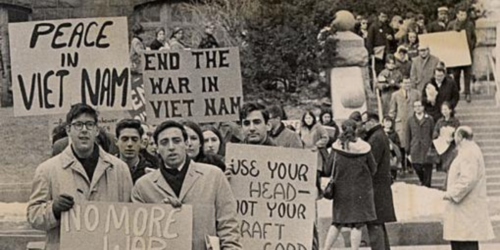
Archon Fung explores the history of student activism at Harvard and argues that such movements often bring a rare sense of “moral clarity” to universities nationwide — a crucial benefit of free speech and peaceful protest.

Commentary
Building effective channels for the interaction between AI developers and activist communities is critical for innovating social mobilization and strengthening civil society.
Feature
Erica Chenoweth shares a brief addendum to the Nonviolent Action Lab’s workshop held in December 2024 on how AI can influence social mobilization, for better or worse.

Feature
In response to the recent anti-democratic patterns in the United States, the Ash Center hosted a panel of Harvard scholars to discuss how civil society can resist democratic backsliding through social mobilization and organizing.

Video
In this webinar, panelists drew upon lessons from around the world about how civil society groups can protect and promote democracy and the rule of law during episodes of democratic backsliding.
Article
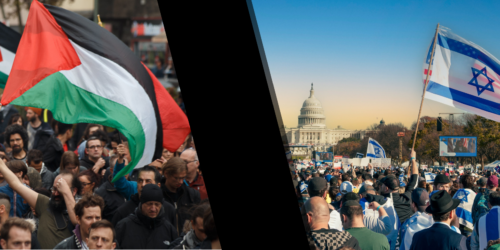
From 7 October 2023 to 7 June 2024, the Crowd Counting Consortium recorded nearly 12,400 pro-Palestine protests and over 2,000 pro-Israel protests in the United States.

Podcast
Host Jay Ulfelder and Hardy Merriman discuss Merriman’s latest guide, titled Harnessing our Power to End Political Violence, which empowers people from all over the country to band together and support democracy by rejecting acts of political violence.