Before the Civil Rights Act, My Great-Uncle from Roxbury Took on Pullman in 1954 — and Won
As we commemorate 100 years of Black History Month, it is worth remembering that progress was not driven by headlines alone. Beyond the monuments and courtrooms, everyday people took risks to demand dignity and fairness. Among them was my great uncle, whose pursuit of a promotion became a catalyst for change.
As Black History Month marks its centennial, we celebrate towering figures and landmark Supreme Court rulings. We quote speeches delivered on the steps of monuments and honor presidents whose names fill our textbooks. But civil rights history was not written only in Washington. It unfolded in rail yards, workplaces, union halls, and administrative hearing rooms — often because ordinary people decided they would no longer accept second-class status.
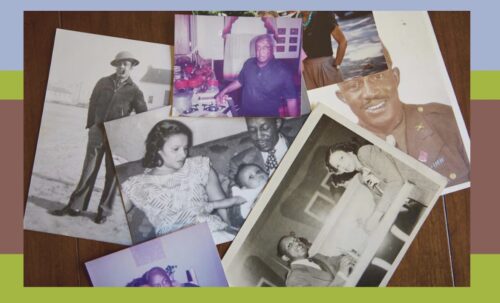
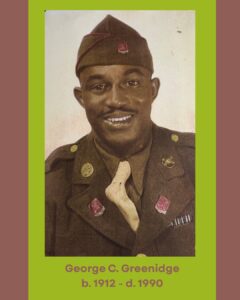
One of those people was my great uncle and namesake, George C. Greenidge of Roxbury, Massachusetts (b.1912–d.1990).
Courtesy: Greenidge Family
On May 11, 1954, the Massachusetts Commission Against Discrimination announced a landmark conciliation agreement with the Pullman Company. The company agreed that in Massachusetts, it would no longer restrict hiring for porters and conductors based on race, color, creed, national origin, or ancestry. The decision came the same year — and shortly before — the U.S. Supreme Court’s ruling in Brown v. Board of Education.
That announcement was not an abstract policy. It was personal. My great uncle filed the complaint in 1953 that led to the agreement. He did not set out to become a symbol; he sought a promotion.
A former Army radar instructor, he was qualified for advancement within Pullman’s sleeping-car service. Instead, he encountered a racial hierarchy that had defined railroad labor for nearly a century: Black men overwhelmingly worked as porters — long hours, low base pay, reliance on tips, and the emotional labor of service. Conductors, by contrast, held authority, supervised crews, and earned higher wages. Those roles were largely reserved for white men.
The barrier was not merit. It was race.
To understand the weight of his challenge, we must look further back. After the Civil War, the Pullman Company became one of the largest employers of formerly enslaved Black men. Beginning in the late 1860s, founder George M. Pullman (b.1831–d.1897) hired thousands as porters for his luxury sleeping cars. At one point, roughly 10,000 Black men worked for the company. White passengers commonly addressed every porter as “George,” a lingering echo of enslavement — calling a Black worker by the owner’s name.
The so-called “Georges” of Pullman endured a disciplined performance of dignity under constraint. In that composure lived both the cost of oppression and the quiet genius of survival.
Long before the terms existed, these men practiced what sociologist Arlie Hochschild (b.1940–) would later define in 1983 as emotional labor — managing expression and feeling for wages — while absorbing the daily diminishment that psychiatrist Chester M. Pierce (AB 1948, Harvard College 1952, Harvard Medical School) – (b.1927–d.2016) described in 1970 as microaggressions. To be called “George,” regardless of one’s actual name, was routine erasure. These experiences were foreshadowed in Paul Laurence Dunbar’s (b.1872–d.1906) 1896 poem “We Wear the Mask,” later powerfully echoed by Maya Angelou (b.1928–d.2014). The mask was both shield and burden: a practiced smile that concealed exhaustion, anger, and sorrow, yet safeguarded livelihoods and families’ economic futures.
The work itself was grueling. Shifts could stretch up to 400 hours a month. Pay depended heavily on tips. Black porters carried luggage, shined shoes, made beds, and served with constant deference. Yet paradoxically, these jobs helped build a Black middle class. Porters became community leaders and organizers, eventually forming the Brotherhood of Sleeping Car Porters under A. Philip Randolph (b.1879–d.1979)— the first all-Black labor union recognized by the American Federation of Labor. Still, racial ceilings remained. Black men could serve, but not supervise. They could make the beds, but not command the train.
Massachusetts often prides itself on its civil rights legacy. Yet this discrimination persisted here, in the North, in the 1950s. Occupational segregation was not solely a Southern phenomenon; it was embedded in American industry. The Massachusetts Commission Against Discrimination (MCAD) was formed in 1946 as the Fair Employment Practices Commission to enforce new anti-discrimination laws. It was later renamed MCAD in 1950 when its jurisdiction expanded to cover housing and public accommodations. It remains one of the oldest state civil rights agencies in the United States.
Nearly a century after Pullman began hiring formerly enslaved men, that ceiling was still intact when my great uncle filed his complaint. In 1953, Elwood S. McKenney (AB, Harvard College 1938) (b.1918–d.2003) determined that there was probable cause to believe discrimination had occurred. He served as the lead commissioner in Greenidge v. Pullman Company, a pivotal case before the Massachusetts Commission Against Discrimination. As one of the Commission’s original appointees, McKenney played an important role in shaping its early civil rights enforcement efforts. Before the Civil Rights Act of 1964, state agencies like MCAD were testing the limits of anti-discrimination law. Each finding strengthened the legal framework that would later underpin federal civil rights enforcement.
Today, as my great uncle’s namesake, I carry forward his legacy in a different arena of public service. As Commissioner and Chair of the City of Cambridge’s newly established American Freedmen Commission and past member of the City of Boston Reparations Task Force, I now work to document the lived experiences of descendants of enslaved Africans in this country and to recommend pathways toward meaningful repair. Emancipation in 1863 did not come with land, wages, or restitution. Nor did discrimination end neatly in 1954.
If we are serious about equity and inclusion in 2026, we must move beyond commemoration toward accountability. The work is not finished. And the stories and facts — however painful, and deeply ceremonial — must continue to be told not only during Black History Month but also reinforced afterward through government policy, truth-and-reconciliation processes, and reparative frameworks designed to close the racial wealth gap.
Progress has always depended on ordinary people who decide that enough is enough. My great uncle did not seek fame. He sought fairness. By insisting that the conductor was not a job reserved for someone of a different hue, he challenged a lineage of enforced subordination stretching from plantation fields to railroad cars. Civil rights history lives in our families. It lives in the names we carry. In 1954, one of them was George C. Greenidge, a man from Roxbury who refused to accept a ceiling placed over his ambition.
Our Charge — And What It Means for Today’s Policies
The public debate continues to evolve regarding how Americans—and Bostonians in particular—should respond to their historic links to slavery, and its enduring impact on descendants. Reparative processes take many forms. Across local, state, and national governments—as well as within corporations and universities—task forces and commissions are working to confront historical wrongs and repair the pain, harm, suffering, and humiliation they caused. As cities establish reparations commissions, we must remain focused on the ultimate goal: delivering restorative and reparative justice that meaningfully improves the lives of families today.
As Boston and Massachusetts mark 250 years since the American Revolution, the city is rightly celebrating a legacy of bold resistance, innovation, and a refusal to accept the status quo. But that same legacy places a clear responsibility on us today: to confront the enduring harms of slavery and systemic inequity with more than symbolism. If our city and state governments were to truly honor their revolutionary spirit, they must lead again—not just in remembrance, but in building policies that deliver lasting, measurable equity today. These policies and practices must be actively challenged and reshaped as part of a broader strategy to close the racial wealth gap.
Recently, Harvard University in Cambridge, MA agreed to transfer a set of historic images—believed to be among the earliest photographs of enslaved Black people in the United States—to the International African American Museum, located where the individuals depicted were once enslaved. Taken in 1850, these images are daguerreotypes—an early form of photography created 15 years before the 13th Amendment to the United States Constitution formally ended slavery.
The photographs were commissioned by Cambridge resident and Harvard professor of biology, zoology and geology Louis Agassiz (b.1807–d.1873) as part of now-discredited research intended to assert the superiority of white people. Agassiz promoted polygenism—the false belief that human races evolved separately.
The transfer of these images represents more than a symbolic act; it reflects a broader reckoning with how knowledge, institutions, and power have historically been used to justify inequality. Yet the release of these images and related materials must be understood as only an initial step. It must be followed by deeper examination and meaningful reform of the policies and practices that have long restricted access and reinforced inequity.
Harvard University’s reckoning with its ties to slavery—and the return of images commissioned by Louis Agassiz—signals progress. But acknowledgment alone is not justice; it must be paired with sustained accountability and structural change.
Our charge now is to translate reflection into policy: embedding reparative justice into housing, education, and economic systems; dismantling institutional barriers that continue to restrict access; and making targeted investments that close the racial wealth gap for descendants of those harmed. While milestones such as emancipation and landmark civil rights legislation laid a critical foundation, their promises remain unfulfilled within today’s systems.
Continuing the practice of sharing family stories strengthens the evidentiary record of our lives, transforming lived experience into powerful testimony that documents our families’ encounters with racism in the United States. These narratives must move beyond hidden folklore and into the realm of documented testimony—preserved, validated, and recognized as essential historical record. As political scientist and Duke University professor Candis Watts Smith (b.1984–) argues in her new book Black Evidence: A History and a Warning, American history has repeatedly dismissed, ignored, or denied the truths shared by Black people. By tracing this pattern from the 17th century to the present, she underscores the urgency of elevating Black testimony as legitimate evidence—both to correct the historical record and to confront ongoing inequities rooted in that long legacy of denial.
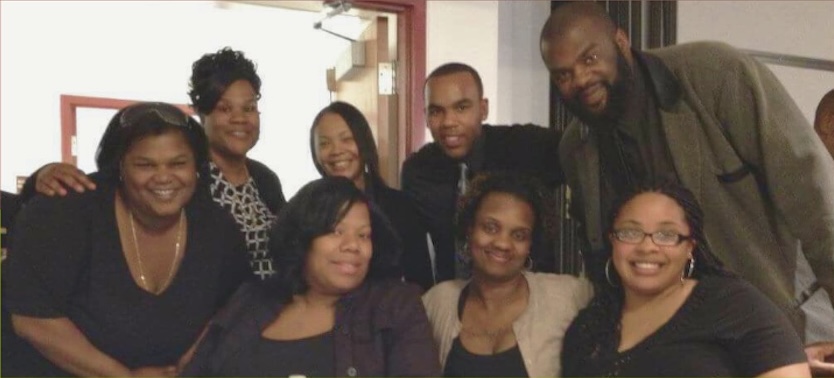
A family photo of George’s grandchildren, along with his great nieces and nephews. Courtesy: Greenidge Family
We must uplift and invoke the spirit, tenacity and documented voices of George C. Greenidge, Elwood S. McKenney and the many others who have challenged injustice—while also creating space for a new generation of leaders across government institutions, corporations, and universities to drive meaningful change toward true accountability, lasting transformation, and advancing equitable reforms.
This article is dedicated to George C. Greenidge’s great-grandson, Cyrus Greenidge. (b. 2020 –). Stay brilliant.
George “Chip” Greenidge, Jr. is a visiting fellow at the Harvard Kennedy School’s Ash Center for Democratic Governance and Innovation, and Executive Director and Founder of the Greatest MINDS, a nonprofit dedicated to creating a new generation of civic-minded leaders in Boston.
The views expressed in this article are those of the author(s) alone and do not necessarily represent the positions of the Ash Center or its affiliates.
Terms of Engagement – Can Ideological Diversity Improve Campus Culture?
Professor Eitan Hersh, the inaugural director for Tufts University’s new Center for Expanding Viewpoints in Higher Education, wants create a new campus atmosphere of “robust intellectual life, where norms of curiosity and goodwill reign.”
Terms of Engagement – Trump and His Billionaire Allies Make their Move on the Media
Harvard Kennedy School Shorenstein Center director and former TIME editor Nancy Gibbs joins co-hosts Archon Fung and Stephen Richer to discuss the impacts of billionaire media consolidation and pressure from the Trump administration on the flow of information vital to democracy.
Terms of Engagement – The Bombs to Ballots Fantasy: Can the Iran War Lead to Democracy?
Harvard Radcliffe Institute Fellow and Boston College Associate Professor Ali Kadivar joins Terms of Engagement hosts Archon Fung and Stephen Richer to discuss the prospects for democracy in Iran now that the country is at war with the U.S. and Israel.
Terms of Engagement – Can Ideological Diversity Improve Campus Culture?
Professor Eitan Hersh, the inaugural director for Tufts University’s new Center for Expanding Viewpoints in Higher Education, wants create a new campus atmosphere of “robust intellectual life, where norms of curiosity and goodwill reign.”
Terms of Engagement—How Does Our Civil Rights History Shape the Future of American Democracy?
Archon Fung and Stephen Richer invite Harvard Kennedy School Professor and civil rights advocate Cornell William Brooks to assess the evolution of America’s historical narrative and what implications history has on our contemporary political context.
Allen Lab Fellow Spotlight: Why a People-Centered Approach to American Democracy Matters Now
Allen Lab Policy Fellow Christine Slaughter makes the case that democracy must be understood through people’s lived experiences and agency, not just institutions.