Podcast
Inside Trump’s White House
White House reporter Annie Linskey offers a closer look at how the Trump White House makes decisions and what recent actions reveal about its strategy.
Podcast
As Venezuela grapples with authoritarian collapse and a controversial U.S. operation that removed Nicolás Maduro, Freddy Guevara joins the podcast to discuss what Venezuelans are feeling and what democratic renewal might actually look like.
Once one of Latin America’s strongest democracies, Venezuela has endured years of economic collapse, humanitarian crisis, and authoritarian rule under Nicolás Maduro. In January 2026, a U.S. military operation captured Maduro, a move the Trump administration has characterized as an effort to remove a dictator and stabilize the country. However, questions remain about its legality and the path forward for actual democratic renewal.
This week, co-hosts Archon Fung and Stephen Richer discuss the prospects for democracy in Venezuela with Freddy Guevara, a Venezuelan political leader and democracy advocate who has spent more than five years in exile after being targeted by the Maduro government. Drawing on his experience leading nonviolent resistance and surviving political persecution, Guevara shares how Venezuelans are really experiencing this moment and assesses Venezuela’s democratic prospects going forward.
Freddy Guevara is a Venezuelan political leader, democracy advocate, and Democracy Visiting Fellow at the Ash Center at Harvard Kennedy School. A co-founder of the Venezuelan progressive party Voluntad Popular, he served as Venezuela’s top-voted congressman in 2015 and vice president of Parliament in 2016. He was held as a political prisoner by the Maduro regime and has been in exile since 2021.
Archon Fung is the Winthrop Laflin McCormack Professor of Citizenship and Self-Government at the Harvard Kennedy School and the Director of the Ash Center for Democratic Governance and Innovation. His research explores policies, practices, and institutional designs that deepen the quality of democratic governance with a focus on public participation, deliberation, and transparency. He has authored five books, four edited collections, and over fifty articles appearing in professional journals. He received two S.B.s — in philosophy and physics — and his Ph.D. in political science from MIT.
Stephen Richer is the former elected Maricopa County Recorder, responsible for voter registration, early voting administration, and public recordings in Maricopa County, Arizona, the fourth largest county in the United States. Prior to being an elected official, Stephen worked at several public policy think tanks and as a business transactions attorney. Stephen received his J.D. and M.A. from The University of Chicago and his B.A. from Tulane University.
Stephen has been broadly recognized for his work in elections and American Democracy. In 2021, the Arizona Republic named Stephen “Arizonan of the Year.” In 2022, the Maricopa Bar Association awarded Stephen “Public Law Attorney of the Year.” In 2023, Stephen won “Leader of the Year” from the Arizona Capitol Times. And in 2024, Time Magazine named Stephen a “Defender of Democracy.”
The views expressed on this show are those of the hosts alone and do not necessarily represent the positions of the Ash Center or its affiliates.
Archon Fung: Hey, you’re listening to Terms of Engagement. This is season 2, episode 2, and I’m Archon Fung, professor at the Harvard Kennedy School and director of the Ash Center for Democratic Governance and Innovation.
Stephen Richer: And I’m Stephen Richer. I’m the former elected Maricopa County recorder, and now I am a senior practice fellow at the Ash Center.
Fung: Great. And as always, we’re speaking as individuals, not on behalf of Harvard or the Harvard Kennedy School or the Ash Center.
Richer: And as always, we love to hear from you. So please, please, please put your comments in the chat. We’d love to integrate them into today’s exciting conversation with somebody who has very much been part of this whole Venezuela conversation, has really lived an exciting life, is intimately familiar with many of the main players involved in Venezuela. But before we get to that, just again, we’d love to see your comments. And Archon’s got a few current event updates.
Fung: Yeah, a few current event updates. Yesterday was MLK Day. Hope everyone had a good holiday. I know some people had a long weekend; other people did not. Also, a couple of big news events.
One is there’s a lot of talk out of the White House about Greenland, of course. Danish troops have increased their presence in Greenland, and some European countries have moved also in there. There was a news report yesterday and this morning saying that Archbishop Timothy Broglio, who leads the U.S. Archdiocese responsible for pastoral care of the military, suggested that it may be morally acceptable for troops, U.S. troops, to disobey orders to invade Greenland. He is appealing to just war theory. He said, “I don’t see any plausible case in which an invasion of Greenland could be a just war.” So if we end up — if the U.S. — and I won’t go myself in all likelihood — but if the United States ends up invading Greenland, we may do an episode on just war theory.
Richer: How does that not apply then to all past wars? I mean, many sort of engagements have been suspect in terms of their justification, right? Especially the ex-post.
Fung: Yeah. And so, I don’t know him or, I mean, I was kind of surprised at this. He did say, look, I realize it’s a super difficult decision because obviously there’s a strong moral and ethical obligation to obey the hierarchy if you’re a soldier, also. But I guess the point is you have to consult your conscience about whether, you know, if it’s obviously not a just war, I think there would be some obligation not to participate in that.
Richer: Does the famous refrain about invading Russia during the winter, does that also apply to Greenland?
Fung: I don’t know how cold it is.
Richer: Yeah, I would imagine quite cold.
Fung: And then also obviously big in the news is Minneapolis. Nobody really knows what the future of that is going to be. There has been some talk of the president invoking the Insurrection Act. Evidently, Secretary Hegseth has put 1,500 members of the U.S. military on alert that they may be deployed in Minneapolis. And then the DOJ is reportedly investigating Governor Tim Walz and Mayor Jacob Frey for conspiracy to impede federal law enforcement based on what they said about the ICE and immigration enforcement presence. So, maybe we’ll do more on Minneapolis in a subsequent episode.
But on to Venezuela. The news is last week, opposition leader in exile, María Karina Machado, presented her Nobel Prize to President Donald Trump. And if we could have that picture. And then, several AI-generated deepfakes making fun of this have been breaking the internet. If we could have a couple of those. Here is Jabba the Hutt presenting a carbonized Han Solo, “Make Tatooine great again.” And then we have the alien, the exomorph, presenting his or her egg to Donald Trump.
But on a more serious note, our guest today is Freddy Guevara, who is a Venezuelan political leader and democracy advocate in exile from Venezuela. We’ll get a little bit more of his story in a moment. But the important kind of home front note is that Freddy is an Ash Center fellow, and it’s really been an honor and a privilege to be able to get to know Freddy and to be able to work with him over the last couple of years. He’s really kind of a model of somebody that combines political passion for democracy together with real intellectual curiosity about what we can learn from the experiences of building democracy in other places and seeing democracy erode and backslide in other places. And so welcome, Freddy.
Freddy Guevara: Hello. Thank you very much, Archon and Stephen and all the team. I’m very honored to be here.
Fung: Great. Honored to have you.
Richer: I mean, we’re going to get into the subject at hand, but I first want to ask you, how are you such a happy-go-lucky person when you were held in solitary confinement for a number of months? So I was doing a little bit of research on some of your past and reading some of the articles you’ve written and some of the podcasts that you’ve been on. And I didn’t realize that you were in prison for as long as you were and that you were part of solitary confinement. And yet when you interact with us, you seem just like another American who has lived a pretty charmed life and who has had gone through things. And like the worst thing that ever happened was your parents didn’t buy you the Nintendo 64 right when it came out.
Guevara: I think it’s because, you know, I’m alive, I’m free and I’m here with you. I’m at Harvard. So I think when you go through these things, you appreciate more things that you weren’t appreciated as more before. But at the same time, I compare myself to many of my fellow countrymen and friends of mine that are having a way worse time, but they also had a worse time than me in jail. You can always find someone who suffered more than you, too. So I think somehow you also feel grateful. I can talk about it. I have friends who can’t talk about it because the things they lived there were way worse. So, I think it’s these things, you know. I don’t know. I’m not sure if I can say that everything happens for a reason because no, but at least I think that you can make a good thing of every bad thing that happens to you, or at least you should try.
Richer: It was just powerful perspective for me while I was listening to some of your podcasts this weekend and walking and thinking about my normal human challenges. For those of you who aren’t familiar with Freddy’s story, as Archon mentioned, he was vice president of the Venezuelan parliament for a period of time. He then was placed under house arrest in the Chilean embassy for I think three years. He was imprisoned. He was in solitary confinement for a number of months before being exiled to Mexico and then eventually coming to the United States.
And then all of this happened. And as you recounted during one of those podcasts, it’s had a profound impact on you and the friends that you continue to communicate with.
Guevara: No, for sure. Because as I say, I think, and I like what Archon said, because for me, it’s an honor that someone like Archon can say what I feel that it’s my contribution from this new trench, right? Because when I got into exile, all my life I was in Venezuelan politics — all my life, since I was 20 years old, when I was a student and then became a student leader.
Fung: Freddy, what period was that in Venezuela when you were in student activism?
Guevara: I started in 2005. A big, let’s say, breakthrough was in 2007. I started in 2005. So 20 years ago. Whoa! 21 now.
Fung: Yeah. And so just for people’s background, we won’t go into the whole long history of Venezuela, but it was quite a stable and high-performing democracy for many decades from 1970. And then Hugo Chávez gets elected in 1998 in a very democratic, open election, he wins by a landslide, but then he begins doing things to chip away at the democracy and eventually gives himself the power to be reelected forever, right? And then you get involved. And what motivated you to get involved in activism?
Guevara: I mean, first I would have to say something that Venezuela was an outlier in the region in three main things. A, we didn’t have a war, at least for the previous 150 years, unlike, for example, Colombia, that’s our neighbor and they’ve been entrenched in this very horrible armed conflict. We had a higher GDP even than Spain and Italy during a lot of time. Of course, most of it was from the oil. And then also when most of the region was entrenched with authoritarian regimes, like military coups and things like that, Venezuela was a democracy.
Of course, nothing was perfect because sometimes we can, you know, had this idealistic view of, well, everything was perfect until Chávez came. Well, if everything was perfect, why people chose Chávez, right? Because Chávez didn’t make a coup d’etat. So I think in all of our societies, we can create this — we can get into this fallacy of thinking that, you know, these autocrats just came in a plane, you know? No, I mean, they’re also the byproduct of a society that has a lot of issues. But of course, none of the issues that we have before are compared to the ones that we have now.
So anyway, what I think was the history of my parents, both my parents were sons and daughters of democracy. Both came from lower income families, none of them at all engaged with politics or nothing. And when democracy came, basically they grew up with the democracy. So there were public funding schools, public funding universities, the mobility, scholarships from the state. So they were part of these Venezuelans that lived democracy not only as a right but also as a benefit.
And I remember when Chávez was campaigning, my father — I remember very clear — I was like, I don’t know, 10 years old, 12 years old, something like that. I remember my father went to a rally of him. He wanted to listen. And he said, you know what? This is a guy that speaks the best. And I asked him, “Are you going to vote for him?” And he said, no, hell no. I was like, well, why not? And he said, because I will never vote for someone who tried to kill in order to get to power. Because Chávez, before rallying to be president, he did a coup d’etat. He failed and he was in prison, right? Kind of like Hitler and Fidel Castro in Cuba. So that’s kind of the thing.
And I think their life — because since Chávez started arriving to power, he started creating these measures and taking a lot of promoting polarization and making a lot of things that my parents were like, you know, hell no, you know, we’re not going to do it. We’re not going to do this. So I think through them, I lived this, but in a very interesting way because they weren’t politicians, they weren’t in political parties. It was more like a civic duty aspect of it. Then, in the university, I will say more through the intellectual approach, I got into oh, I want to do politics, but really it was more about taking classes of Venezuelan history, political sociology, sociology. Those were the things that made me realize that, oh, I want to become a politician and not just a civil society democracy promoter. So that’s how I got into all of this.
Richer: I was hoping you can tell us a little bit about the transition from Chávez to Maduro, because in the minds of many in the United States, Chávez was bad. Maduro is bad and they didn’t really appreciate how the change happened and if it was meaningful or if it was just badness continued.
Guevara: That’s a very good question because I’m very tempted to reply with different approaches. One side of me can tell you that I believe that Chávez was worse than Maduro, at least in intentions and in terms of persona, you know, I think that he was worse in many ways.
However, if you see actions, Maduro was way worse. I mean way worse in terms of everything, in terms of repression, in terms of authoritarianism, in terms of economy. My interpretation is that Chávez didn’t rely on repression. He didn’t need it to use those tools because he also had popularity. So when you are a popular autocrat, you don’t necessarily need to use all of the other things. Add that Chávez also had the biggest price of oil, barrels, it was his era. He was blessed with that. So, he had a lot of money. He had popularity in the country. And he also had international support. When he was in power, you had Lula in Brazil, Bachelet in Chile. You had [Fernández de] Kirchner in Argentina. So there was a left-wave in Latin America.
And Chávez became also a symbol for the anti-imperialism. So fighting against Bush, the war in Iraq. So we kind of have this mysticism. I think what I’m saying is that I think he was as bad as Maduro, but he didn’t need to rely on those tools. Maduro, on the other hand, he inherited his regime with a big economic crisis, created also by Chávez, for sure. A lot of people said, no, the economic sanctions. Economic sanctions started in Venezuela in 2019. We were begging for toilet paper in 2014. So five years before all of the economic sanctions started. But anyway, so he had an economic crisis. He had very bad popularity. We were increasing the popularity in the opposition and a different international arena. And, he inherited also the system that Chávez built, because even if Chávez didn’t put 1,000 political prisoners — he had some political prisoners, but he was more targeted. But he controlled during the Chávez era. They took control of all the Supreme Court, all of the legislativem and all of the other military and police branches.
Fung: Yeah, so he develops this capacity to repress that then Maduro can use. And then just to highlight for folks listening how authoritarian it actually was, right? The Chávez-Maduro party loses the legislative election in 2016, you know, kind of dissolves the legislature. And then there’s another recent critical moment in 2024 when the party, when Maduro’s party loses in a landslide in 2024. And they don’t say that, but everyone in the international community absolutely agrees on that.
And just to run the tape forward, Kathryn Sikkink, our friend and colleague writing from Uruguay, writes, “Freddy, the last time we talked,” — she interviewed you in the IOP forum, I think, probably two or three months ago — she said, “at that time you supported the demand of many Venezuelans for military intervention.” That was before, obviously, the U.S. military intervention that actually occurred, in which it was a large operation, but Delta Force commandos captured Nicolas Maduro. So, Freddy, how and when did you learn of Maduro’s capture and what were your initial reactions to that? This happened just three weeks ago, right?
Guevara: Yeah, I was in Colombia, I was in Bogota. Actually, I was in Bogota just for one day because I was, this sounds like context, but it’s important so you understand what is happening in Venezuela. So, my father is in Colombia, and I wanted to spend Christmas with him and New Year’s Eve. However, days before I was going to buy the tickets, two Venezuelan dissidents got shot by a sicario, a hitman, ordered by the Maduro regime in Bogota. Two friends of mine who worked with me.
Fung: Oh, my God.
Guevara: That made me like, “Okay, I’m a little bit scared to go to Colombia.” So I say to my father, “Hey, you know what? I’m not going to do it.” I went to another place, but I want to be there one day. I just like to say, “Okay, it’s very unlikely that they’re going to find that I am there in just one day and organize something in just one day.” So I went, I stayed one night. I had a dinner with these two friends of mine. By the way, they both got six shots and they’re alive. Thank God. So, I had a dinner with them and my father. I went to sleep, and I wake up at six a.m. and everyone was calling me and was like, this is happening, this is happening. And I was sleeping.
My fiancée, she doesn’t speak Spanish at all. She’s from Austria. And we were sleeping, and I wake up and she hears me speaking Spanish, frankly. And then she hears — she sees me crying, but she was like, what is happening? You know, because I was crying tears of joy. So I know that for America, Americans could be like, how can a Venezuelan or any person in the world could cry of happiness if you just heard that your country was bombed. We weren’t happy because the country was bombed. We were happy because the butcher that has been persecuting me and many of my friends and millions of Venezuelans was captured, you know? So I think at that moment, you don’t really think about the legality. You don’t really care about that, right? It’s like if you’re being robbed in the street, it doesn’t mind if it’s a vigilante or a cop. You just want to be, you know, free of being raped or killed or kidnapped, right?
So to be true, what I felt was relief and happiness and hope. And I have to say that that’s what most Venezuelans feel. And now they have data. We all have data available. The Economist made this poll and 70% of Venezuelans agreed with what happened. and support the action and like — I know that for Americans who don’t agree with Trump, this might be conflicted, but it’s not about the policy in the United States; it’s about people seeing someone who finally did something from them.
Fung: So that’s a horrible person who had done terrible things to the country.
Richer: Lots of things I want to follow up on there, but I do want to pause to emphasize two points. One, that the context in which Americans see this military strike is very different than the context in which Venezuelans see it. We’re analyzing it through: is this the appropriate role of the U.S. government? Is this the appropriate — was the right legal steps taken? Should the Congress have been given advance notice? So on and so forth, or do I like or dislike Donald Trump can sometimes just be the lens through which this is viewed. So I want that.
And then, too, I think so often the U.S. military and our engagements abroad are described only in the negative sense. But at least for now, this has accrued a great benefit to many of those wins or at least provided a measure of hope. But when we talk about what the United States did and bringing it to the article that we read in the Journal of Democracy, which is why the United States shouldn’t run Venezuela, I guess the normal means through which a democratic uprising occurs is something more like the Arab Spring in around 2010, when it comes from the populace itself and there’s a movement to overthrow the autocrat. This one, as the article points out, is different in that the autocrat was removed by a foreign power and now we don’t really know what’s necessarily next. The popular movement didn’t wipe away all aspects of the autocracy. Maduro’s people are still very much in there. A lot of things have started to change, including political prisoners have started to be freed. But that’s the main point I took away from this paper. Archon, was that your assessment as well?
Fung: Yeah, I think that it’s a pretty interesting paper and people should have a look at it. For people like me, political scientists who went to graduate school in the 90s and 2000s, we kind of think of the transition to democracy as OK, in an authoritarian country, there’s a popular resistance. There’s a democratic opposition, a political opposition vying with the authoritarian. Sometimes, like in the Arab Spring, like you said, Stephen, the opposition gets enough power to overthrow. Right, and then usually there’s a pact of some kind. Sometimes there’s international forces outside that are looking in and kind of trying to tip the scales a little bit in favor of the democratic opposition and against the autocrat. You could tell a story like that about Myanmar and the ascendance of Aung San Suu Kyi, despite generals running a big, big show there.
But usually, if there’s an international thumb on the scale, usually that international thumb favors the democratic opposition after this moment of transition. And then there’s some kind of deal so that it’s not the case that the generals all get shot. Otherwise, they would fight to the death. You don’t want that. You want a deal of amnesty or exile or something else, some tolerable kind of cost, so that you can maybe move to some sort of democratic transition. But the weird thing here, at least from this transitions to democracy to the extent that there’s a transitions playbook, is that the outside force didn’t kind of put the thumb in the scale, at least not yet, for the Democratic opposition. It put its thumb in the scale — that is the Trump administration — for Delcy Rodríguez, which was, I guess, at least a surprise to me.
And then, Freddy, I wonder, what were your immediate reactions? And then we’ll go to, what’s next for Venezuela?
Guevara: I think that we are living history and a lot of things are going to be reshaped with this episode. I think there’s a lot of this, for example, ways to democratize a country. This will be a discussion. The international order is going to have another discussion with this United States foreign policy and relationship with authoritarian relief. So there’s a lot of things that are going to be affected by this. And I think in the years to come, we’re going to see the ripple effect of this. Because this was, at least as my understanding, I think it is the first kind of democratization process that has these particularities.
Because if you think about something similar, that was Noriega in Panama, it was a military invasion, right? Like a proper military invasion, boots on the grounds, planes, ships, and things like this, and a complete regime change. This is a tactical move to take the head of the corporation and then saying to the people in line, are you now willing to negotiate a democratic transition? So it’s a different approach that, of course, I want it to work because I’m Venezuelan, right? And I think everyone should hope to work, but it’s something new. So, I think it was very interesting.
Richer: Is it fair to call this democratization or isn’t that a to be determined? Isn’t this sort of just a, you know, coup is not really the right word because it’s not being done to take power. I guess some have called it a kidnapping.
Fung: Or a decapitation or something. I don’t know.
Richer: Venezuela is not a democracy as of today.
Guevara: Yeah, no, we’re in a process. I think there’s two statements that for me reveal very interesting approaches from the American administration. The first one is Rubio’s statement about the stages and the phases of this process. He mentions stabilization, he then mentions recovery, which includes there, the oil industry and the business for American. And in that second stage, he includes the freedom of political prisoners and some, let’s say, liberalization process. And then he says at the end is going to be the transition. But they haven’t at least publicly explained a time frame.
The other conversation, or the other statement, let’s say, is a question that was recently asked to Donald Trump when he was just previously, he was going to vote his chopper. And it was after Maria Corina’s meeting and someone asked him, OK, if you like Maria Corina, why you didn’t do this? Why you chose Delsy?
And he said, well, we learned from Iraq. We learned that what happened in Iraq is that we tried to change everyone and fire everyone. And this created a mess. These people became ISIS and blah, blah, blah, blah, blah. So I think this is kind of, at least it reflects what they’re saying publicly and probably what they’re thinking also, that this is a distinctive international approach in which it’s let’s promote a more reform path instead of a revolutionary change. That’s what I think that we can understand from the approach they’ve been assuming in the last weeks.
Richer: Can the next steps of democratization happen without the United States? Or does it require… Because the United States hasn’t provided weapons or funded the popular revolt. And the mechanisms, as Archon termed them, of repression are still very much in place. So I guess other than removing somebody who’s a very, very, very bad person and also was indicted in the Southern District of New York in the United States, how does this facilitate the next steps of democratization? Or can it be done without U.S. military involvement?
Guevara: The sad answer is no. I think that if the United States takes a step back and they say, we’re not going to, we’re going to take the gun out of the table of negotiation, the people from the regime will do whatever they want and they will just — business as usual. Because these people are not willing to give Venezuelans freedom, right? They’re just doing this because they are afraid of following the same path of Maduro. That’s what they’re afraid of. So if they feel that the United States is no longer capable or willing to enact or use force against them, they will do business as usual. So I will have to say that sadly, the reality is that we’ve lost many of our agency. Our task is to recover it, right? And to create and to be more in the field. But now the main player is the United States.
Saying that, I don’t think that we require boots on the ground or like arming people or something like that. Why? Because I think This is, you know, when we analyze the regime of Maduro, they have this characteristic that it was very complicated for a democratic transition but could help in this situation. What I mean is that, basically this was a regime who is more about the network of people who held together to protect their interests and they use a very small fraction of the army or the intelligence police to repress people, including military — half of the political prisoners are people from the military, so there’s been attempts of people from the military to revolt against the autocracy. However they’ve been using a lot of money, but also international support, we cannot ignore that the Cuban regime recognized publicly that 32 Cubans died in the action protecting Maduro. And we’ve been for years saying, “This is not about them, because when I hear people saying, oh, the severity of Venezuela” — oh, now you care about severity of Venezuela. But you didn’t care before, when thousands of Cubans, Iranians, Chinese soldiers and Cubans and Russians from the Wagner Group were assisting the repression in Venezuela.
You don’t care about the sovereignty. You only care if sovereignty is violated by the United States. But anyway. So what I’m trying to get with this is that when you have few people who control, then you don’t need to repress an entire army. We won in most of the centers in which the military voted. So this means that you don’t need boots on the ground to coerce all the military and the police. What you need is to have the pressure of some individuals to feel that they will follow the same path of Maduro if they don’t comply.
Fung: So it seems like a really difficult — so it was really insightful what you said, like, the revolutionary path is off the table, right? We just install Maria Karina Machado and see what happens in the next elections. That’s not what’s happening. What might happen, I think a left critic, an anti-militarist critic would say, “Well, you know, this is a Roosevelt story. I’ve seen this happen,” right? Franklin D. Roosevelt said of Anastasia Somoza that he’s a son of a — I don’t think Roosevelt actually said this; it’s attributed to him — that Somoza’s a son of a bitch, but at least he’s our son of a bitch. And what that meant was that the U.S. interest in Nicaragua is instability, not democracy. And Somoza can deliver stability.
And then so the left critic would say, well, the Trump administration is primarily interested in stability and maybe oil revenues for the U.S., not in democracy. And Delcy Rodriguez may be in a good position to deliver that. And then Rodriguez, I have to imagine she’s trying to play this really difficult role of kind of appeasing Marco Rubio, freeing some political prisoners, allowing some of the opposition to form and contest. And at the same time, knowing that she’s really wanting to keep a lid on that. And then, I was just thinking as you were talking, maybe from the U.S. perspective and from the Venezuelan perspective, maybe there’s like a little bit of a trilemma.
There’s democracy, stability, and doing what the U.S. wants. And it’s hard to get all three of those things at the same time. And so I guess what I’m afraid of, it’s going to be stability and what the U.S. wants, and democracy takes a backseat. But how can democracy take a front seat in your view?
Guevara: No, no, for sure. I don’t envy at all Delcy. You know, I mean, I know her and I know her brother and I’ve been in processes with them and I know who they are. So I don’t feel a lot of sympathy for them. And there’s people that say that her brother is the one that put me in jail, that it was his decision. However, you know, no hard feelings. Really, this is more about a bigger cause. But I have to say that it’s not easy to try to do that. But at the same time, they are in this strange position because if they comply with Trump, probably they will lose power. If they don’t comply, maybe they will be in prison.
But at the same time, during all this process, they can have internal divisions and the Russians, Chinese and Iranians and Cubans are not happy with this neither. The Kremlin just said yesterday that there’s no, I would say, scheduled meeting between Putin or conversation between Putin and Delsy. So they know that they also kind of like now lost this thing. And these are very revengeful people too. So I think they are trying to manage that. In our camp, I think — listen, we are not naive.
Of course, we understand that there’s a lot of interest in oil, and it’s not like we are super smart. It’s very obvious, they’ve been saying it. The Trump administration hasn’t been denying it, saying, no, this is also about oil and recovering national security and their interests and framing the situation in the America First agenda. So we know that, right? And it’s not like before or oil was being used for the good of Venezuela or oil was being given for free to Cuba, to China, and other international actors. So I think what we believe is that those things aren’t necessarily excludable. That you can achieve the alignment between American economic and stability and national security concerns with democratization.
And one thing that gave me hope, let’s say, there was in this meeting with the oil people. In that meeting, two things happened. One, many business, oil business people said, “But, you know, we need stability. We need rule of law. This is not just about you are showing us, you know, we need rule of law because oil investments are long-term investment.” You start seeing returns in 20 or 30 years. So, you know, Trump will not be in power in 20 or 30 years. So how is this going to be something that, you know, gives us confidence?
But the other thing was a question that one journalist asked to Trump, it says, “What is more important for you, stability of democracy?” His reply was, “Both are the same.” So I think that we can work on that thing and create this, you know, Venn diagram in which we can unite both things. That’s true. That’s the art that we have to make.
Richer: If American interests are predicated on stability and economic revival, you’re saying and maybe President Trump is saying too that the only true path to that long term is a democratic form of government, and I think that there’s a decent amount of precedent and past history to play that out.
I’m curious, one, if you have any questions for Freddy, please put them in the chat. Two, shorter term, are there any sort of bright red lines where you think that like Rodriguez has to accomplish this by this or else it’s going to sit poorly with either the Venezuelan public, very poorly, or with the Trump administration? Like, she’s got to release all the political — 1,000 political prisoners by, you know, two months, and we’ve got to have elections within seven months or anything like that to show that they are making progress on sort of this Rubio map and that they’re good stewards at least by the Trump administration’s assessment of Venezuela for the time being?
Guevara: I think, I mean, I know these guys, right? The Rodriguez siblings, let’s say. And I’m sure that they are doing everything to remain in power. And their main strategy is buying time. That’s what they want to do. And they’re going to try to survive until past midterms to see what happens. They will try to see if the Republicans lose Parliament, the legislative branch in general, so then Trump loses the capacity to exert more force on them, or they’re going to wait to see if the Greenland situation evolves and then shifts attention or they’re going to see what happens with China and Taiwan; they’re just going to try to wait. So this is why I believe that before midterms, we need to make them give something that they cannot take back.
For me, this is basically repression; we have to take away from them the capacity to repress people. This might look something as a different general attorney, so they cannot persecute people. Or that the intelligence units has to respond to some higher authority that are not the Rodriguez brothers, siblings. That’s one. And the second thing is, I think we need the date of the new election before that. Because once you have the date, things start, you know, the clock sticks moving, right? Ticking. And I think psychologically, this creates a lot of issues for the regime to stay. So I think those would be my answers regarding the timing, yeah.
Fung: So an elaboration of Stephen’s question, if you had one request of Secretary Rubio vis-a-vis Venezuela, what would it be?
Guevara: Well, now particularly will be the freedom of all political prisoners because it’s the most urgent and pressing thing. But after that, I think will be the dismantling of the repression system because that’s the only thing that keeps it in power now, right? So if we manage to dismantle that, then we don’t need anymore the Gerald errors in the Caribbean, we don’t need the Delta Force team; we can take our destiny in our hands. So, I think that’s the most pressing thing to dismantling the highly competent repression apparatus.
Richer: So, would you go back
Guevara: Sorry?
Richer: Under what circumstances would you go back and people who are in exile, who are part of the pro-democracy movement, go back to Venezuela?
Guevara: Well, me particularly, I am in a tier of people who we also need an amnesty law because we have an indictment or a judicial cause. So it’s not just about normal repression — normal repression, it shouldn’t exist, normal repression — but it’s not just about repression. There’s people like me who we have a judiciary case, so we need an amnesty law, right? But many other people who were out just for preventing or but they didn’t have a judiciary case but they were — how to say, they were rat out or harassed — and they left to prevent naturally to being captured, many of them are thinking to start coming.
Actually, yesterday and some days ago, people who were hiding — I don’t know if you have this word in English, clandestinity, you have that word in English, no?
Richer: Clandestine?
Guevara: Yeah.
Fung: They’re underground, I think.
Guevara: Underground. We have some people underground that now there are, you know, important leaders that were underground. Now they’re doing press conference saying, hey, I’m out of underground.
Fung: In Venezuela?
Guevara: Yeah. We’re having that now as we speak. So that’s good. And so, yeah, it depends on the case. In my situation, I will also need amnesty law or some kind of judiciary solution because legally, they can put me in jail, you know. So there’s many people like me. So we need to wait a little bit more.
Richer: We know you have a hard stop in just about two minutes. But Frank Miller asked in the chat, “Tell us about what does Venezuela look like 20 years from now? How optimistic are you?” Are 1,000 flowers blooming or facing the same challenges and looking to outside assistance 20 years from now?
Guevara: I mean, the old Freddy will reply with you a very idealistic approach. And I think life have taught me and my time at Harvard that things are more black and white. Probably we will change some of the problems that we have for others. But I am confident with the fact that we’re going to be able to help other societies that are facing the same challenges now to prevent that to happen. I think one of our main contributions will be how to not lose your democracy or how to not get into the point that you have to have something so dramatic as the dictator being taken away by an external military force to achieve freedom again.
And I think also that we’re going to be a main player, big player in the energy field. I hope that we do it in a way that doesn’t create more problems. But I think Venezuela will become a very big hub because in one side, we have the biggest reserve of oil in the world, the third in gas. We have a lot of also rare minerals that are going to be used in this AI race. So I think we’re going to become a middle power country that will have a lot of things to say in the international order.
Fung: That’s great. Thank you very much, Freddy. You know, the bottom line I’m hearing about what kind of help pro-democracy forces can use is creating space for them to grow and compete politically on something like an even playing field. It’s not coming in and running the country. It’s creating the conditions for the opposition, first of all, to be out of jail and to be free and to build strength and build popularity and then eventually win an election. Well, thank you very much.
Guevara: Thank you very much. I really enjoyed this.
Fung: Yeah. Great. All right. See you later, Freddy.
Richer: Archon, I’ve got one question for you.
Fung: All right.
Richer: Is this an indictment of the international order?
Fung: That’s what Freddy — you know, in this Boston Globe podcast, he was saying, and Kathryn raises this issue in the chat a little bit, Freddy was saying, look, you know, the international order just wasn’t working very well for us because it allowed this repression to occur for a long, long time. So… I mean, I take his point. You know, there’s some serious flaws in the international order does privilege sovereignty, even when it’s not democratic. And people, a lot of people in Venezuela and many other places suffered from that.
On the other hand, on the chat, Kathryn asks, we didn’t have enough time to take this up with Freddy. But, you know, she asked in the chat, “Does this create a precedent for other great powers in their own region?” E.g., does China get to do this to Taiwan? And, I think that’s a great big open question is what are the rules of the road? And this is, or, you know, if we do this to Greenland, then, what complaint does — can we lodge a complaint against Russia or China in the Straits of Taiwan?
So I guess I think at the end of the day, peace is sometimes a bigger value than democracy for me on that. Like, I don’t want to see China invade Taiwan. What do you think?
Richer: I think it is. And I thought that Freddy’s exasperation with the international order was very clear in some of his previous interviews. And I think it’s still just people — I think we need to appreciate that there are certain things that can only be done by the United States military and whether it was done lawfully and whether this was the appropriate role of the U.S. military, I don’t know that any other force in the world was going to do what we did. And I do think that it has the real possibility of inuring to the benefit of Venezuelan citizens.
But as far as sort of setting a precedent, I’m not even sure what the United States’ level of involvement is yet. And I’m not sure that anyone has really a great understanding of what that will be. And so I’m not sure what type of precedent that we are going to be setting. All I know is it was somewhat surprising to me that President Trump, who I remember so well on the 2016 campaign, was so critical of the Bush family and of Jeb Bush in particular, and of limiting the scope of the United States’ involvement throughout the world and that we are not the policemen for the world, et cetera, et cetera. I guess I would have been surprised a year ago that he was the one to remove Maduro from power.
Fung: Do you have a thought for why that is? I mean, a big plank of MAGA America First was, J.D. Vance put it, no more stupid wars, right? And maybe he would say, well, this obviously isn’t a stupid war. We did it right and it was quick.
Richer: I think that J.D. Vance would say this isn’t a war. There are no — There’s no U.S. military occupation of Venezuela. He was part of the drug syndicate that was funneling drugs into the United States and that he was indicted in the United States. That being said, that same rubric extends to a lot of leaders in Latin America in particular. And I don’t think it’s the Trump administration’s ambition to be going and checking off all of them in all of Latin America. And I certainly don’t think that’s what many MAGA voters contemplated in voting for him in 2016 and in 2024.
But I think both the foreign policy of the Trump administration and of the MAGA movement is a little bit of a fluid thing. And so, who knows? Maybe it will have to be written after all this is done.
Fung: Yeah, so we don’t know where this is going to land. You know, on a personal note, I have to say that over the last few months in talking to Freddy, and it’s part of obviously the objective of this livestream, but, you know, a bunch of conversations around campus, I’m pretty anti-U.S. intervention in just about any circumstance. And talking to Freddy has really been enlightening and challenging. And, you know, I think I’d still have very grave doubts about this one.
But, I think you have to take seriously someone from Venezuela who says, “I think this is going to be a good thing for my country,” who’s so thoughtful and so committed to democracy as a way of governing is really enlightening and challenging for me.
Richer: And he says that even if you ascribe the most cynical motivations to the United States. So I know a number of people in the comments have been saying, isn’t this just all about oil? I think Freddy would say, if it is, we’re still really happy to have Maduro out. We’re still really happy to have a number of political prisoners freed. And guess what? A lot of that oil revenue was going to Iran, was going to Russia. And so, if it’s going to the United States instead, then, you know, it doesn’t make all that much different. And we’re down one dictator.
Fung: And more free. And that’s what counts at the end of the day. I mean, I think you have to take that really, really seriously.
Richer: And so I do think that he has been a healthy perspective on sort of some of the potential merits of American force. However, I think maybe even more than Freddy, that there is a timetable. And if things don’t start moving toward a democracy over the next few months in Venezuela, then I think that the way in which the global community, maybe even the way in which Venezuelans begin to see the removal of Maduro, fundamentally changes. Whereas I think most, almost everyone in the world sort of says, even if we didn’t like exactly how you dotted the i’s and crossed the t’s, we’re pretty happy he’s gone. But if it’s just replacing one dictator with another, then maybe not.
Fung: Right. And I think you’re saying there’s a window of focus and opportunity now. And, you know, if too much time passes, then the Delcy Rodriguez authoritarian regime kind of solidifies and ossifies.
Richer: And if we go two years without having elections in Venezuela, then I think that’s sort of the … It’s harder to say the Maduro removal was just this global humanitarian boon, even if unlawful, under the United States law. Which I’m not taking a position on that. I refer you to Jack Goldsmith at Harvard Law School if you want to know whether or not it was a legal action.
Fung: Right. I don’t know enough to say. All right. Great. So we are out of time. We’ve gone past, but this is just a super discussion. Just really privileged to be able to talk with Freddy. As a reminder, please send suggestions to info@ash.harvard.edu. Thank you all.
Richer: And thanks to the production team as always.
Fung: Yeah. Thanks to Colette and Courtney and Dana and Evelyn. Hope to see everyone next time. Take care.
Podcast
White House reporter Annie Linskey offers a closer look at how the Trump White House makes decisions and what recent actions reveal about its strategy.
Podcast
Jonathan Rauch joins the podcast to discuss why he now believes “fascism” accurately describes Trump’s governing style.
Podcast
Drawing on new data from more than 10,000 Trump voters, this episode of Terms of Engagement unpacks the diverse constituencies behind the MAGA label.
Podcast
White House reporter Annie Linskey offers a closer look at how the Trump White House makes decisions and what recent actions reveal about its strategy.
Additional Resource
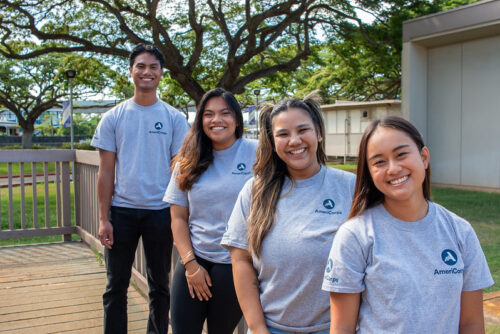
In a new essay, The Case for Building an AmeriCorps Alumni Leadership Network, Allen Lab Policy Fellow Sonali Nijhawan argues that the 1.4 million Americans who have completed national service represent an underleveraged civic asset. Drawing on her experience as former Director of AmeriCorps, Nijhawan outlines a roadmap for transforming dispersed alumni into a connected leadership network capable of reinvigorating public service, rebuilding trust in government, and strengthening civic participation.
Article
Economists and policy analysts broadly agree that more housing needs to be built in order to reduce costs in America’s most expensive cities. Using a novel survey of mayors of mid-sized and large cities to explore mayors’ views on the roots of America’s housing crisis and what solutions they believe will most effectively address their constituents’ housing challenges, the authors summarize mayors’ attitudes and perceptions on key issues related to expanding the housing supply, reporting how well these views correlate with mayors’ assessments of their own cities’ supply needs.