
Podcast
Inside Trump’s White House
White House reporter Annie Linskey offers a closer look at how the Trump White House makes decisions and what recent actions reveal about its strategy.

Podcast
Co-hosts Archon Fung and Stephen Richer weigh conflicting predictions for the 2026 midterms and explore how to safeguard a free and fair election.
The 2026 midterms are shaping up to be unlike any in recent history. While these elections traditionally serve as a standard check on the presidency, today’s landscape of federal pressures and localized flashpoints has many questioning if the old rules still apply. Are we looking at a routine political correction, or an unprecedented “election meltdown”?
In this episode, co-hosts Archon Fung and Stephen Richer weigh the “business as usual” outlook for the midterms against the increasingly dire warnings. They discuss various 2026 scenarios as well as practical strategies to safeguard a free and fair process.
Coming soon!
Archon Fung is the Winthrop Laflin McCormack Professor of Citizenship and Self-Government at the Harvard Kennedy School and the Director of the Ash Center for Democratic Governance and Innovation. His research explores policies, practices, and institutional designs that deepen the quality of democratic governance with a focus on public participation, deliberation, and transparency. He has authored five books, four edited collections, and over fifty articles appearing in professional journals. He received two S.B.s — in philosophy and physics — and his Ph.D. in political science from MIT.
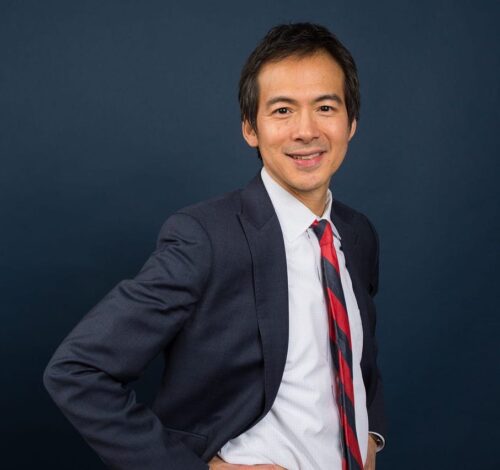
Stephen Richer is the former elected Maricopa County Recorder, responsible for voter registration, early voting administration, and public recordings in Maricopa County, Arizona, the fourth largest county in the United States. Prior to being an elected official, Stephen worked at several public policy think tanks and as a business transactions attorney. Stephen received his J.D. and M.A. from The University of Chicago and his B.A. from Tulane University.
Stephen has been broadly recognized for his work in elections and American Democracy. In 2021, the Arizona Republic named Stephen “Arizonan of the Year.” In 2022, the Maricopa Bar Association awarded Stephen “Public Law Attorney of the Year.” In 2023, Stephen won “Leader of the Year” from the Arizona Capitol Times. And in 2024, Time Magazine named Stephen a “Defender of Democracy.”
The views expressed on this show are those of the hosts alone and do not necessarily represent the positions of the Ash Center or its affiliates.
Archon Fung: Hey, you’re listening to Terms of Engagement, episode 28. Today, we’re going to talk about the midterm elections, a little bit overdue conversation. I’m Archon Fung, a professor at the Harvard Kennedy School and faculty director of the Ash Center for Democratic Governance and Innovation.
Stephen Richer: And I’m Stephen Richer. I’m the former elected Maricopa County recorder, which is hopefully of great salience today. And I am a senior fellow at the Ash Center.
Fung: So Terms of Engagement is a weekly live conversation, and we’re talking about democracy today. As always, Stephen and I are speaking as individuals and not on behalf of Harvard University or the Harvard Kennedy School.
Richer: And today we are not bringing in a guest, which means that you all are our guests. And so instead of posing questions to our guests, we hope that you will pose some questions to us that we’ll do our best to answer. So please put them in the comment box. We always appreciate those. They are best if they end in a question mark, however. Archon and I are well aware of our individual flaws; I’m especially aware of my flaws starting with my office, which I promise, eventually, I will move into the new office and then I will have a more visually pleasing background, maybe some bookshelves like you have, some better lighting, it’s going to be — maybe I’ll just be better looking too as a result of the new office — and all that stuff. But so fire away with some questions.
So, turning to the topic at hand, about everything imaginable has been happening in terms of election administration, despite the fact that primaries haven’t even started yet. They don’t start until next month, they start in March. But we’ve been hearing all sorts of developments pertaining to election administration, whether it’s DOJ suing different states for voter lists, whether it’s the FBI’s raid of Fulton County, whether it’s the president talking about the nationalization of certain election jurisdictions, whether it’s the SAVE Act, whether it’s the Make Elections Great Again Act, whether it’s gerrymandering. What else is, I mean, not that that’s an insufficient number of topics, but a lot has been happening.
Fung: A lot has been happening. And so we recommended a couple of articles on social media for this discussion. And one is a December 2025 article by David Graham, in The Atlantic called “The Coming Election Mayhem.” And the second one is an article from February of this month from David French called “This Is Not a Drill.” That’s the title. And so, both David Graham and David French are trying to sound the alarm bells. And they, in their pieces, express a huge amount of worry and concern that there will be an election meltdown in 2026 and that it won’t be free and fair.
What’s your level of alarm? Zero is, you know, no salsa on the taco to five is like the North Carolina Reaper pepper. Where are you on the alarm bell, Stephen?
Richer: I wanted to ask you first, I always think this is kind of a cheap question, like when doctors ask you on a scale of one to ten, you know, how much pain are you in? It’s like, well, I’m not experiencing this on a regular basis where I know all the potential gradients. I will say that especially within the election community, I was on the lower side of being worried about the election in 2026 — until recently, I think Fulton County really changed my view of what’s possible and what the federal government could potentially do in the 2026 midterm elections.
But the reason why I never … I wasn’t at a panic mode or I wasn’t thinking that we were going to have what was it called the meltdown in the Graham piece was because election administration in the United States is so disaggregated that it’s really hard to disrupt the system there are over 9,000 voting jurisdictions in the United States that translates to like 100,000 different voting locations. Thousands and thousands, not 100,000, but a lot — thousands and thousands of election workers, different state laws, different technology, different tabulation, paper ballots, all that jazz makes it very challenging for a small group of people to effectively go in and flip a switch that disrupts American elections. That’s why I thought some of the allegations following the 2020 election were very fanciful at best. And that’s why I’ve been reluctant to say “this one person,” whether it’s the president or whether it’s somebody in the president’s orbit or whether it’s somebody of an opposing political vantage, could disrupt American elections wholesale.
That being said, the federal government, the FBI’s raid of Fulton County, I think took me to places that I wouldn’t have previously predicted were even possible. And so, if the federal government gets involved and does something like seizes ballots in the middle of an election before the jurisdiction can even tabulate them, then I think we’re in a whole new game and maybe I need to get a little more creative in my thinking. So, so I would say on a scale of one to five, I’m like somewhere between a, two and a three right now, but I was definitely more of a two previously. So maybe I’ll say was a two now upgraded to three. What about you?
Fung: Oh, interesting. I want to get into David Graham’s scenario in a second because he opens his piece with Maricopa County, in Maricopa County. So I guess … It’s so hard to say. I would be at a four if, you know, come August, it looks like control of the House is down to a small number of jurisdictions that are close. I think right now I’m at a three maybe because of, and it was before Fulton County. So I guess I’m thinking, one way I’m thinking about this is, does — and we could talk about this — I think the primary threat, I’ll just be explicit, to free and fair elections 2026 is President Trump and the Republican Party and the incentives that they have to maintain control of both houses of Congress.
And then so I guess I think about the alarm bells, you know, kind of a little bit of a criminal procedural trope. So, is there motive? Is there means? And is there opportunity to mess with the election? I think that there is clearly —
Richer: Motive, means, opportunity. OK.
Fung: Yeah. And so motive is pretty clear. And I think we see that in the 2020 election and the recent pardoning of all of the J. 6th. people, so there’s plenty of motive to alter an election in order to seize victory and maintain political control. And is there means? I think that’s a lot of what this discussion is about, is how could it actually be played out. And I think compared to 2020, President Trump has much greater means at his disposal and in particular politicized control of the Department of Justice and the FBI. So the means is there.
And then it’s that opportunity that I don’t know about. The opportunity is — Well, if it’s a blowout in either direction, then I don’t think that too much messing around with election outcomes is on the table. But if it’s really close in terms of number of seats and the margin of victory for those seats, then I think there’s opportunity.
Richer: Okay. So first put it on your hot sauce scale, one to five. Where are you?
Fung: Three maybe right now. It would crank up to four after primaries, once we do an analysis of what the open seat or the potential flips are.
Richer: Ao we’re similarly positioned. Now, I’m sympathetic to everything you just said, I think you lay out the three points nicely, but what I never heard was, okay, well, tell me what that means in terms of brass tacks. Because I actually don’t think that everyone would always point to, well, ICE is going to show up at a few voting locations. And I agree that that would be problematic and that would face a lot of legal scrutiny. And I think it would be unjustified. That being said, I don’t think it would have a materially disruptive impact on elections.
Elections these days, you can vote early, you can vote by mail, you can go to different locations in many instances. I think it would be hard to station ICE in any significant number of voting locations. And then I think people would say, well, you know, President Trump’s going to try to do things. And I said, well, you look at his executive order and that was enjoined. You look at what they’re trying to do in Congress and it doesn’t seem like that’s moving as fast. And honestly, like if they change something in law and Congress, like that’s the legal process. That’s appropriate. And so my pushback to you is how does that manifest?
Fung: Right. And so I think there’s one category of changing how easy or difficult it is to vote and that’s the Save Act. That might be ICE around polling places. And that one’s tricky because we won’t actually know whether that made a material difference to the outcome of the election. That’s like, because you can never really tell what the counterfactual was. Right? So let’s set that aside. And I think we’ll talk about those things later in this episode or in subsequent episodes, which would be really interesting because you’re just much more informed than I am about the differences that something like the SAVE Act or stricter voter ID would make.
But I want to dive into David Graham’s brass tacks that he opens with, right? So his scenario in that Atlantic piece, he opens up and says, OK, it’s election night and by whatever it is, he doesn’t say which time zone. He doesn’t say which time. It’s pretty clear that control of the House falls down to two seats in Maricopa County. And I didn’t even know this, but Maricopa County is huge. There are like 10 or 11 House seats in Maricopa County.
Richer: Yeah. So Arizona… Arizona has nine and seven of them touch Maricopa County, at least of our nine House seats, just because Maricopa County makes up 60% of the population of Arizona. Fortunately, only one of those right now is highly competitive. So not to be the fact checker on David’s piece, but okay, so the scenario begins that way.
Fung: Okay, so it begins that way, and it’s pretty gripping, right? So the whole country, control of the House, depends on a couple seats in Maricopa County. And the Republicans are ahead, but there’s a bunch of mail-in ballots and provisional ballots that haven’t been counted yet. And the Republicans declare victory, even though the count is still going. And by Wednesday morning or the middle of the night on Wednesday, it looks like the Democrats are pulling ahead. But just by a few hundred votes. And then allegations of vote fraud and vote tampering roll in. And then the crux of it, the brass tacks is that the FBI and the Department of Justice want to seize the ballots and the machines. I guess it’s the machines, right? Because it’s electronic voting. And Secretary Fontes of Arizona says, no way, all the county supervisors don’t return the calls of the Trump administration on advice of counsel.
However, in this scenario, the county recorder, your old job, has a call with the president and then hands over the machines to the federal government. The chain of custody is broken. There’s actually no way to know who won those elections. The two Republicans get seated. The Republican Party maintains control of the House. So, what do you think about that scenario?
Richer: So I would have said that was far-fetched. And in fact, I think David did interview me for this piece, and I come in later in the article, and I push back a little bit. And I would have said, when David did write this, I probably said, I’m sympathetic, and it’s good to brainstorm. It’s good to battle plan about these types of scenarios. But I think that the probability of this happening is very, very slim. At that time, I would have said, the main weapon that can be used against the democratic process and election administration will be what we’ve seen over the past six years, which is loss of confidence in the process. And then there will be a question of whether these people are validly elected in the minds of many Americans. And that might lead to some sort of contestation with them being seated in the United States House or the United States Senate.
That being said, again, I keep going back to Fulton County and the FBI seizure of all of the 2020 election materials changed the game for me because it showed that the federal government, federal law enforcement is, has a heightened appetite for what it might be possibly up for. I still don’t think it’s likely. I still don’t think it’s likely, especially in Arizona, for a number of technical reasons. But if it was a very small percentage now, it’s at least double that very small percentage in my mind now. So I find David’s piece to be much more credible. And so perhaps apologies, David, if you’re listening on that front. Keep the questions coming in.
Nufot, N-U-F-O-T-9-8-1, “tell us you don’t live in the South without saying you don’t live in the South.” That was about showing up to voting locations, having law enforcement show up to voting locations. Point taken. It’s a good one. I am a Westerner. I vote West and Wild. And I also know that there’s a rich history in this country of law enforcement deterring people from the polls. I think in every state, the number of channels by which you can vote has expanded. But I realize that you are correct in that in some states, it has definitely expanded more than others.
So yeah, so the David Graham thing, I think is … I think that the real problem would be not the lead-up necessarily is where I was fearful. And then I thought if the ballots are tabulated, you’re always gonna have the paper ballots. 97% of Americans vote on some form of paper ballot. And you can always go back to those and you can audit those and those will ultimately answer any question and those will ultimately resolve any court dispute. But if the federal government just seizes them, especially if they seize them after they’ve been cast, but before they’ve been tabulated, then somebody like me, after the 2020 election, it would be hard to say like, well, we can just go through and tell you guys, we wouldn’t even really know what the count was in the first place, or if all the audits and reconciliations came out. So, I do think that is the great disruptive Achilles heel.
Fung: Wow. So why don’t you take a minute or two and explain the Fulton County, what happened there? Because I’m not sure everybody understands that. And I didn’t know that for you that was a little bit of an inflection point because some people would read Fulton County and say, oh, that’s backward looking. What the president cares about is a 2020 election and wants an accurate reading on his lights of what happened there. And that’s what the Fulton County seizure was in the service of. But you’re saying maybe it says something about the future too.
Richer: Yeah, I don’t know. The motivation may very well have been backwards looking. Obviously, President Trump doesn’t feel that he lost the 2020 election. I think it’s a point of pride for him. I don’t think he likes the idea that he lost to Joe Biden. I think it’s fair to say he doesn’t hold Joe Biden in very high esteem. And so I think that this is something that, you know, he continues to want certain people within the federal government to look into. So they did, and they took a step that is, I think, unprecedented, certainly something that hasn’t been envisioned in a long time, which is that the FBI executed a search warrant, meaning that they went to a federal magistrate judge in the Northern District of Georgia, which is where the Atlanta metro area sits. And they said, here’s our reason for having probable cause to believe that if we seize this material, we will be able to yield evidence of a crime and two particular crimes: one relating to fraud in the 2020 election and two relating to the destruction of materials from the 2020 election.
And they took that, they got it, and then they went and the FBI picked up over 600 boxes of election materials from the 2020 election that were in a Fulton County warehouse. Director Tulsi Gabbard of the National Intelligence Service was there. I think the deputy director of the FBI was there. It was a big operation. And now we don’t really know what they’re going to do with the materials other than what we have in the affidavit that was included in the search warrant. But the affidavit in the search warrant also revealed that in establishing probable cause, they were relying a lot on past theories and past allegations that had already been analyzed and had already been investigated and had already been assessed. And that’s why I wrote in an article today for The Dispatch that I think that this affidavit and this search warrant was resting on very shaky legal ground.
But to the conversation we’re having right now, it just showed me that like things that I thought the law enforcement would never do, they did do, even though it’s five-and-a-half years since the 2020 election.
Fung: Right. And in a live situation in November 2026, the temptation might be much higher. One of the from, K. Moncla: isn’t it true that Fulton County had refused to permit the state election board, the DOJ, and the FBI from accessing the paper record on which the entire election is based? I don’t know anything about the — I know there were a bunch of efforts to validate and recount, but I don’t know the details, and you might. I don’t know.
Richer: Yeah, well, you know, few people know this better than Kevin, who actually I believe is the K. Moncla there. So, Kevin is one of the people that put a lot of these claims forward to the Georgia State Election Board and actually also wrote the 263-page report that I think a lot of people are crediting as being the impetus for the FBI’s probable cause affidavit. It’s right. There was a long-going dispute between the Georgia State Election Board and the Department of Justice with Fulton County about whether or not they could have this material. And Fulton County took the position that it couldn’t just hand over this material absent a court order.
And so then I think the DOJ was in the process of doing that. But just about one or two weeks before the FBI raid, the Georgia State Election Board had secured a ruling from a state court that they could take some of this material. And actually, sort of in an irony, some of the members, some of the MAGA members of the Georgia State Election Board were a little bit ticked off that the FBI took the material because they said, well, we were subpoenaing that material and we wanted to look at it first.
But again, let’s contextualize this. This was an election that was investigated, assessed, had court cases over, and still the FBI saw fit to deploy significant resources to pick up these ballot boxes five-and-a-half years later. So if we’re talking about moving forward, then I think that shows, again, a heightened appetite.
All right, we’ve got a lot of questions here. Do you want to turn to the other article or do you want to — why do you think, like, do you think that, so David French wrote the article in The New York Times that we shared, and obviously David Graham wrote this one in The Atlantic. Do you think that these articles achieve anything, accomplish anything? If so, what?
Fung: I think it goes to Joan’s comment. Joan Lancourt 209, says you both are doing a massive disservice to the listeners by calling it a three because to counter the, even the most minimal interference, we need to be prepared for the worst. So I think that my guess is that David French, I don’t know. I haven’t talked to either of them about that, and David Graham, that that’s what they’re trying to do is sound the alarm to the people who, to the low-information voter — the low-information voter doesn’t read The Atlantic or The New York Times — but to people who may not be paying as close attention to say, hey, look, there’s a real possibility of election manipulation and meltdown in a way that we just haven’t encountered before in elections past. So that’s what my guess is.
Richer: And do you think that it’s sort of morally incumbent upon us to talk about it in four or five terms, even if we don’t think that that’s the probabilistic outcome? Because the end result, if it does happen, would be so catastrophic that we need to think of it in four or five terms in order to be ready.
Fung: No, I don’t think so. I think, at least I feel like it’s incumbent on me, to try to make the best actual assessment that I can and then very clearly express like three is way too high. Like zero is the right number for me, right? Three is ridiculously high. And so that’s what I think.
Richer: Yeah. Okay. We’ve got Monty Murchie. Are you confident whether the level of institutional trust will be maintained this electoral cycle? So I’m going to try and put this in the chat. But some friends of ours and collaborators with the Ash Center, I just handed, no, no, I think, no, whoops, sorry. Just shucks. Well, Thad Kouser, who’s a political scientist at UC San Diego, just has a piece out there, or there was a news story in the LA Times about confidence in election administration. Following the 2024 election, confidence in election administration among Americans went up significantly. And according to this article, it was about 75% of Americans had confidence that ballots were being lawfully and accurately counted.
Now, just a few months before the 2026 midterm cycle begins really in earnest, it’s gone down to 60%. And he cites a number of factors. He cites some of the things that the president has been saying about mail ballots, some of the things that the president has been saying about non-citizens voting. But then he also cites sort of on the left, too, that there’s a lot of worry that maybe they read pieces like the ones from David Graham and David French, and they fear that the president’s going to do something to disrupt elections. And so it’s being brought down on both sides, which makes me sad because obviously at the Ash Center and at other places, we’ve been brainstorming over the past years of how do we garner more trust in election administration. But now we’re coupling that with like, how do we be responsible in talking about potential risks to election administration? So I don’t know. Any brilliant thoughts on that?
Fung: Yeah. So that 60% is not just among Republicans. It’s like general population. It’s everybody.
Richer: America, American voters.
Fung: Yeah. So I wanted to talk about the background condition. One belief that’s feeding some of that low number, that 60% I regard as extremely low for confidence in election administration, is the belief among many on the right that there’s this tie between election fraud and immigration. So the 2020 theory and the possibility of massive voter fraud in 26 and 28, the stealing the election. And I believe House Speaker Mike Johnson, Stephen Miller, Donald Trump himself have articulated various versions of this theory, which is that Democrats want large numbers of noncitizens to come into the country and vote in order to maintain power. And at least what I have trouble fully internalizing — and I wonder if you do too, or no, it’s easy, you believe this is true — in polls, 80% of Republicans in recent years report being very concerned about non-citizen voters. In tracking polls, 50-60% of Trump voters report believing that millions of votes were cast illegally by non-citizens in recent elections. And so this is like a blue and a red world. We just believe that there are different election realities And this like immigration election fraud nexus lays the groundwork for ICE election. Because if you believe that, then of course you want to prevent voter fraud and you should take all of these measures to do that. And many of those measures will be targeted against immigrants. So like how are you grappling with the two realities issue?
Richer: Yeah, well, I think Joan in the comments would say that we need to grapple with it more seriously, that I need to stop pretending about things that ordinarily wouldn’t happen because things are happening. And she points to Minneapolis. And so the probability of ICE being out at these voting locations should be higher than maybe what it is currently, in my mind at least. So yeah, this has obviously been a persistent refrain from many election skeptics, not even just the last six years, because this goes back a long time, that lots and lots of non-citizens, especially illegal immigrants, are participating in American elections.
And I’ll admit that I started from a point of skepticism about that allegation just because I think that the great blessing of coming to the United States is that you have individual security and that you have economic opportunity. And I find it sort of peculiar to think that somebody would be willing to gamble that, to risk that, also that you can cast one extra vote in a contest that might have millions in your state and over 150 million if it’s the presidential contest. And so I was always very skeptical.
And then within the elections community, people would say, well, nobody’s hardly anyone’s being prosecuted for this. There aren’t massive prosecutions of non-citizens voting. And if you had millions of them, it seems like there would be more than like 20 over every 10 years or something like that. But I also found that dissatisfying because just because something’s not prosecuted doesn’t mean it doesn’t happen. And so that’s why I’m excited that a number of jurisdictions in recent years and even in recent weeks have been affirmatively investigating their voter lists, have been running it against all records that they have, and have been trying to find out if they have any non-citizens on their voter rolls. And the answer is they do. But the answer is they have a very, very, very small number of them. And the number of those people who are actually voting on elections is even smaller.
So two things from that is, one, I want to applaud the election administrators in states ranging from Utah to Michigan to Idaho to Louisiana who have been doing that. But two, we can have a conversation about public policy. And I kind of want to do that a little bit about documented proof of citizenship. But the reality is that there aren’t a lot of non-citizens currently participating in American elections.
Fung: Right. And how — I guess I think that unless — most voters kind of agree on, come to agree on that reality, then trust in election administration is not going to creep up much beyond that 60, 70%. Right. Like this idea that there’s millions of noncitizens, immigrants voting in elections. Like if you think, if I thought that was true, I wouldn’t trust Stephen Richard in Maricopa County either, right? I would want a whole lot more election integrity measures. I just believe that’s not true. So do you think that this the kind of research, the running the voter rolls to establish how many people are verified citizens and what those percentages are, is that going to move the dial on the reality of what people believe to be the reality?
Richer: So this was always a challenge we faced. Like, you know, if it’s a baked in belief that is unshakable by facts, then like, what are we doing here? My response was always, well, we can’t just do nothing. So that’s the only tool we have is investigating this and then sharing that information in any way we can. Look, I wrote an article about this in The New York Times recently, and I’m not operating under the illusion that somehow everyone who thinks that non-citizens were participating in mass is reading The New York Times and then read that, and now they’re all happy. But I think especially when some Republican secretaries of state, some Republican election administrators are doing this and then are offering the real data and saying, yes, we’ve had, you know, this handful of non-citizens who have been participating and we’ve referred them to prosecution, or investigation and then prosecution, and hopefully that will help.
But I do want to get to like one of the elements of the SAVE Act and perhaps the core element of it at least in its original form is requiring documented proof of citizenship. If we’ve established that that’s not that big of a problem in American elections. Do you think it’s immoral or inappropriate to be saying we should have documented proof of citizenship?
Fung: No, I don’t. I mean, for me, it’s an empirical question about how big a barrier it poses and what the actual disenfranchisement effect is. And this one might be a little bit painful for the progressive listeners in the audience. A YouGov poll shows a 67% support for requiring people to show proof of citizenship when they register to vote. So it’s a pretty popular measure. It may be that people have — that 67% — some of them may not really have thought about the implementation and the side consequences there. But like I’m dwelling on this public opinion because it forms the basis for these laws and even for the David Graham scenario, right? I mean, if, you know, 30% of the population, 40% of the population, believes that there’s massive fraud, that enables the FBI to seize the ballots, et cetera. It’s not just, you know, five people in the White House acting alone without some belief that there’s something going on out there, right? It creates the legitimacy for it, which is why I wanted to spend a little bit of time on it.
But so on the SAVE Act. So I think in prior conversations, you think, and I think there’s social science evidence for this, that so far the voter ID requirements do not actually… disenfranchise very many people. But then there’s a, first, is that, right? And then there’s the idea that the SAVE Act will be worse because it’s hard to demonstrate citizenship for some people, like women whose passports don’t show their legal name because they got them before they were married, et cetera. So what do you think? How big of a deal are the —toughening up voter ID requirements at the state level and then SAVE Act requiring citizenship.
Richer: Yeah, I’ll defer to the social science on this. You’re right on voter identification, which is usually a person showing a driver’s license at the voting location to confirm you’re the person who’s registered to vote. Most of the social science literature shows a very small impact or no impact at all across different voting groups based off of age, age, etc., etc., There’s been far less study of requiring documented proof of citizenship at the point of registration just because so few states require that. For the vast majority of registrants, you just have to attest under penalty of law that you’re a United States citizen. And we know that the two things that are commonly used for this are a passport, which only about 50% of Americans have, and then a birth certificate, which there’s not great polling on this, but supposedly about 9% of Americans don’t have easy access to their birth certificate.
And then, yes, you also present the issue with what if the name on your birth certificate isn’t the same as the name you have now, either because of marriage or you’ve changed it for another reason, does that unduly encumber you? So I’m generally sympathetic to documented proof of citizenship and to voter ID. And I appreciate your point that it’s an empirical question. Well, if we want to add this, we need to know what impact would it have on people. But say, but you also say this is a voter confidence problem. So do you believe it would be ethical to basically give a placebo? To say, you know, we’re going to give you this sugar pill and we’re going to convince people that it has some positive impact on preventing non-citizens from voting, which we don’t think is really a big deal anyways. But it might improve confidence. Do you think that’s, do you think that’s moral? And then I guess if so, then I think there’s a slightly better case for the SAVE Act and requiring document to proof of citizenship if what you’re really trying to do isn’t keep non-citizens off the voter rolls, but to convince Americans that non-citizens aren’t on the voter rolls.
Fung: Yeah, I think that that’s a tough question. I mean, it… It doesn’t feel like a tough question, but I’m receiving it as a tough question. Because so, I guess I think all things being equal, rituals are okay. And so if one of our rituals is to show a driver’s license or other state issued ID or library card in order to vote and everybody thinks, oh, that makes our elections more solid, then I would be in favor of that. But it goes back to the immigration voter fraud complex, right? Is that… We’re not in a situation where all other things are equal. We’re in a situation where there is what I believe to be a very false narrative that there are millions of undocumented non-citizen voters, immigrants, non-citizen voters who are helping the Democratic Party.
And so… For me, Archon, to favor voter ID or the SAVE Act as an antidote to that constructed problem would be, in my view, not the right thing, would be immoral because you’re rewarding a political non-truth, a political deception of public policy. So it’s not just a harmless ritual like a party at the polls or something like that. It’s a public policy antidote to a constructed problem that is nefarious and toxic.
Richer: So I really grappled with this while I was in office because we had somebody who wanted to put special watermarks on every single ballot, and it would cost the county a good amount of money, but it would have no impact negative impact on the voters. And the proponent of it argued that it would increase confidence because currently right now, there are people who believe that ballots are being smuggled in from either China or South Korea and inserted into the system. And it was just like, do I give out this placebo to the county? Because that’s a fiction that they were being imported from China and from South Korea. The watermarks would have no impact on the integrity of the election. And yet I know that we have a confidence problem. And so do you bite the bullet and pay the few hundred thousand dollars that it would have cost us?
Fung: I guess before thinking a little bit more about our discussion here, I would have said yes. But now I’m a little bit… more skeptical because it is rewarding a set of really unjustified and nasty political efforts
Richer: It’s a little bit like the reverse of the heckler’s veto, like they are forcing you to, through bad actors are forcing you to take interest in certain subjects or take actions as a result of. Yeah. So, Frank, I know that you asked about the SAVE Act, hopefully some of this commentary got to a little bit of your questions. I know that there’s a lot of questions in here, but I also know we have a hard stop today at 12:45, so if there’s any other things, Archon, fire away, but I also wanted to ask you: Are you watching the Olympics and if so, have you had a favorite event so far?
Fung: Hold on. Let me bring up one question, which you can answer, which I can’t. And I want to bring this up because it’s Peter Pettit from Boston who raises two, just about the basic facts of election administration. One, are eligibility requirements for voting clearly delineated for all 50 states and territories, or are some states better at this, so to speak, than others? So that’s one. And then the second one is, similarly, are the responsibilities and functions of each state for running elections all clearly delineated? One would expect this after 2016 and 2020, but I’m not sure that this is the case. So these are two square-on election administration questions.
Richer: Yeah. So the first one does actually have some federal law. Most election administration rules and laws are set at the state level. But in terms of who can participate, you have to be 18 to participate in a federal election and you have to be a United States citizen in order to participate in a federal election. Now some states require a heightened level for participating in state elections, such as, my home state, the state of Arizona, you have to show documented proof of citizenship in order to be able to vote a full ballot. There are some distinctions though between states on, for instance, if you’ve committed a felony and whether you can participate. How long do you have had your rights restored in order to be able to participate? And then, of course, there’s lots of differentiations in terms of what type of documentation do you need to show for different things. And of course, then how can you participate in those different states?
And then as far as work, sort of, let’s see, what was the other, the second part of that was who can —
Fung: Are the responsibilities and functions of each state for running elections all clearly delineated? That is, are the orders to you as the county recorder, is your job clear, I suppose, right?
Richer: It is clear, but it differs quite a bit by state. For instance, let’s take Oregon. If a ballot is postmarked on Election Day but comes three days after Election Day to the election office, Oregon can accept that. You can’t accept that if you’re in Georgia or if you’re in Florida. In Maricopa County, Arizona, you can show up to vote on election day at any single one of the over 200 voting locations. In Georgia, on election day, you have to show up to your assigned voting location. So, there are a lot of differences. There’s even differences in who can serve as a worker at elections facilities.
Now, some of the commonalities are that bipartisanship at some level is baked into every jurisdiction. There’s not just Republicans or Democrats running elections. Tests pre- and post-election of tabulation equipment and other voting equipment is baked into every single election throughout the United States. And some level of being able to observe the process is baked into every election jurisdiction in the United States. So the answer to that is a little more complicated than I’d like to give, but hopefully that teases out a little bit. Okay.
Fung: You and me both, I think, share, you know many more election administrators than I do. I’ve had the great privilege of meeting many of them over the last, some of them over the last couple of years. And I think, you know, kind of the bigger answer to Peter’s question is I think we both have a great deal of confidence in, by and large, the people that are doing that job and the standards that they follow. They’re operating and I’ve been at a very high level of professionalism, seriousness, and dedication. So.
Richer: And I think it’s by and large getting better. And so despite all the talk, I think the trajectories in terms of security and in terms of accessibility have very much improved over the last 40 years of this country’s history.
Fung: Yeah. Great. All right. Winter Olympics moment. So for me it was Ilya Malinin. You know, this, the kid is like 21 years old and he could do every version of the quad axel. And then on that Friday night, you know, whatever he doesn’t have, but it’s like such a human story. He’s probably the best male figure skater in the — ice skater in the world. And he has this human moment where he’s in his head. Like we all are. It’s like, wow. Even the Olympians.
Richer: A lot of people were excited about him. A lot of people were saddened by that. I like the Olympics. It’s when I get most nationalistic. I’m a little angry at Norway right now. Norway’s cleaning up in medals for all these sports that I don’t even know.
Fung: Tiny country. Tiny country.
Richer: Like hardly anyone. I think everyone in the country has won a medal at this point, basically. But last night I watched the oldest Olympian we have on our team, I think, a 41-year-old lady who does the mono bobsled, which is a one-person bobsled, and she got gold and she had already won like two silvers and three bronzes in previous Olympics, and she wanted the gold because when one is 41 — and I’m 40, so I care about this — apparently one is basically done with one’s athletics.
Fung: Well certainly an Olympic career, I would think, right?
Richer: So, it was nice to know that a 41-year-old can still win an Olympic gold medal, and I enjoyed that. Okay, we’ve got a Lunar New Year party going on at Ash, and so it’s the Year of the Horse, I understand.
Fung: It is the Year of the Horse. Happy New Year, everyone.
Richer: and to those celebrating. And thank you all for all the questions and for participating in the conversation. If you have any ideas for future shows, please let us know, especially if you have an article that you think we should be reading.
Fung: And a special thanks to Colette, Courtney, Dana, and Evelyn for everything they do to make this show possible. And we’ll see everyone next week.
Podcast
White House reporter Annie Linskey offers a closer look at how the Trump White House makes decisions and what recent actions reveal about its strategy.
Podcast
Jonathan Rauch joins the podcast to discuss why he now believes “fascism” accurately describes Trump’s governing style.
Podcast
Drawing on new data from more than 10,000 Trump voters, this episode of Terms of Engagement unpacks the diverse constituencies behind the MAGA label.

Feature
Economists and policy analysts broadly agree that more housing needs to be built in order to reduce costs in America’s most expensive cities. Using a novel survey of mayors of mid-sized and large cities to explore mayors’ views on the roots of America’s housing crisis and what solutions they believe will most effectively address their constituents’ housing challenges, the authors summarize mayors’ attitudes and perceptions on key issues related to expanding the housing supply, reporting how well these views correlate with mayors’ assessments of their own cities’ supply needs.
Podcast
White House reporter Annie Linskey offers a closer look at how the Trump White House makes decisions and what recent actions reveal about its strategy.

Additional Resource
In a new essay, The Case for Building an AmeriCorps Alumni Leadership Network, Allen Lab Policy Fellow Sonali Nijhawan argues that the 1.4 million Americans who have completed national service represent an underleveraged civic asset. Drawing on her experience as former Director of AmeriCorps, Nijhawan outlines a roadmap for transforming dispersed alumni into a connected leadership network capable of reinvigorating public service, rebuilding trust in government, and strengthening civic participation.