Looking to the start of the school year, the Ash Center invites you to explore a reading list curated by the Project on Indigenous Governance and Development featuring compelling articles, books, and podcasts. From investigative journalism pieces to stories of the fight for self-determination, this list was created for students and lifelong learners who want to gain a better understanding of Indigenous governance throughout history and into the present day.
Article Series
This five-part package from High Country News and ProPublica takes readers to the frontlines of the Colorado River Basin tribes’ fight for water rights they were guaranteed over a century ago:
Books
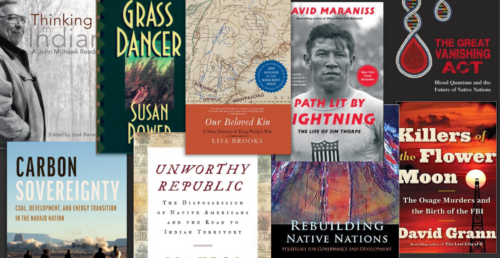
In his book, Curley looks at the Navajo Nation’s complex relationship with the coal industry and how the transition away from coal impacts the Nation’s political and economic state.
Saunt details the harrowing history of “Indian Removal” and the forced displacement of tribes from their land to territory across the Mississippi River.
This collection of essays looks at issues of sovereignty, land rights, globalization, and many more, from a traditional yet modern understanding of the Native experience.
In a biography of Jim Thorpe, a member of the Sac and Fox Nation, Maraniss juxtaposes Thorpe’s major athletic accomplishments with a struggle against the odds. Throughout his life, Thorpe dealt with racism, financial hardship, and tumultuous relationships, surviving it all.
Brooks’s historical recount of the “First Indian War” details the stories of key players in the battle — like Weetamoo, a female Wampanoag leader, and James Printer, a Nipmuc scholar — to introduce readers to a new story of colonial New England and the origins of America.
The Indian Reorganization Act of 1934 and the present-day conceptualizations and effects of it are brought to life in essays, personal stories, case studies, and satire.
Set in North Dakota, Susan Power draws on her Sioux roots to bring to life a dramatic tale full of conflict, love, and magic.
When members of the Osage Nation — the richest people per capita in the world in the 1920s — are murdered, an FBI team goes undercover to work with the Osage and uncover a dark conspiracy.
Written by Harvard Kennedy School Indigenous Governance and Development Project experts, this book showcases the true reality of modern-day Indigenous nations throughout the U.S. The book details contemporary challenges faced by tribes under current federal policies and how tribes continue to chart a path forward toward self-determination.
Podcasts
In this podcast, host Rebecca Nagle explores a tactic used by political actors to pit Indigenous children against Native Nations.