
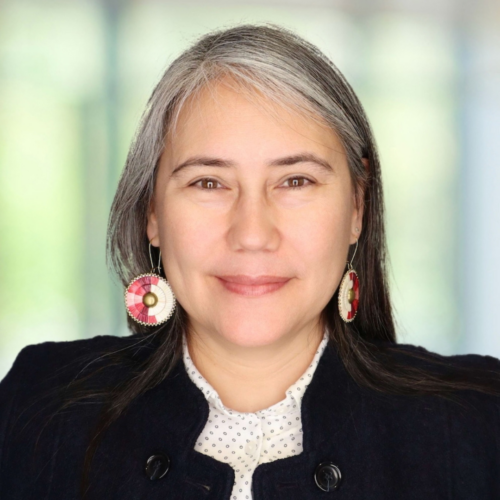
Randall Akee
Director, Project on Indigenous Governance and Development and Julie Johnson Kidd Professor of Indigenous Governance and Development

When Native nations make their own decisions they consistently outperform external decision-makers. Today, we’re answering the question: How can Indigenous governments exercise their sovereignty for better outcomes across the board?
Research from the Project on Indigenous Governance and Development shows that when Native nations exercise their sovereignty it leads to better outcomes across the board —from education to natural resource management. Yet, the path to sovereignty and self-governance isn’t always straightforward.
Our work aims to arm Indigenous people themselves with the tools to build thriving self-governments and strengthen their economic, social, and cultural fabrics. From events to research, we encourage you to explore the below to learn more about how we’re fostering Indigenous governance and nation-building.
Director, Project on Indigenous Governance and Development and Julie Johnson Kidd Professor of Indigenous Governance and Development
Senior Program Director for the Project on Indigenous Governance and Development

Program Director of the Ittapila Program for Nation Building Education and Outreach Endowment at the Project for Indigenous Governance and Development; Lecturer at Harvard Kennedy School

Assistant Director for the Honoring Nations program at the Project on Indigenous Governance and Development

Program Assistant, Faculty Assistant

Outreach and Communications Coordinator
Policy Brief
Video
Harvard Kennedy School’s Ash Center and the Harvard Project on American Indian Economic Development hosted a diverse panel of Congressional and tribal leaders to look ahead and discuss how Congress might come together on a bipartisan basis to enhance support for Indian Country’s pandemic recovery efforts.
Policy Brief
Video
Like governments around the world, America’s 574 federally recognized tribal nations were racing to protect their citizens from the coronavirus. Impacting tribes at a rate four times higher than the US population, the pandemic was testing the limits of tribal public health infrastructures.
Media Release
Researchers from Harvard, the University of Arizona, and University of California, Los Angeles today released its proposal for fairly allocating the $8 billion of Title V CARES Act monies earmarked for the governments of federally recognized American Indian and Alaskan Native nations.
Policy Brief
Media Release
Research finds that Treasury has employed a population data series that produces arbitrary and capricious “over-” and “under-representations” of tribes’ enrolled citizens.
Media Release
Policy Brief
Media Release