Transparency for Development (T4D)

The Transparency for Development Project was a novel, decade-long research initiative, housed at the Ash Center and executed in partnership with Results for Development. The Project investigated whether, why, and in what contexts local transparency and accountability interventions improve development outcomes, such as those around health and citizen participation. Specifically, T4D worked with local civil society partners in Tanzania, Indonesia, Ghana, Malawi, and Sierra Leone to implement transparency and accountability interventions along with mixed-methods evaluation, leveraging quantitative (randomized controlled trial) and qualitative (including ethnography, observations, and key informant interviews) data collection.

The project team, led by Principal Investigators Archon Fung, Jean Arkedis, Jessica Creighton, Steve Kosack, Dan Levy, and Courtney Tolmie, authored several papers, all of which are accessible as Ash Center publications as well as through Harvard’s Digital Access to Scholarship Archive. The final project results and implications are published and available here.

Filter by

  • Format

Filters

Close

Filters

Format

Information Inequality Can Be a Matter of Life or Death
Cover photo of the report

Policy Brief

Information Inequality Can Be a Matter of Life or Death

In this paper, Mary W. Graham examines how unintended information inequities undermine critical health and safety alerts. Focusing on three key policies — wildfire alerts, drinking water reports, and auto safety recalls — she identifies common roots of these disparities and highlights efforts by policymakers to address them.

Brokering Collaboration: Involving Officials in Community Scorecard Programs
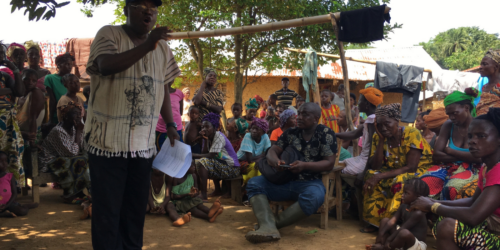
Sierra Leone Community Meeting

Testimony

Brokering Collaboration: Involving Officials in Community Scorecard Programs

A community scorecard program in Indonesia and Tanzania showed no measurable health improvements — but a nearly identical version in Ghana, Malawi, and Sierra Leone worked in almost twice as many communities. Stephen Kosack, Archon Fung, and their coauthors trace the difference to one design choice: whether local officials were in the room.

Insights from Transparency and Accountability Action Plans in Indonesia and Tanzania
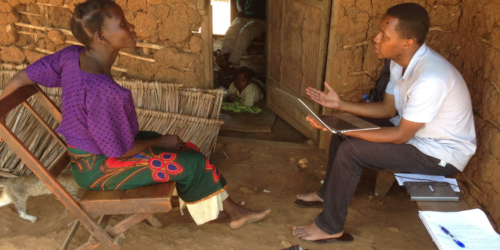
Man surveying woman

Paper

Insights from Transparency and Accountability Action Plans in Indonesia and Tanzania

Instead of telling communities how to fix their maternal health systems, researchers just handed them information and let them design their own plans — no prescribed targets, no required tactics. The result: 1,139 separate actions, from road repairs to ambulance funds to confronting health officials directly. Would people converge on one obvious strategy, or scatter in every direction?

Can Transparency and Accountability Programs Improve Health? Experimental Evidence from Indonesia and Tanzania
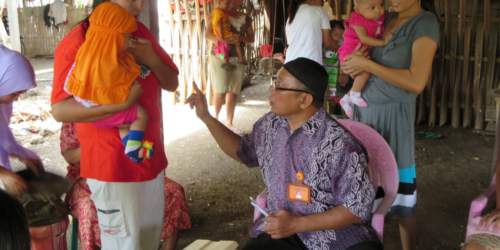
Women holding their babies next to a doctor

Occasional Paper

Can Transparency and Accountability Programs Improve Health? Experimental Evidence from Indonesia and Tanzania

A community scorecard program in Uganda once cut infant mortality by a third — so researchers tried a similar approach in 100 villages each in Indonesia and Tanzania, this time with a rigorous randomized trial. Archon Fung and his co-authors dug into why the results didn’t repeat, and what that says about when “information empowers citizens” actually holds true.

Identifying Survey Respondents: Testing Alternatives to a Census
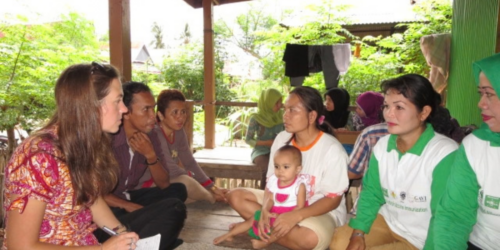
T4D surverying Indonesian women

Article

Identifying Survey Respondents: Testing Alternatives to a Census

To find mothers who’d recently given birth across rural Indonesia, researchers assumed a door-to-door household census would beat asking a few knowledgeable locals where to look. So they tested both, side by side, in the same villages. Jessica Creighton and Wayan Suriastini ran the comparison — and the “thorough” method missed far more respondents than anyone expected.

Transparency for Development: PreAnalysis Plan
Instuctor teaching in Tanzania

Paper

Transparency for Development: PreAnalysis Plan

Before a single endline survey was collected in Indonesia and Tanzania, the Transparency for Development research team locked in, on paper, every outcome, hypothesis, and statistical model they would use to judge their own intervention. It’s a safeguard against a researcher’s oldest temptation: finding a story in the data after the fact. So what happens when you commit to your verdict in advance, and the results come back mixed?

Citizen Voices, Community Solutions: Designing Better Transparency and Accountability Approaches to Improve Health
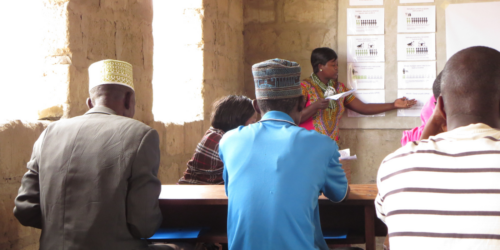
Classroom of people learning

Citizen Voices, Community Solutions: Designing Better Transparency and Accountability Approaches to Improve Health

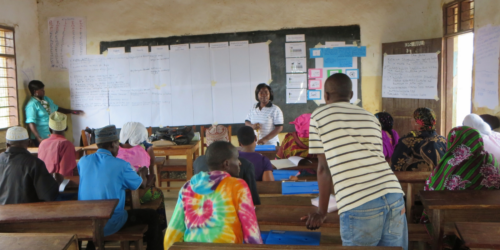
Before the Transparency for Development team ever entered a village in Indonesia or Tanzania, they had to settle a harder question: how much guidance turns citizen empowerment into just another top-down program? The team calls their answer “crawling the design space” — years of co-design and iterative piloting with local partners to land on six governing principles, including one deliberately vague rule: never prescribe what citizens should actually do.

Transparency for Development: Baseline Report
Indonesian women looking at a document

Survey

Transparency for Development: Baseline Report

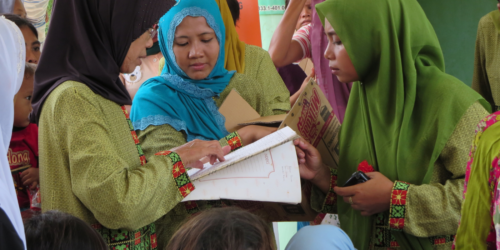
Ahead of launching their transparency intervention in 200 villages, the Transparency for Development team surveyed households in Indonesia and Tanzania and found a telling split: people rated their local health providers as fairly responsive, but had little faith that local government would respond to anything at all. That gap, recorded months before a single “social action” was designed, may explain a pattern researchers would later observe in how communities chose to act.