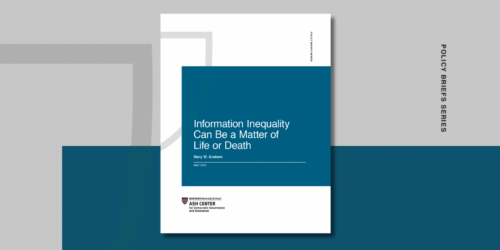
Information Inequality Can Be a Matter of Life or Death
In this paper, Mary W. Graham examines how unintended information inequities undermine critical health and safety alerts. Focusing on three key policies — wildfire alerts, drinking water reports, and auto safety recalls — she identifies common roots of these disparities and highlights efforts by policymakers to address them.
Six years ago, when California’s deadliest wildfire killed 85 people in the town of Paradise, more than three-quarters of those who died were 65 or older or had disabilities. Many never received evacuation alerts.More recently, 93 percent of those who died in the tragic January 2025 Eaton and Palisades fires were 65 or older or had disabilities, according to the Los Angeles County medical examiner’s preliminary report.
In practice, information may not get to all Americans when and where they can access, understand, and act on it to protect themselves and their families. Wildfire alerts, drinking water contamination warnings, and auto safety recalls are among the nation’s enduring commitments to inform all Americans about hidden risks. A closer look at how they have served the public provides clues about the causes of information inequities and their remedies.
Originally published May 2025.
Mary Graham is a Senior Fellow at the Ash Center for Democratic Innovation and Governance.
The views expressed in this article are those of the author alone and do not necessarily represent the positions of the Ash Center or its affiliates.
Brokering Collaboration: Involving Officials in Community Scorecard Programs
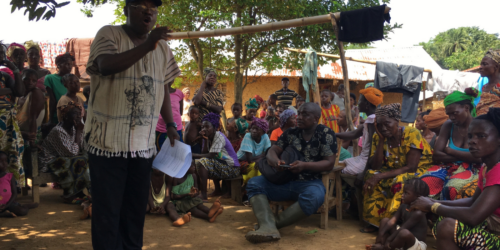
A community scorecard program in Indonesia and Tanzania showed no measurable health improvements — but a nearly identical version in Ghana, Malawi, and Sierra Leone worked in almost twice as many communities. Stephen Kosack, Archon Fung, and their coauthors trace the difference to one design choice: whether local officials were in the room.
Insights from Transparency and Accountability Action Plans in Indonesia and Tanzania
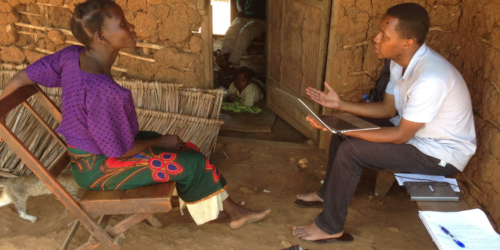
Instead of telling communities how to fix their maternal health systems, researchers just handed them information and let them design their own plans — no prescribed targets, no required tactics. The result: 1,139 separate actions, from road repairs to ambulance funds to confronting health officials directly. Would people converge on one obvious strategy, or scatter in every direction?
Can Transparency and Accountability Programs Improve Health? Experimental Evidence from Indonesia and Tanzania
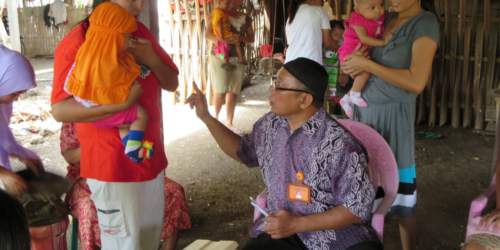
A community scorecard program in Uganda once cut infant mortality by a third — so researchers tried a similar approach in 100 villages each in Indonesia and Tanzania, this time with a rigorous randomized trial. Archon Fung and his co-authors dug into why the results didn’t repeat, and what that says about when “information empowers citizens” actually holds true.
Allen Lab Fellow Spotlight: City Charters Are Deliberative Democracy’s Friends
Allen Lab Fellow Tyler Fisher examines the untapped potential of city charters as a vehicle for deliberative democracy, arguing that advocates should work to embed tools like citizen assemblies, participatory budgeting, and town meetings directly into the governing architecture of cities, institutionalizing deliberative democracy one municipality at a time.
Tova Wang, director of research projects in democratic practice at the Ash Center, shares her top picks for summer reads focused on making democracy more resilient, responsive, and inclusive.