
Research & Resources

Through our books, case studies, journal articles, papers, and surveys, the Ash Center is home to some of the world’s most advanced research and publications on issues related to democratic governance and self-governance.

To explore all research authored by Ash Center faculty, please visit the Harvard Kennedy School website. You can view the Ash Center’s open access policy here.

Billboard sign advertising the Desert Diamond casino.

Paper

American Indian Casino Operations and Firm Long-Run Employment and Sales

A new working paper by Randy Akee, Julie Johnson Kidd Professor of Indigenous Governance and Development, and co-authors examines the role of The Indian Gaming Regulatory Act of 1988 in facilitating sustained private-sector growth for American Indian reservations through tribal casino development.

Read The Story

Filter by

  • Issue Areas
  • Programs
  • Format

Filters

Close

Filters

Issue Areas
Programs
Format

214 Items

of 24

Newest

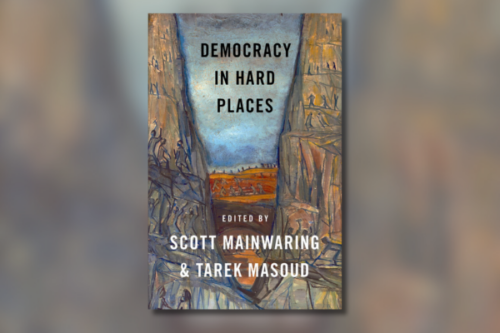
Democracy in Hard Places
Cover photo of the book

Book

Democracy in Hard Places

In Democracy in Hard Places, Scott Mainwaring and Tarek Masoud bring together a distinguished cast of contributors to illustrate how democracies around the world continue to survive even in an age of democratic decline.

Bridging-Based Ranking
Long lines of light of varying lengths appear on a wall

Policy Brief

Bridging-Based Ranking

This report explores the potential of bridging and discusses some of the most common objections, addressing questions around legitimacy and practicality.

PROTESTS UNDER TRUMP, 2017–2021
A photo of the Mobilization: International Quarterly journal with a blue background.

Article

PROTESTS UNDER TRUMP, 2017–2021

The Trump presidency featured a high volume of contentious mobilization. In this research article, the authors describe the collection and aggregation of protest mobilization data from 2017 to 2021 and offer five observations.

How AI Fails Us
A human and robot hand touch

Policy Brief

How AI Fails Us

Researchers and funders should redirect focus from centralized autonomous general intelligence to a plurality of established and emerging approaches that extend cooperative and augmentative traditions as seen in successes such as Taiwan’s digital democracy project to collective intelligence platforms like Wikipedia.