Additional Resource
How A.I. Can Be Good For Democracy
In a recent guest essay for The New York Times, Allen Lab Democracy Stack Fellow Beth Noveck argues for putting A.I. behind every public servant.
Additional Resource
This essay was adopted from a presentation given by Aviv Ovadya at the Second Interdisciplinary Workshop on Reimagining Democracy held on the campus of Harvard Kennedy School in December 2023.
By:
 Aviv Ovadya
This essay was adapted from a presentation given by Aviv Ovadya at the Second Interdisciplinary Workshop on Reimagining Democracy held on the campus of Harvard Kennedy School in December 2023. Convened with support from the Ash Center for Democratic Governance and Innovation and the Belfer Center for Science and International Affairs, the conference was intended to bring together a diverse set of thinkers and practitioners to talk about how democracy might be reimagined for the twenty-first century.
Can we accelerate democratic innovation by recalling that real-world democracy is an imperfect approximation of an ideal? How might AI help?
“No matter what form of democracy we are aiming for, we should remember that all democracy is, by necessity, an imperfect approximation of an ideal worth striving for. The only question is what kind of democracy we choose to cultivate with the resources that we can bring to bear, ” writes Ovadya.
Additional Resource
In a recent guest essay for The New York Times, Allen Lab Democracy Stack Fellow Beth Noveck argues for putting A.I. behind every public servant.
Media Release

Open Access Resource
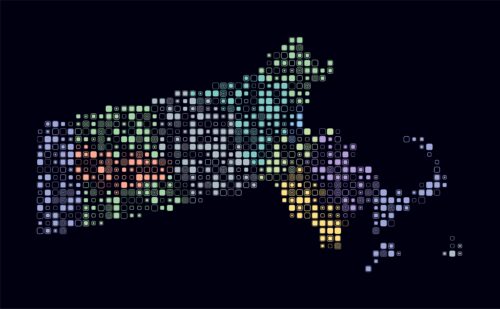
With a majority of municipalities publishing their budgets as PDFs, Open Book offers a free alternative that towns own and run themselves.
Additional Resource
In a recent guest essay for The New York Times, Allen Lab Democracy Stack Fellow Beth Noveck argues for putting A.I. behind every public servant.
Media Release

Additional Resource
As public officials increasingly turn to digital tools, this guide helps Massachusetts municipal leaders navigate Open Meeting Law and their everyday digital practice while safeguarding transparency.