The Allen Lab for Democracy Renovation’s Technology and Democracy workstream aims to ensure that emerging technologies are developed and governed in support of the public benefit.
The Allen Lab for Democracy Renovation’s Technology and Democracy workstream is focused on developing democracy-supportive technology policies, harnessing the opportunities for emerging technologies to improve governance, fostering professional norms that lead to technology development supportive of human pluralism, and building a robust pipeline of experts who can bridge ethical and technical considerations within policy and industry spaces. We pursue this work through foundational analysis and theory, field-building, and policy development.
The Landscape of Digital Civic Infrastructure in Massachusetts
Allen Lab for Democracy Renovation authors offer the first comprehensive analysis of how Massachusetts municipalities are using technology to support civic engagement, government decision-making, and public service delivery.
Crocodile tears: Can the ethical-moral intelligence of AI models be trusted?
Allen Lab authors Sarah Hubbard, David Kidd, and Andrei Stupu introduce an ethical-moral intelligence framework for evaluating AI models across dimensions of moral expertise, sensitivity, coherence, and transparency in their recently published paper, Crocodile Tears: Can the Ethical-Moral Intelligence of AI Models Be Trusted? in Springer AI & Ethics.
Earlier this year, the Allen Lab for Democracy Renovation hosted a convening on the Political Economy of AI. This collection of essays from leading scholars and experts raise critical questions surrounding power, governance, and democracy as they consider how technology can better serve the public interest.
This policy primer from the Allen Lab for Democracy Renovation is intended to introduce the ideas and conversations around how public AI alternatives could foster an ecosystem that prioritizes the public interest while offering a counterbalance to corporate concentration.
This policy primer from the Allen Lab for Democracy Renovation is intended to introduce the ideas and conversations around reform of Section 230 of the Communications Decency Act and how it could remake the social media ecosystem.
A Roadmap for Governing AI: Technology Governance and Power-Sharing Liberalism
This paper aims to provide a roadmap for governing AI. In contrast to the reigning paradigms, we argue that AI governance should be not merely a reactive, punitive, status-quo-defending enterprise, but rather the expression of an expansive, proactive vision for technology—to advance human flourishing.
GETTING-Plurality Research Network
At the center of our work is our multidisciplinary research network. The Governance of Emerging Technology and Tech Innovations for Next-Gen Governance (GETTING-Plurality) is a research network linking philosophers, social scientists, computer scientists, legal scholars, and technologists. This unique collaborative unites tech ethics initiatives at Harvard University with external impact partners across higher education and the tech industry, bringing philosophers and ethicists to the table for every project.
Our network seeks to advance understanding of how to shape, guide, govern, and deploy technological development in support of democracy, collective intelligence, and other public goods. Our focus is on how to do so, given the plural nature of human intelligence. We connect theory with practice to ensure that academic insights inform real-world policy and industry standards.
Allen Lab launches new Digital Civic Infrastructure Initiative to help governments strengthen democracy through technology
The new initiative combines municipal partnerships, digital tools, and research to help communities improve transparency, civic participation, and public service delivery.
The Hidden Cost of Cord-Cutting: Losing Access to Civic Life
As cord-cutting erodes the funding that sustains local cable access channels, the Allen Lab for Democracy Renovation offers recommendations for preserving vital sources of community information, government transparency, and civic participation.
Massachusetts Municipal Leader Guide: Open Meeting Law in the Digital Age
As public officials increasingly turn to digital tools, this guide helps Massachusetts municipal leaders navigate Open Meeting Law and their everyday digital practice while safeguarding transparency.
Update Massachusetts Open Meeting Law for the Digital Age
As technology reshapes how public officials communicate with their communities, this policy brief offers recommendations for modernizing Massachusetts Open Meeting Law to protect transparency and accountability while enabling the tools that expand access to government.
The Landscape of Digital Civic Infrastructure in Massachusetts
Allen Lab for Democracy Renovation authors offer the first comprehensive analysis of how Massachusetts municipalities are using technology to support civic engagement, government decision-making, and public service delivery.
Work in the Age of AI: Reflections from After Neoliberalism
Allen Lab member Charlie Covit reflects on the After Neoliberalism conference and examines the intersection of artificial intelligence and the future of work, arguing that AI forces a democratic reckoning with the meaning of labor itself and that an economy which generates abundance while stripping citizens of purpose and dignity undermines the very foundation of democratic life.
Q & A: Crocodile tears, Can the ethical-moral intelligence of AI models be trusted?
As artificial intelligence becomes more embedded in everyday decision-making, its role in shaping how people think about ethics and morality is drawing increasing scrutiny. In this conversation with researcher Sarah Hubbard, we discuss insights from her co-authored paper, “Crocodile Tears: Can the Ethical-Moral Intelligence of AI Models Be Trusted?”—examining how AI systems respond to moral dilemmas, and what this reveals about the risks, limitations, and need for greater transparency and human oversight in AI-driven ethical guidance.
Allen Lab Fellow Hillary Lehr convened a Voter Experience Summit at Harvard’s Ash Center in March, bringing together 25 cross-sector experts to rigorously map the voter journey. This essay explores how that collaborative process could lay the groundwork for new interventions to understand and improve the experience of voting for all.
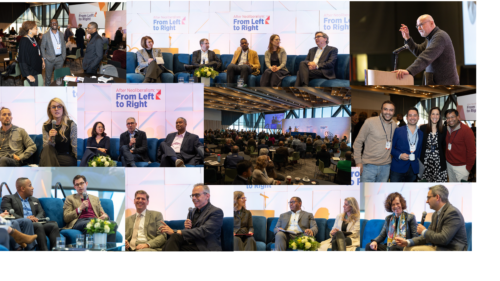
After Neoliberalism: From Left to Right brought together hundreds of leading economists, political scientists, journalists, writers and thinkers from across the political spectrum to explore and debate emerging visions for the future of the political economy.
Crocodile tears: Can the ethical-moral intelligence of AI models be trusted?
Allen Lab authors Sarah Hubbard, David Kidd, and Andrei Stupu introduce an ethical-moral intelligence framework for evaluating AI models across dimensions of moral expertise, sensitivity, coherence, and transparency in their recently published paper, Crocodile Tears: Can the Ethical-Moral Intelligence of AI Models Be Trusted? in Springer AI & Ethics.
AI & Democracy: Perspectives from an Emerging Field
The Allen Lab is proud to have contributed to this timely landscape report from The David & Lucile Packard Foundation mapping the emerging field of AI and democracy.
Allen Lab Fellow Jeremy McKey reflects on India’s AI Impact Summit, exploring the theme of diffusion and the implications for sovereignty and democracy.