Transparency Policy Project

The Transparency Policy Project studied how public disclosure systems can be designed to support important policy goals in society through public engagement. Research shows that well-designed transparency systems can reduce health and safety risks, strengthen governance, encourage public participation, and discourage corruption by motivating organizations—such as banks, hospitals, companies, and governments—to increase their performance and accountability. However, transparency efforts often fail when information is confusing, incomplete, or poorly presented, as seen with issues like unclear nutrition labels or outdated water safety data. These failures can waste resources and even increase risks.

The project also explored a new generation of “participatory transparency” in which the internet enables citizens to share experiences about issues like product defects, medical errors, unsafe workplaces, and ineffective public services, creating collective knowledge that can help improve safety and services for everyone.

The program published the book, “Full Disclosure”, co-authored by the three co-directors of the Transparency Policy Project. The full body of work can be found below. 


Filter by

  • Format

Filters

Close

Filters

Format

Raising Wages by Changing Norms: Work Policy for the Long Game
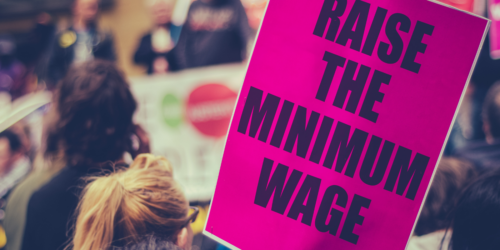
Protest for raising the minimum wage

Policy Brief

Raising Wages by Changing Norms: Work Policy for the Long Game

When Amazon announced a company-wide $15 minimum wage in 2018, the obvious assumption was that every competitor fighting for the same workers would have to match it or lose their workforce. They didn’t. Despite dramatic wage jumps at the companies that voluntarily raised their floors — and real cuts to turnover and hiring costs that made the move pay for itself — researchers find zero evidence of wage spillovers to the “poacher” and “feeder” companies competing in the very same local labor markets. The explanation turns out to say less about generosity than about just how much leverage employers hold over workers who have nowhere else to go.

What Do Workers Want and Need: Partisan Consensus on What it Takes to Make Ends Meet
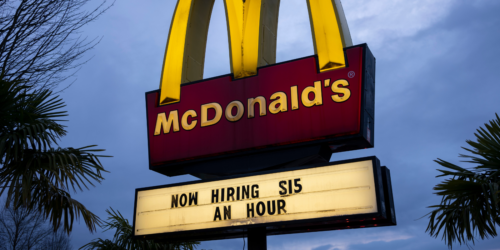
McDonalds sign accepting job applications

Policy Brief

What Do Workers Want and Need: Partisan Consensus on What it Takes to Make Ends Meet

Survey nearly 10,000 hourly workers at 67 of the country’s largest service-sector employers — Walmart, Waffle House, Amazon — and you’d expect their politics to split them on everything. Instead, 78 percent of MAGA-identified workers and 96 percent of Harris voters back a $15 minimum wage, and across the board, workers converge on the same figure for what it would actually take to get by: $24 an hour, 40 hours a week. What they’re actually paid falls $7 short. The bigger problem may not be the wage gap at all — it’s who workers think is responsible for closing it.

“This Ancient Atrocity”: The Return of Child Labor in the United States: Why Now? What Should be Done?
Child labor illustration

Policy Brief

“This Ancient Atrocity”: The Return of Child Labor in the United States: Why Now? What Should be Done?

In 2023, federal investigators found nearly 5,800 children employed in violation of labor law — 2.5 times the number just five years earlier — cleaning “skull splitters” and “brisket saws” on meatpacking kill floors, running equipment in Hyundai and Kia supply plants, and working overnight shifts in bakeries supplying Frito-Lay and General Mills. Every case traces back to the same business model: major brands outsourcing labor through layers of contractors and staffing agencies, then professing outrage when children turn up on the factory floor. The Fair Labor Standards Act has banned this exact kind of work since 1938. So why is it the contractors, not the Fortune 500 names on the label, taking the blame?

Enforcing Labour Standards in Fissured Workplaces: The US Experience
Inspector enforcing safety in the workplace

Article

Enforcing Labour Standards in Fissured Workplaces: The US Experience

Big brands keep the reputation and the profits — so who’s actually on the hook when labor laws get broken? David Weil’s “fissured workplace” theory has an answer, and it’s not the one regulators have been using.

Can Transparency and Technology Make Us Healthier?
Man looking at health details on watch

Article

Can Transparency and Technology Make Us Healthier?

Archon Fung and Elena Fogotto describe a new Commonwealth Fund–supported project examining whether smartphones, apps, and wearables can create a better model of transparency: one where patients not only access information but generate and share their own health data through platforms like Smart Patients and patient-powered research networks. The project will study these platforms’ features, how they empower patients, and whether their benefits reach all users or mainly the tech-savvy.


Want To Know If A Job Is Safe? The Government Should Let You Find Out
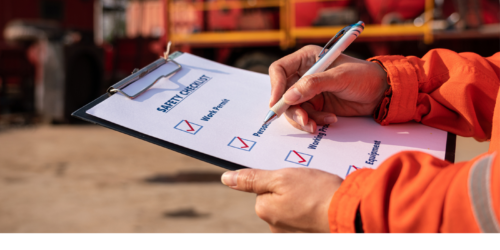
Employee writing on safety checklist

Article

Want To Know If A Job Is Safe? The Government Should Let You Find Out

Wouldn’t it make sense to find out—before applying for a job in a dangerous industry—which firms have a safe track record and which don’t? The Obama administration thought so and proposed an online system for accessing workplace safety data. The Trump administration disagreed, delaying it indefinitely—a decision that raises injury risk for thousands of workers.

David Michaels and David Weil argue that OSHA-driven transparency can push dangerous employers to improve: making injury data public would likely “nudge” them into better protecting their workers.

Our Desperate Need to Save U.S. Democracy From Ourselves
Intercom with Hands held high

Article

Our Desperate Need to Save U.S. Democracy From Ourselves

Archon Fung argues that American democracy is eroding because everyone—campaigns, politicians, journalists, social media platforms, and citizens—pursues narrow self-interest instead of protecting it. He points to attack ads, gerrymandering, policy that favors the wealthy, “fake news,” and low voter turnout as evidence.

How To Improve Workplace Safety
Workers surrounded in circle being informed by staff

Article

How To Improve Workplace Safety

A new OSHA rule, taking effect in 2017, will require large employers and those in high-risk industries to electronically report injury and illness data. Elena Fagotto argues the added transparency will help employers benchmark safety performance and let OSHA target its limited inspection resources more effectively.

Do Nutritional Labels Work?
Customer looking at nurtitional label

Article

Do Nutritional Labels Work?

The FDA’s new nutrition labels will more clearly show added sugar, calorie counts, and realistic serving sizes, and are being praised by health advocates as key to fighting obesity. However, Elena Fagotto argues these improved labels may not actually help the people who need them most.

A Government Both More Secretive and More Open
Government officals at a roundtable conference

Article

A Government Both More Secretive and More Open

The U.S. Government has been hiding secrets — and handing us the files to catch it. Mary Graham discusses two rival books, one wild truth: the same Cold War decades that built America’s secrecy machine also sparked the fight for FOIA, honest food labels, and the public’s “right to know.” Turns out secrecy and sunlight grow side by side.

Too Much Information
Woman looking at laptop overwhelmed

Article

Too Much Information

Transparency isn’t magic: menu calorie counts and credit card disclosures actually change behavior, but sex offender registries and privacy policies often backfire or go ignored — the difference is whether people have real choices and the information is presented simply, argue Elena Fagotto and Archon Fung.

Targeting Transparency
Stack of papers with magnifiying glass

Article

Targeting Transparency

In a landmark 2013 Science piece, David Weil, Mary Graham, and Archon Fung coin “targeted transparency”: the idea that governments can hit big policy goals — safer cars, healthier menus, cleaner factories — simply by forcing companies to disclose the right information at the right moment. It’s worked before (think fuel-economy stickers), but the authors warn it can just as easily backfire into empty paperwork. So when does sunlight actually change behavior, and when is it just noise?

Infotopia : Unleashing the Democratic Power of Transparency
Overwhelmed by Social Media A Room Full of Notifications

Paper

Infotopia : Unleashing the Democratic Power of Transparency

Archon Fung’s “Infotopia” imagines a society where accurate, abundant information actually helps people make better choices as consumers and citizens — and offers a roadmap for building an information environment that truly serves both individual welfare and democracy.

Transit Transparency: Effective Disclosure Through Open Data
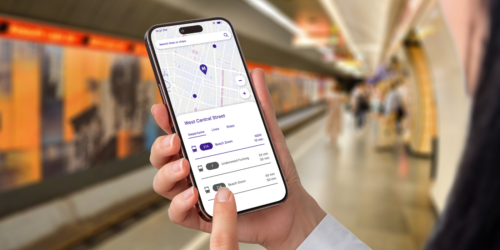
Metro public transport app with map

Paper

Transit Transparency: Effective Disclosure Through Open Data

When Portland’s TriMet released its raw bus and train data to the public, it had no idea what would happen next. Francisca M. Rojas traces how that one decision to open the books sparked an entire marketplace of apps — and asks why some transit agencies embraced it while others resisted for years.

Recovery Act Transparency: Learning from States’ Experience
Woman inspecting documents

Paper

Recovery Act Transparency: Learning from States’ Experience

Recovery.gov let anyone track $275 billion in stimulus spending, project by project, in real time — the boldest transparency experiment the federal government had ever tried. Francisca M. Rojas dug into six states to see who actually used all that data, and the answer wasn’t quite the army of “Citizen Inspector Generals” reformers had imagined.