Transparency for Development (T4D)

The Transparency for Development Project was a novel, decade-long research initiative, housed at the Ash Center and executed in partnership with Results for Development. The Project investigated whether, why, and in what contexts local transparency and accountability interventions improve development outcomes, such as those around health and citizen participation. Specifically, T4D worked with local civil society partners in Tanzania, Indonesia, Ghana, Malawi, and Sierra Leone to implement transparency and accountability interventions along with mixed-methods evaluation, leveraging quantitative (randomized controlled trial) and qualitative (including ethnography, observations, and key informant interviews) data collection.

The project team, led by Principal Investigators Archon Fung, Jean Arkedis, Jessica Creighton, Steve Kosack, Dan Levy, and Courtney Tolmie, authored several papers, all of which are available below.


Filter by

  • Format

Filters

Close

Filters

Format

Can Transparency and Accountability Programs Improve Health? Experimental Evidence from Indonesia and Tanzania
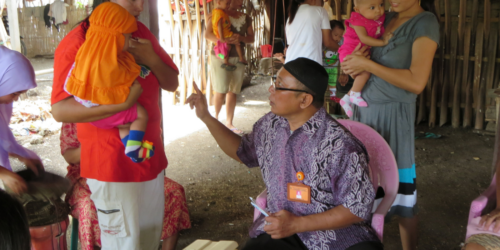
Women holding their babies next to a doctor

Article

Can Transparency and Accountability Programs Improve Health? Experimental Evidence from Indonesia and Tanzania

We assess the impact of a transparency and accountability program designed to improve maternal and newborn health (MNH) outcomes in Indonesia and Tanzania. Co-designed with local partner organizations to be community-led and non-prescriptive, the program sought to encourage community participation to address local barriers in access to high quality care for pregnant women and infants. We evaluate the impact of this program through randomized controlled trials (RCTs), involving 100 treatment and 100 control communities in each country.

Brokering Collaboration: Involving Officials in Community Scorecard Programs
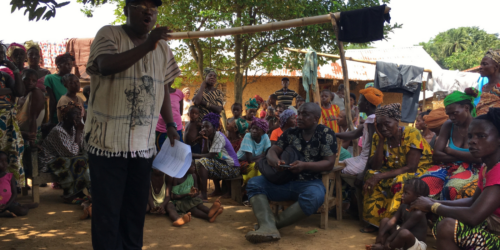
Sierra Leone Community Meeting

Occasional Paper

Brokering Collaboration: Involving Officials in Community Scorecard Programs

A community scorecard program in Indonesia and Tanzania showed no measurable health improvements — but an adapted version in Ghana, Malawi, and Sierra Leone showed promise. The difference? Whether local officials were in the room.

Transparency for Development: Project Results and Implications
Group of kids in Tanzania

Paper

Transparency for Development: Project Results and Implications

In the past three decades, the concept of citizens playing a role in monitoring and holding government officials accountable for poor services has gained prominence as a potential tool to fight mismanagement, poor resource prioritization, and corruption around the world. The idea is extremely appealing – who better than citizens to observe breakdowns in government decisions and actions and to fight for solutions to these breakdowns when they occur?
To test these assumptions, the Transparency for Development team ran a transparency experiment through 200 villages in Indonesia and Tanzania and then a modified version in Ghana, Malawi, and Sierra Leone.

Insights from Transparency and Accountability Action Plans in Indonesia and Tanzania
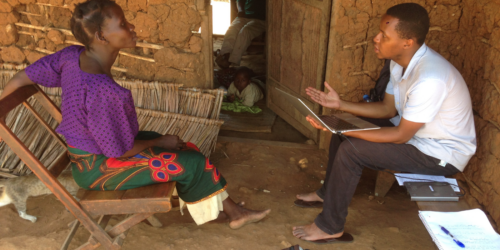
Man surveying woman

Paper

Insights from Transparency and Accountability Action Plans in Indonesia and Tanzania

Instead of telling communities how to fix their maternal health systems, community partner organizations shared information on local conditions and encouraged communities design their own action plans — no prescribed targets, no required tactics. The result: 1,139 separate actions, from road repairs to ambulance funds to confronting health officials directly.

Identifying Survey Respondents: Testing Alternatives to a Census
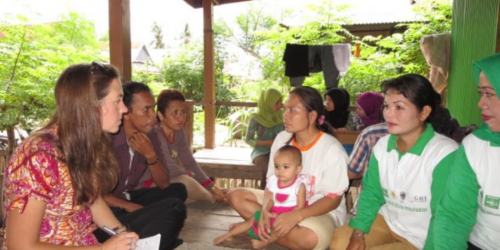
T4D surverying Indonesian women

Additional Resource

Identifying Survey Respondents: Testing Alternatives to a Census

To find mothers who’d recently given birth across rural Indonesia, researchers assumed a door-to-door household census would beat asking a few knowledgeable locals where to look. So they tested both, side by side, in the same villages. Jessica Creighton and Wayan Suriastini ran the comparison — and the “thorough” method missed far more respondents than anyone expected.

Transparency for Development: PreAnalysis Plan
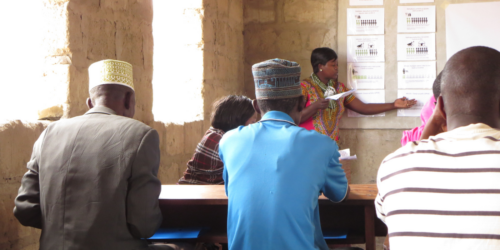
Instuctor teaching in Tanzania

Paper

Transparency for Development: PreAnalysis Plan

This report pre-specifies the analytical approach to a Randomized Controlled Trial (RCT) of 200 communities each in Indonesia and Tanzania. The RCT evaluated a community-based transparency intervention that was co-designed by local partners and the Transparency for Development team.

Citizen Voices, Community Solutions: Designing Better Transparency and Accountability Approaches to Improve Health
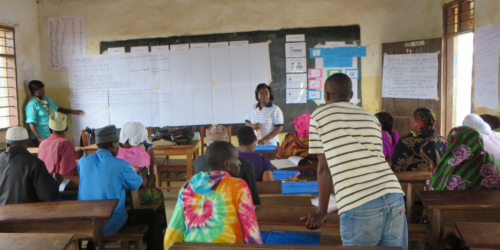
Classroom of people learning

Occasional Paper

Citizen Voices, Community Solutions: Designing Better Transparency and Accountability Approaches to Improve Health

The Transparency for Development (T4D) study was designed to answer the question of whether a community-led transparency and accountability program can improve health outcomes and community empowerment, and, if so, how and in what contexts. To answer this question, researchers and civil society organization partners began by co-designing a program that would activate community participation to address myriad barriers to proper maternal and newborn care, with the ultimate goal of improving maternal and newborn health outcomes. This report presents the design of the program that was then implemented in 200 villages in Tanzania and Indonesia and studied using a mixed methods impact evaluation. In addition to detailing the program, the report outlines how we got there—describing a number of principles that informed some distinguishing features of the program, as well as an iterative design process that defined other features through trial and error.

An Approach to Small-Scale Mixed-Methods Experimentation Transparency for Development, Phase 2
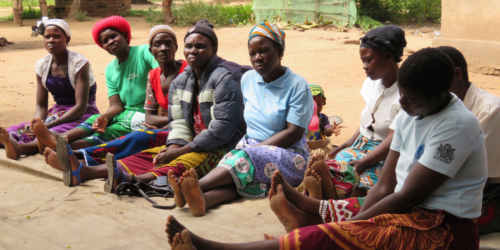
Group of Malawi women

Paper

An Approach to Small-Scale Mixed-Methods Experimentation Transparency for Development, Phase 2

The growth of experimentation has brought randomized controlled trials (RCTs) into evaluations of complex interventions in policy areas like health care or education, which often occur at the group or society level, at a large scale, and the implementation of which can take myriad forms. For precisely evaluating the benefits of complex programs, RCTs remain the gold standard, frequently used when, for example, a health or education program is under consideration for scaling, is already being done at large scale but is of uncertain benefit, or is almost perfected save for a very specific design question. But often large-scale randomized controlled trials of complex interventions are not the best choice. When, for whatever reason, evaluation of a complex intervention is important but small-scale experimentation is more appropriate than a full RCT, how might further refinement of that intervention be most rigorously and reliably evaluated? This paper describes one approach to such an evaluation.

Transparency for Development: Baseline Report
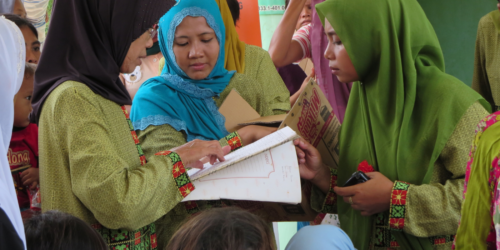
Indonesian women looking at a document

Paper

Transparency for Development: Baseline Report

Ahead of launching their community scorecard intervention in 200 villages, the Transparency for Development team surveyed households in Indonesia and Tanzania. This report details the demographics, health conditions, and empowerment levels of the communities included in the sample prior to the intervention. One interesting finding is although respondents rated their local health providers as fairly responsive, very few viewed local government as responsive.

Does Transparency Improve Governance?
A magnifying glass against a newspaper.

Article

Does Transparency Improve Governance?

In this study, Archon Fung and Stephen Kosack assess the current state of transparency initiatives across the globe. Honing in on interventions with a focus on “transparency for accountability”—which show mixed results—they develop a framework of five “worlds” that helps account for the variation in outcomes.