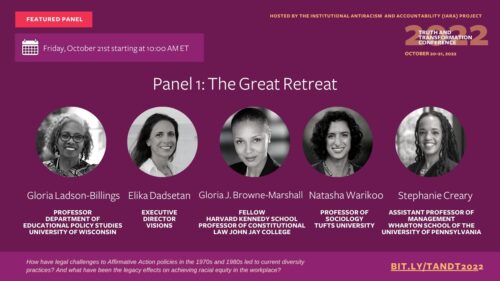
Welcome and Panel One: The Great Retreat (Truth and Transformation 2022)
At the 2022 Truth and Transformation conference, during the welcome, we heard from Professor Khalil Gibran Muhammad, head of the Institutional Antiracism and Accountability Project at Harvard Kennedy School, as well as Talia Landry, Mashpee Wampanoag Tribe.
The first panel discussion: Affirmative Action policies were responsible for making the greatest economic gains for historically marginalized groups. This panel will address how legal challenges to the policies in the 1970s and 1980s, have led to current diversity practices. Why did this happen? Who pushed for these changes? And what have been the legacy effects on achieving racial equity in the workplace today?
About Truth and Transformation 2022
How can truth and transformation be achieved through historical accountability? The 2022 Truth and Transformation Conference, hosted by the Institutional Antiracism and Accountability (IARA) Project, examined how reparative practices, truth commissions, and institutional reckoning with structural oppression provide ways forward for equitable change. Convened by IARA Faculty Director Khalil Gibran Muhammad.
Contesting Repression in Divided Democracies: Can Counternarratives Reduce Support for Police Violence?
A new article in the American Journal of Political Science, co-authored by Yanilda María González, Ford Foundation Associate Professor of Public Policy and Ash Center affiliate, examines public attitudes toward police violence in Brazil. The authors find that while police discourse can increase public endorsement of violence, counternarratives from marginalized victims can be effective in reducing citizen support for repressive policing.
Bootstrap Blackness: Black Men, Conservatism, and Party Politics
A new research article by Dr. Christine Slaughter, Research Fellow at the Allen Lab for Democracy Renovation and co-authors examines the narrative of black men’s political “shift right”. The study finds Black men remain overwhelmingly Democratic, despite growing public attention to ideological divides.
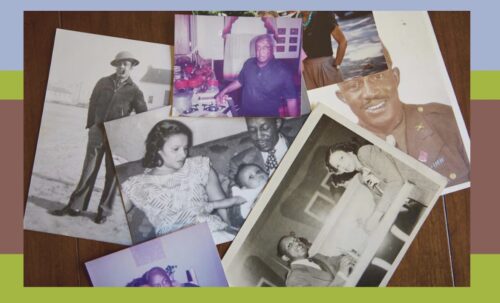
Before the Civil Rights Act, My Great-Uncle from Roxbury Took on Pullman in 1954 — and Won
As we commemorate 100 years of Black History Month, it is worth remembering that progress was not driven by headlines alone. Beyond the monuments and courtrooms, everyday people took risks to demand dignity and fairness. Among them was my great uncle, whose pursuit of a promotion became a catalyst for change.