

Feature
Antiracism Summer Reading List
15 noteworthy recent releases handpicked by the Institutional Antiracism and Accountability (IARA) Project.

Additional Resource
The insights and feedback gathered at the event will guide IARA’s forthcoming report, which aspires to catalyze ongoing policy, advocacy, and community-based efforts for social change.

The Institutional Antiracism and Accountability (IARA) Project at Harvard Kennedy School recently concluded a three-year study (2021-2024) examining global truth-telling, justice, and healing efforts, such as truth commissions and tribunals. This project aimed to uncover accountability mechanisms and best practices that could inform similar initiatives in the U.S. and beyond. The culminating Symposium on Global Justice, Truth-Telling, and Healing convened 25 international and U.S. leaders, advocates, and experts to discuss findings, share experiences, and foster dialogue on advancing racial, ethnic, and Indigenous justice. The insights and feedback gathered at the event will guide IARA’s forthcoming report, which aspires to catalyze ongoing policy, advocacy, and community-based efforts for social change.
Erica Licht is the Research Projects Director for the Institutional Antiracism and Accountability Project at the Ash Center for Democratic Governance and Innovation at Harvard University.
Leonardo Kamilius is the Founder and CEO of Koperasi KASIH Indonesia (KKI).
The views expressed in this article are those of the author(s) alone and do not necessarily represent the positions of the Ash Center or its affiliates.
Feature
15 noteworthy recent releases handpicked by the Institutional Antiracism and Accountability (IARA) Project.

Policy Brief
The IARA project investigates new and existing strategies for antiracist transformation in the healthcare sector.
Policy Brief

Article
A new article in the American Journal of Political Science, co-authored by Yanilda María González, Ford Foundation Associate Professor of Public Policy and Ash Center affiliate, examines public attitudes toward police violence in Brazil. The authors find that while police discourse can increase public endorsement of violence, counternarratives from marginalized victims can be effective in reducing citizen support for repressive policing.

Article
A new research article by Dr. Christine Slaughter, Research Fellow at the Allen Lab for Democracy Renovation and co-authors examines the narrative of black men’s political “shift right”. The study finds Black men remain overwhelmingly Democratic, despite growing public attention to ideological divides.
Commentary
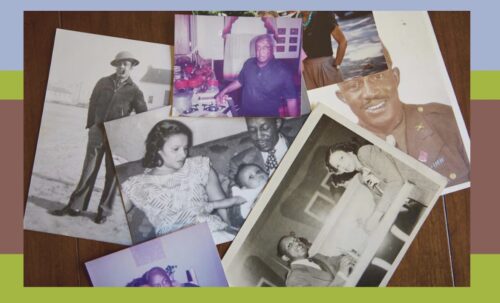
As we commemorate 100 years of Black History Month, it is worth remembering that progress was not driven by headlines alone. Beyond the monuments and courtrooms, everyday people took risks to demand dignity and fairness. Among them was my great uncle, whose pursuit of a promotion became a catalyst for change.