



Paper  

Improving the Pipeline of Election Officials Strengthening Recruitment, Retention, and Professional Development in U.S. Election Administration

This paper by members of the Ash Center’s Executive Session on Elections and Election Administration, Tina Barton, Judd Choate, Ruth Greenwood, Elizabeth Linos, Veniece Miller and Tammy Patrick, presents a comprehensive pipeline strategy to recruit, support, and retain election administrators—by reducing barriers to entry, strengthening professional networks, improving workplace support and using workforce data to address burnout and prevent attrition.

A poll worker consulting a clipboard on a table.

Research Highlights

  • Election administration is facing a workforce crisis, which puts the institutional knowledge of election administrators at risk.
  • Solutions to remedy this crisis should address the entire workforce pipeline, and not focus only on recruitment.
  • Retaining experienced administrators is as important as advancing recruitment efforts.

This Executive Session on Elections and Election Administration report examines how the United States can strengthen its election-administration workforce amid growing complexity, public scrutiny, threats, misinformation and high levels of burnout and turnover. The authors argue that addressing workforce shortages requires more than recruiting new employees—leaders must build a durable pipeline that supports candidates throughout the entire process, from considering an application to succeeding on the job and remaining in the field.

Drawing on evidence-based recruitment strategies, the paper offers election officials and policymakers concrete steps to develop a more resilient, supported, and sustainable election-administration workforce.

More on this Issue

How Americans Navigate Voting Information Ahead of the 2026 Midterm Elections
Captiol building with trend graphic

Additional Resource

How Americans Navigate Voting Information Ahead of the 2026 Midterm Elections

The Shorenstein Center’s 2026 Voting Information Trends project—developed in collaboration with the National Internet Observatory at Northeastern University, the Ash Center for Democratic Governance and Innovation’s Program on Democracy and the Informed Public, and The Civic Health and Institutions Project—provides new insights into the voter information landscape in the United States ahead of the 2026 midterm elections.

Among the resources, an interactive dashboard maps where Americans are finding voting information and learning about key aspects of the voting process—from sourcing polling locations to voter registration. Also included are a series of trends reports gauging perceptions of voting in the lead up to the 2026 midterm elections.

In Appearance Before Congress, Stephen Richer Testifies on Alleged Noncitizen Voting in New Jersey
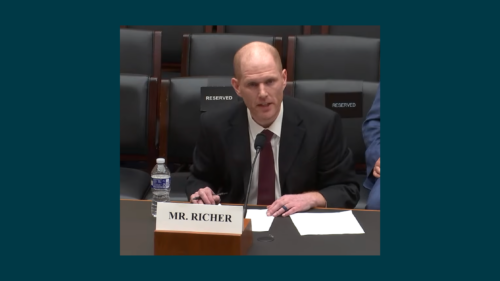
Stephen Richer testifying before Congress.

Feature

In Appearance Before Congress, Stephen Richer Testifies on Alleged Noncitizen Voting in New Jersey

On Tuesday, September 15, 2026, former Maricopa County Recorder Stephen Richer, now an Ash Senior Fellow and election administration expert, testified before the House Judiciary Subcommittee on Oversight. The hearing examined allegations that approximately 6,600 noncitizens were improperly registered to vote in New Jersey between June 2023 and June 2024.


Content Creators, Election Administration, and Voting: Can Social Media Be Used to Improve the Voter Information Environment?
Woman holding phone with a cup of coffee

Video

Content Creators, Election Administration, and Voting: Can Social Media Be Used to Improve the Voter Information Environment?

In this webinar moderated by Tova Wang, director of democratic research projects at the Ash Center, panelists Julia Angwin, Amanda Yarnell, Tommy Gong, and Brianna Wiggity Weck explore how election officials can leverage social media’s reach to improve public awareness around voter registration, voting, and election integrity. The discussion builds on the Ash Center paper, “Building Capacity to Use Social Media: How Election Officials Can Leverage Content Creation to Provide Accurate Voter Information,” which outlines frameworks for collaboration between election officials and digital content creators.