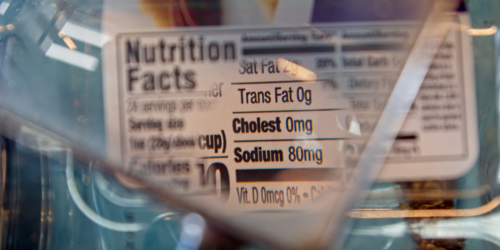
The Nutrition Labeling and Education Act of 1990 (NLEA) required food processors to label products with amounts of key nutrients as a public health measure. Chronic diseases such as heart ailments, cancer, and diabetes were the largest causes of preventable deaths in the United States, killing more than 1.5 million people each year. Scientists agreed that the single most important factor in preventing and minimizing the effects of such diseases was improved diet. Before Congress acted, however, consumers had no way to assess the healthfulness of most packaged foods. Supporters of the law hoped that it would create new incentives for Americans to eat healthier foods and for manufacturers to improve their products.
Consumer groups combined with organizations such as the American Cancer Society and the American Heart Association to promote nutritional labeling as a public health measure rather than simply a right-to-know cause. Entrepreneurial members of Congress, led by Representative Henry Waxman (D-Calif.) and Senator Howard Metzenbaum (D-Ohio), pressed for the new labeling law. The food industry supported disclosure both as preferable to conflicting state requirements and as a means to reap profits from marketing healthy products.
The new law required food processors to label in standardized formats amounts in each serving of total fat, saturated fat, cholesterol, sodium, total carbohydrates, complex carbohydrates, sugars, dietary fiber, and total protein, in the context of amounts recommended for consumption as part of a daily diet. Companies also had to list total calories and calories from fat in each serving. Serving sizes were standardized to conform to amounts customarily consumed. Products that were not labeled accurately and completely could be deemed misbranded by the federal Food and Drug Administration (FDA) and removed from the market. In 1994, when the law took effect, interested shoppers could compare nutrients in virtually every can, bottle, or package of processed food for the first time. The law was appropriately heralded as the most important change in national food policy in fifty years.
However, Congress also gerrymandered the labeling requirement to satisfy powerful interests, exempting nearly half of consumers’ food purchases. Fast-food outlets, full service restaurants, fresh meats and seafood, deli items, and dietary supplements all escaped labeling.
Nutritional labeling did improve over time—but only slowly and sporadically. Often labeling failed to keep pace with new science. Scientists had known since the 1970s that trans fatty acids were the most health-threatening fats, for example. The FDA, however, did not require their listing on food labels until 2006. Major food allergens (from tree nuts to shellfish) were not clearly labeled until 2006. And labels continued to group together all carbohydrates despite evidence that complex carbohydrates were healthier than simple carbohydrates. The risks and benefits of dietary supplements remained largely undisclosed. In the late 2000s several industry groups launched private front-of-package labels, some of which were flagged by the FDA for being misleading and unfounded.
A notable expansion of labeling requirements took effect in 2018. After a number of state and local governments mandated that chain restaurants report calorie information on their menus, Congress made the requirement national in 2010 for chains with 20 or more locations selling standardized products. Chains were also required to provide nutritional information on request. The Food and Drug Administration (FDA) issued implementing rules that became effective in 2018. Many restaurant chains welcomed the national rules as preferable to a patchwork of location requirements.
The FDA updated nutritional labels on processed foods in 2020 and 2021 to reflect advances in science. Proposed in 2014 and finalized in 2016 but delayed while food companies prepared to comply, the new rules included a controversial requirement for listing separately sugars that were added in manufacturing to enhance taste, a requirement aimed at helping consumers reduce obesity. They also presented calorie information and serving size in larger and bolder type to make it easier for shoppers to spot. They updated serving sizes to reflect consumption patterns. And they required listing of Vitamin D and potassium, often lacking in American diets.
By 2022, another challenge to nutritional labeling emerged. Surveys suggested that more than two-thirds of consumers now bought some groceries online, with most planning to continue some online shopping after the COVID-19 pandemic receded. As food companies adapted, early research suggested that most grocery stores listed nutritional information on their websites for online ordering but that accessing nutritional information often required extra clicks or scrolling. Likewise, online ordering from chain restaurants increased during the pandemic. While the FDA required that digital menus, like print menus, list calories, the agency did not initially require independent delivery services that posted menus to list calories.
Updated March 2022
This case study is drawn from Full Disclosure, Fung, Graham and Weil, 2007.
A longer version of this case study appeared in Democracy by Disclosure, Graham, 2002