

Additional Resource
How A.I. Can Be Good For Democracy
In a recent guest essay for The New York Times, Allen Lab Democracy Stack Fellow Beth Noveck argues for putting A.I. behind every public servant.

Open Access Resource
With a majority of municipalities publishing their budgets as PDFs, Open Book offers a free alternative that towns own and run themselves.
By:

Today, when a municipality wants to put its budget in front of residents, it can print out pages of spreadsheets; post a large, difficult-to-read PDF; or pay for a proprietary platform that visualizes the information. In The Landscape of Digital Civic Infrastructure in Massachusetts report, 83% of the municipalities we studied share their budgets as PDFs and too often smaller municipalities don’t have the budget or staff to support the proprietary platforms. Municipal leaders told us that while a grant might help cover the initial upfront cost of one of these proprietary platforms, the recurring bill and rising subscription costs aren’t sustainable.
The result? Citizens remain confused by how their local tax dollars are being used, and town leaders struggle to make the information accessible. As Sutton Town Manager Austin Cyganiewicz noted, “The most important policy document is your budget document.”
That is why the Allen Lab supported the development of Open Book: a free, open-source, easy to use budget transparency portal that a town owns and operates itself. Because it is an open-source tool, there are no subscriptions or vendor lock-in issues. Small and mid-sized municipalities can stand it up and adapt it to their own needs, without needing to allocate significant budget or staff time.
Open Book features:
Cyganiewicz saw firsthand the need for a more transparent and accessible budgeting process. As town manager of Rutland, Massachusetts, he found there often wasn’t even a consistently posted, formatted, and publicly available budget PDF document. The budget development process was organized on paper with departments filling out forms and sending them to his office. When he became town manager of Sutton, Massachusetts, he found there were PDFs, but there was nothing residents could easily search online and the cost of a proprietary platform was out of reach for the town. He took the initiative to build Open Book to address this gap. Before long, other town managers across the state were asking how they could do the same.
“This was pre-Open Book. Binders of information, spreadsheets that aren’t readable and easy to interpret. There’s no context here, there’s no summaries of financial information. We would just plop this in front of our select boards or finance committees and speak to them about what’s in this book…Pre-Open Book, we were spending oftentimes tens of thousands of dollars on financial transparency tools. Whereas now, for potentially a few dollars a month to host the site, this is either low cost or in many cases free for communities to provide financial transparency.” –Austin Cyganiewicz, Sutton Town Manager

Austin Cyganiewicz, town manager of Sutton, Massachusetts, with town budget books.
The Allen Lab for Democracy Renovation worked with Cyganiewicz to take what he had built for Sutton and turn it into an open-source tool that other municipalities can use.
Residents can view a branded portal where they can explore expenses, revenues, capital projects, and reserves, from charts of the overall picture to individual line items. They can export the underlying data or print a budget book.


Open Book for Sutton, Massachusetts
Town managers and administrators can stand up the portal without writing code. They can upload budget data in a CSV or Excel, match the spreadsheet columns to fields, and customize the look and feel of the site. Administrators can also invite department staff to submit capital expenditure requests that they are able to review in one place.

Administrator view of Open Book to upload and manage budget data
If you are a town manager, administrator, or resident, try it out for your community. And if you would like to help us improve this open-source tool, we would welcome your contributions to the project. Please reach out to Sarah Hubbard (sarah_hubbard@hks.harvard.edu) to share the examples of your municipality using Open Book, with feedback, or to express interest in contributing.
Sarah Hubbard is the Associate Director for Technology & Democracy at the Allen Lab for Democracy Renovation at Harvard Kennedy School’s Ash Center for Democratic Governance and Innovation. Her research focuses on the intersection of artificial intelligence, democracy, and civic life.
The views expressed in this article are those of the author alone and do not necessarily represent the positions of the Ash Center or its affiliates.
Additional Resource
In a recent guest essay for The New York Times, Allen Lab Democracy Stack Fellow Beth Noveck argues for putting A.I. behind every public servant.

Media Release

Open Access Resource
This free, self-paced course equips public officials with the skills to design, run and learn from meaningful engagement with communities.

Additional Resource
The Shorenstein Center’s 2026 Voting Information Trends project—developed in collaboration with the National Internet Observatory at Northeastern University, the Ash Center for Democratic Governance and Innovation’s Program on Democracy and the Informed Public, and The Civic Health and Institutions Project—provides new insights into the voter information landscape in the United States ahead of the 2026 midterm elections.
Among the resources, an interactive dashboard maps where Americans are finding voting information and learning about key aspects of the voting process—from sourcing polling locations to voter registration. Also included are a series of trends reports gauging perceptions of voting in the lead up to the 2026 midterm elections.
Paper
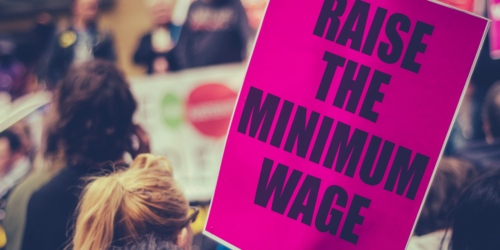
When Amazon announced a company-wide $15 minimum wage in 2018, the obvious assumption was that every competitor fighting for the same workers would have to match it or lose their workforce. They didn’t. Despite dramatic wage jumps at the companies that voluntarily raised their floors — and real cuts to turnover and hiring costs that made the move pay for itself — researchers find zero evidence of wage spillovers to the “poacher” and “feeder” companies competing in the very same local labor markets. The explanation turns out to say less about generosity than about just how much leverage employers hold over workers who have nowhere else to go.
Policy Brief
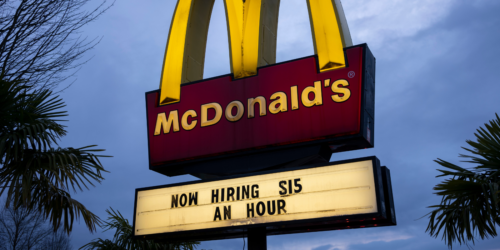
Survey nearly 10,000 hourly workers at 67 of the country’s largest service-sector employers — Walmart, Waffle House, Amazon — and you’d expect their politics to split them on everything. Instead, 78 percent of MAGA-identified workers and 96 percent of Harris voters back a $15 minimum wage, and across the board, workers converge on the same figure for what it would actually take to get by: $24 an hour, 40 hours a week. What they’re actually paid falls $7 short. The bigger problem may not be the wage gap at all — it’s who workers think is responsible for closing it.