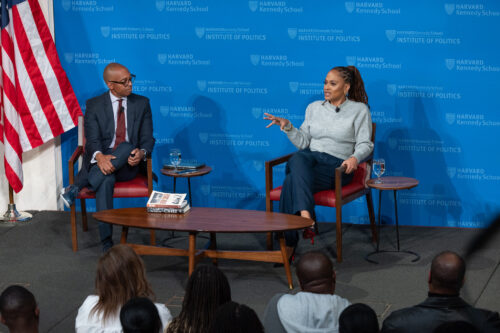
DuVernay’s latest film ‘Origin’ is a powerful adaptation of Isabel Wilkerson’s book ‘Caste’, taking a broad look at underlying systems of social hierarchies. It draws connections between race in the United States, the persecution of Jews in Nazi Germany, and the system of caste in India. By translating these true stories to screen, ‘Origin’ fosters a crucial dialogue on the American understanding of race.
This event hosted by the Institutional Antiracism and Accountability Project (IARA) and the Institute of Politics, explored the relationship between film and advancing racial equity, asking: how is film an effective platform for shaping an informed and critical public narrative about race in the U.S.? And for the filmmakers attempting to do this, what barriers are standing in the way?
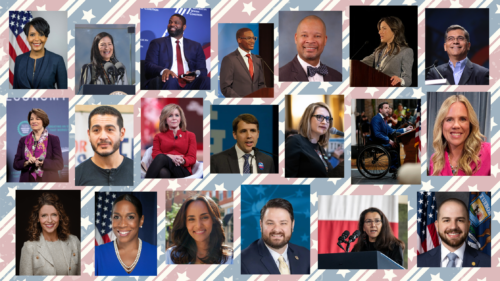
Election night 2026 produced a remarkable roll call of historic firsts. From the first Black woman elected governor of a U.S. state to the first Muslim elected to the Senate, voters broke barriers across state and party lines.
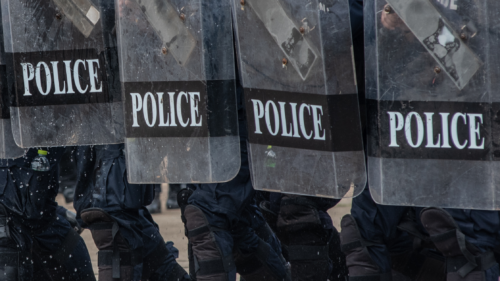
Contesting Repression in Divided Democracies: Can Counternarratives Reduce Support for Police Violence?
A new article in the American Journal of Political Science, co-authored by Yanilda María González, Ford Foundation Associate Professor of Public Policy and Ash Center affiliate, examines public attitudes toward police violence in Brazil. The authors find that while police discourse can increase public endorsement of violence, counternarratives from marginalized victims can be effective in reducing citizen support for repressive policing.
Bootstrap Blackness: Black Men, Conservatism, and Party Politics
A new research article by Dr. Christine Slaughter, Research Fellow at the Allen Lab for Democracy Renovation and co-authors examines the narrative of black men’s political “shift right”. The study finds Black men remain overwhelmingly Democratic, despite growing public attention to ideological divides.