

Feature
Five ways to use our antiracism resource database
Answer pressing questions, discover new strategies, and more with our Race Research and Policy Portal — a free database featuring easy-to-read summaries of peer-reviewed research.

Feature
Diversity, equity, and inclusion efforts may have a political target on them, but the scholarly literature is clear that they help universities recruit, retain, and teach a more racially diverse pool of talented students and faculty, says the Kennedy School’s Khalil Gibran Muhammad.

Nearly three years after George Floyd’s death sparked a national reckoning over racial justice and accountability, diversity initiatives are increasingly coming under attack as politicians take aim at programs intended to foster inclusion and equity — particularly those on college campuses. While efforts to scale back diversity, equity, and inclusion (DEI) programming at public universities may make for a potent talking point on the campaign trail, they ignore the impact that these initiatives have had in strengthening student and faculty outcomes in higher education, according to Khalil Gibran Muhammad, Ford Foundation Professor of History, Race, and Public Policy at Harvard Kennedy School.
Muhammad, the faculty director of the Kennedy School’s Institutional Antiracism and Accountability (IARA) Project, has developed a repository of social science research examining diversity, racial equity, and antiracist organizational change in private, public, and non-profit firms and entities. The research, highlighted in the project’s Race, Research, and Policy Portal (RRAPP), “shows that DEI programs are important tools for recruiting and maintaining diverse cohorts of faculty, staff, and students at universities across the country,” says Muhammad.
Citing a study by Texas A&M researchers, Muhammad notes that attempts by universities to incorporate diversity-related goals into formal campus planning, the sort of DEI efforts now under attack in a number of states, have reaped tremendous dividends for colleges and universities. “Further review of this literature has demonstrated that improving accountability, equity, and overall campus climate strengthens a university’s mission of academic success,” he adds.
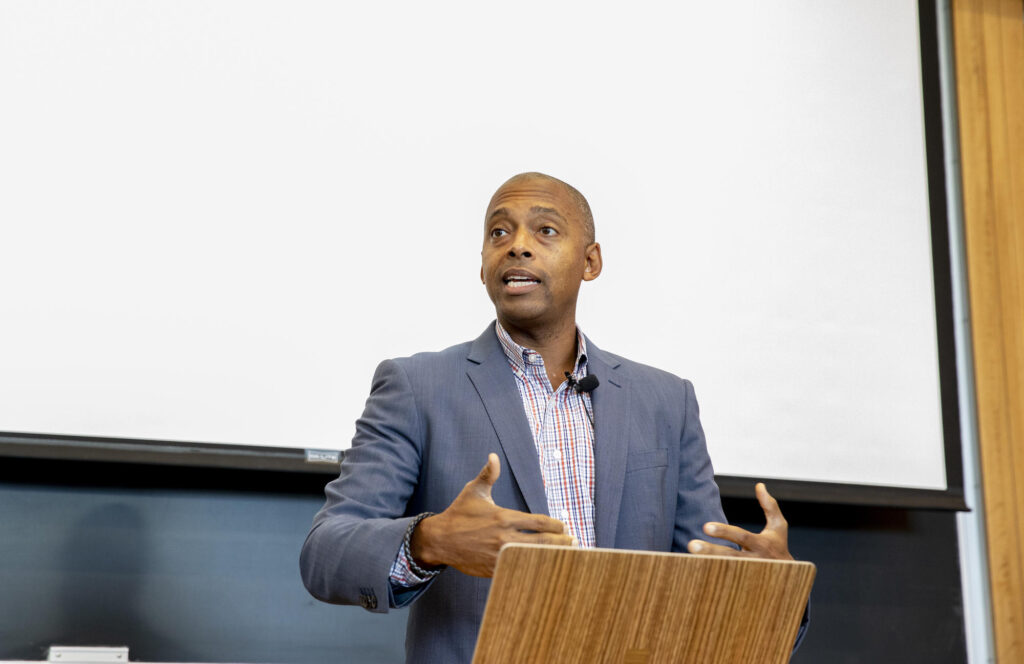
Researchers have also demonstrated how DEI initiatives can lead to important gains in student retention, particularly among students of color. “The scholarship is pretty clear on this,” says Erica Licht, the research project director at IARA, who leads reviews of academic literature on institutional diversity efforts as part of the project’s research portal. “Universities expend tremendous efforts to retain students. Rolling back funding for diversity officers, training, and curricular support is likely to adversely impact retention rates at universities, which will paradoxically hit those schools in the pocketbook with lost tuition.”
Licht and Muhammad are also quick to note the importance that DEI initiatives have played in reforming the hiring process at colleges and universities. Muhammad points to a study featured in the RRAPP database detailing how DEI efforts have helped faculty and administrators identify problems in the faculty hiring process and ultimately make changes to increase the pool of junior faculty of color. “Colleges and universities that want to hire and retain the best talent need to understand the importance of building a diverse faculty. Those schools that don’t or can’t because of political interference are simply going to lose out on recruiting the best and brightest young faculty,” adds Muhammad.
As the political attacks on diversity, equity and inclusion in higher gather steam, Muhammad urges policymakers and university administrators to hold the line because science is on their side. “DEI isn’t about pushing some political agenda,” Muhammad states. “It’s about helping our institutions achieve their own stated goals of access and inclusion, and to help prepare the next generation of global citizens and leaders.”
Feature
Answer pressing questions, discover new strategies, and more with our Race Research and Policy Portal — a free database featuring easy-to-read summaries of peer-reviewed research.
Video
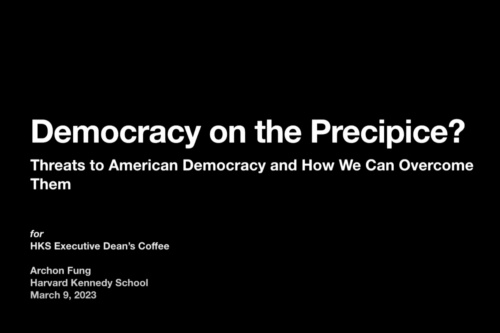
On Thursday, March 9, 2023, Ash Center for Democratic Governance and Innovation Director Archon Fung, Winthrop Laflin McCormack Professor of Citizenship and Self-Government at the Harvard Kennedy School, spoke to Kennedy School community members about threats to American democracy and how we can overcome them.

Article
A new article in the American Journal of Political Science, co-authored by Yanilda María González, Ford Foundation Associate Professor of Public Policy and Ash Center affiliate, examines public attitudes toward police violence in Brazil. The authors find that while police discourse can increase public endorsement of violence, counternarratives from marginalized victims can be effective in reducing citizen support for repressive policing.

Article
A new research article by Dr. Christine Slaughter, Research Fellow at the Allen Lab for Democracy Renovation and co-authors examines the narrative of black men’s political “shift right”. The study finds Black men remain overwhelmingly Democratic, despite growing public attention to ideological divides.

Commentary
As we commemorate 100 years of Black History Month, it is worth remembering that progress was not driven by headlines alone. Beyond the monuments and courtrooms, everyday people took risks to demand dignity and fairness. Among them was my great uncle, whose pursuit of a promotion became a catalyst for change.