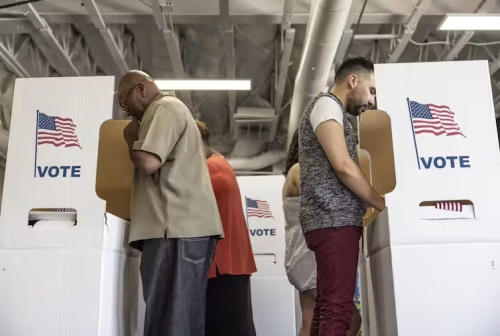
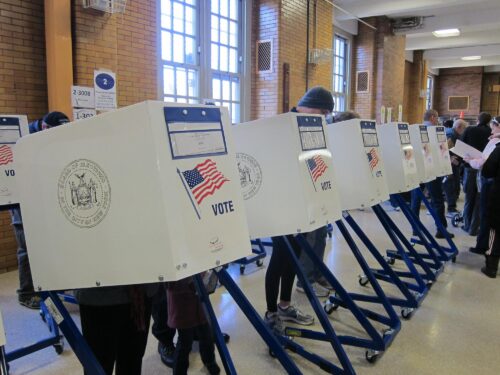
The Ash Center brings together research, events, and expert analysis on voting, election administration, civic participation, and the institutions that help ensure elections are accessible, secure, and trusted.
Engaging Fans, Empowering Voters: How Professional Sports are Promoting Civic Engagement
The Ash Center hosted a discussion with representatives of the NBA, NFL Votes, the co-founder of Vet the Vote, and the Deputy Secretary of State of Georgia to discuss how these partnerships are succeeding at supporting voter participation and fair and secure elections.
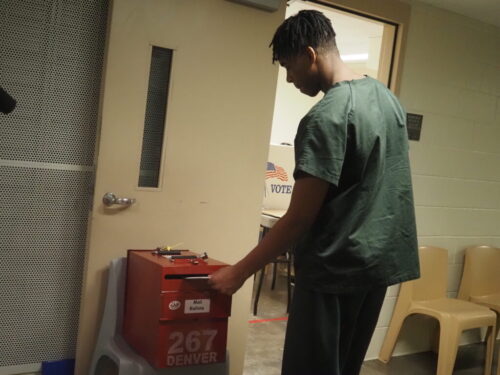
Across the United States, hundreds of thousands of people in jail retain their right to vote while being held in pretrial detention, having not been convicted of a crime.
In this latest report on providing access to registration and voting for the hundreds of thousands of Americans being held in jails without having been convicted, Tova Wang looks at how Denver – and the State of Colorado – have become a model for the nation.
How Portland, Oregon Embraced Voting Reform — and Democratic Innovation
Portland, Oregon passed one of the most progressive voting reforms in the country. Max Kiefel, Nick Chedli Carter, and Archon Fung explore the motivating factors behind this big change.
Laws That Govern Jail-Based Voting: A 50-State Legal Review
As part of the Ash Center’s ongoing work examining the legal, political, and policy implications of advancing jail-based voting, Aaron Rosewood and Tova Wang examine the statutory basis for jail voting in each state.
Voting in 2020: Professional Sports Stadiums & Arenas as Polling Places
The primary findings of this report are that sports facilities make excellent polling sites and team involvement in promoting voting is uniquely helpful in sharing the importance of participation.
Recommendations for Implementing Jail Voting: Identifying Common Themes
This guide is intended for advocates, organizers, and practitioners working across America to facilitate the voting process for eligible voters in jails.
How Will the Voting Rights Act Ruling Impact Redistricting?
According to Kennedy School’s Benjamin Schneer, the decision that an Alabama congressional map illegally weakened the power of Black voters has implications beyond the southern state’s borders.
Claims against nonpartisan voter record system are baseless says former West Virginia Secretary of State
Natalie Tennant discusses the impact of states leaving the Electronic Registration Information Center (ERIC), a resource for maintaining accurate voter records across state lines
Democracy on the (Down) Ballot: Unpacking the Midterms, Voting Rights, and Local Electoral Reforms
During the 2022 midterms, voters not only cast a ballot to decide the balance of power in congress, but in in many states voters decided on a range of consequential ballot initiatives impacting the nuts and bolts of the electoral process including voter-ID laws, party primary reform, ranked choice voting, and proportional representation. The outcomes of these statewide and local level ballot initiatives have direct implications for future elections and participatory democracy.
This midterm recap webinar goes beyond the candidate horse race and focus on analysis and perspectives from advocates and scholars on recent voting-related ballot initiatives, immediate implications for future elections, and what’s ahead for emerging electoral reforms at the state and local level. See panelists Deb Otis, Director of Research at FairVote; Jenny Lee, Deputy Director of the Coalition of Communities of Color; and Wendy Underhill, Director of Elections and Redistricting at the National Conference of State Legislatures. Ash Center Reimagining Democracy Fellow Nick Chedli Carter moderated.