Policy Brief  

Experts, not Obstacles: Indigenous Conservation Excellence and the Trap of Conservation at any Cost

Harvard Kennedy School researchers release global scoping review finding Indigenous conservation practices achieve equal or superior results in biodiversity protection, wildfire management and sustainable management of natural resources

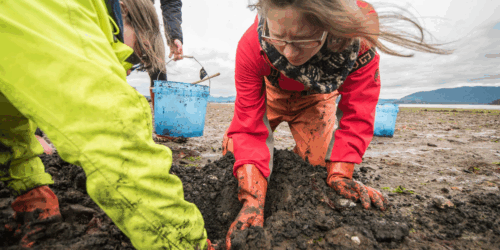
Safety Protocols in Subsistence Fishing Practices by Sitka Tribe of Alaska Environmental Research Lab

A new paper from a research team at the Harvard Kennedy School explores Indigenous conservation practices, finding that Indigenous peoples are achieving equal or superior conservation outcomes across the globe and calling on policymakers, funders, and conservation leaders to support Indigenous-led stewardship as a key strategy to combat biodiversity loss and climate change.

The research warns against “conservation at any cost,” a flawed approach that continues the historical displacement of Indigenous peoples from their ancestral lands and waters. Instead, the report demonstrates that Indigenous nations are not barriers to conservation but experts whose stewardship protects biodiversity, sustains ecosystems, and strengthens climate resilience.

Drawing on a decade of peer-reviewed scholarship, the report documents Indigenous conservation successes across the world. Findings show that Indigenous approaches have curbed deforestation, increased fish biomass, safeguarded vulnerable species, and reduced wildfire risks—results that meet or exceed mainstream conservation targets.

“Our study shows that Indigenous peoples are leaders in conservation, not obstacles to it,” said the researchers with the Harvard Project. “Philanthropists, governments, and NGOs could accelerate global progress by standing behind Indigenous communities whose knowledge and practices are already producing proven results.”

Among the study’s key findings:

  • Superior outcomes: In a majority of documented cases, Indigenous conservation outperformed
    other approaches in biodiversity maintenance, forest protection, and ecosystem restoration.
  • Global scope: Peer-reviewed studies highlight Indigenous-led successes across multiple
    continents, underscoring the universal value of Indigenous stewardship.
  • Diverse practices: Indigenous conservation strategies include sustainable farming, controlled
    burning, resource use limits, and active restoration, rooted in ancestral knowledge and cultural
    responsibility.

The report emphasizes that supporting Indigenous self-determination and rights is both an ethical imperative and a practical necessity for addressing the planet’s ecological crises.

Miriam Jorgensen is Research Director for the Harvard Project on Indigenous Governance and Development and its sister program, the Native Nations Institute at the University of Arizona.

The views expressed in this article are those of the author alone and do not necessarily represent the positions of the Ash Center or its affiliates.  
More from this Program

The Harvard Project Announces 2025 Honoring Nations Award Winners
An image of the awards presentation.

Media Release

The Harvard Project Announces 2025 Honoring Nations Award Winners

The national awards program Honoring Nations, flagship program of the Harvard Project, announces the recipients of the 2025 Honoring Nations Awards, recognizing 6 governmental initiatives for outstanding excellence in tribal self-governance.

Social and Economic Changes in American Indian Reservations: A Databook of the US Census and the American Community Survey, Third Edition 1990-2020
Per Capita Income Change 2010-2020 graph

Book

Social and Economic Changes in American Indian Reservations: A Databook of the US Census and the American Community Survey, Third Edition 1990-2020

From the Harvard Project on Indigenous Governance and Development comes an updated third edition of a data book providing summary statistics for American Indian tribal communities in the lower 48 states using the public-use US Census and the American Community Survey data.

Six Programs Advance to the Site Visit Round for the 2025 Honoring Nations Awards

Media Release

Six Programs Advance to the Site Visit Round for the 2025 Honoring Nations Awards

The Harvard Project on Indigenous Governance and Development’s Honoring Nations program is thrilled to announce the selection of six outstanding tribal programs advancing to the site visit round for the 2025 awards.

More on this Issue

The Harvard Project Announces 2025 Honoring Nations Award Winners
An image of the awards presentation.

Media Release

The Harvard Project Announces 2025 Honoring Nations Award Winners

The national awards program Honoring Nations, flagship program of the Harvard Project, announces the recipients of the 2025 Honoring Nations Awards, recognizing 6 governmental initiatives for outstanding excellence in tribal self-governance.

Social and Economic Changes in American Indian Reservations: A Databook of the US Census and the American Community Survey, Third Edition 1990-2020
Per Capita Income Change 2010-2020 graph

Book

Social and Economic Changes in American Indian Reservations: A Databook of the US Census and the American Community Survey, Third Edition 1990-2020

From the Harvard Project on Indigenous Governance and Development comes an updated third edition of a data book providing summary statistics for American Indian tribal communities in the lower 48 states using the public-use US Census and the American Community Survey data.

Six Programs Advance to the Site Visit Round for the 2025 Honoring Nations Awards

Media Release

Six Programs Advance to the Site Visit Round for the 2025 Honoring Nations Awards

The Harvard Project on Indigenous Governance and Development’s Honoring Nations program is thrilled to announce the selection of six outstanding tribal programs advancing to the site visit round for the 2025 awards.