

Additional Resource
How A.I. Can Be Good For Democracy
In a recent guest essay for The New York Times, Allen Lab Democracy Stack Fellow Beth Noveck argues for putting A.I. behind every public servant.
Feature
The Allen Lab for Democracy Renovation and Bloomberg Center for Cities brought together civic technologists, researchers, as well as municipal and state leaders across Massachusetts for a workshop on digital civic infrastructure.
By:
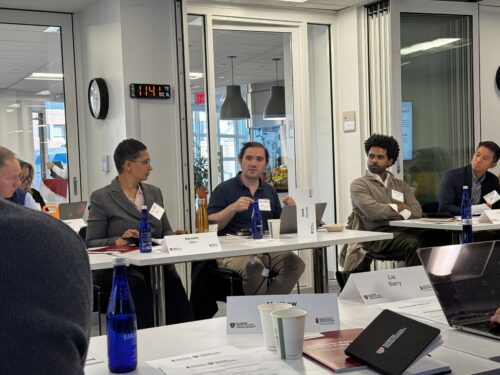
On October 16, 2025, the Allen Lab for Democracy Renovation and the Bloomberg Center for Cities brought together civic technologists, researchers, as well as municipal and state leaders across Massachusetts for a workshop on digital civic infrastructure.
The day began with presentations from organizations building digital tools and platforms that enable community connection, civic learning, and meaningful participation in democratic life. Matt Victor from MAPLE shared how their platform has facilitated over 750 testimonies and encouraged users to engage in the Massachusetts legislative process. David Fields shared Northeastern’s AI for Impact Coop program, which connects students to build solutions for the public sector, featuring their engagement with Jen Lyons and the Massachusetts Operational Services Division.
We also learned from compelling platforms doing work across the country. Micah Weinberg shared how Engaged California is piloting a civic engagement platform for California residents, beginning with LA wildfire recovery. The platform uses AI sense-making tools to help synthesize public input. Dave Lesher from CalMatters demonstrated their Digital Democracy platform which provides a searchable database of public hearings, donations, votes, and bills, along with connecting journalists to this information.
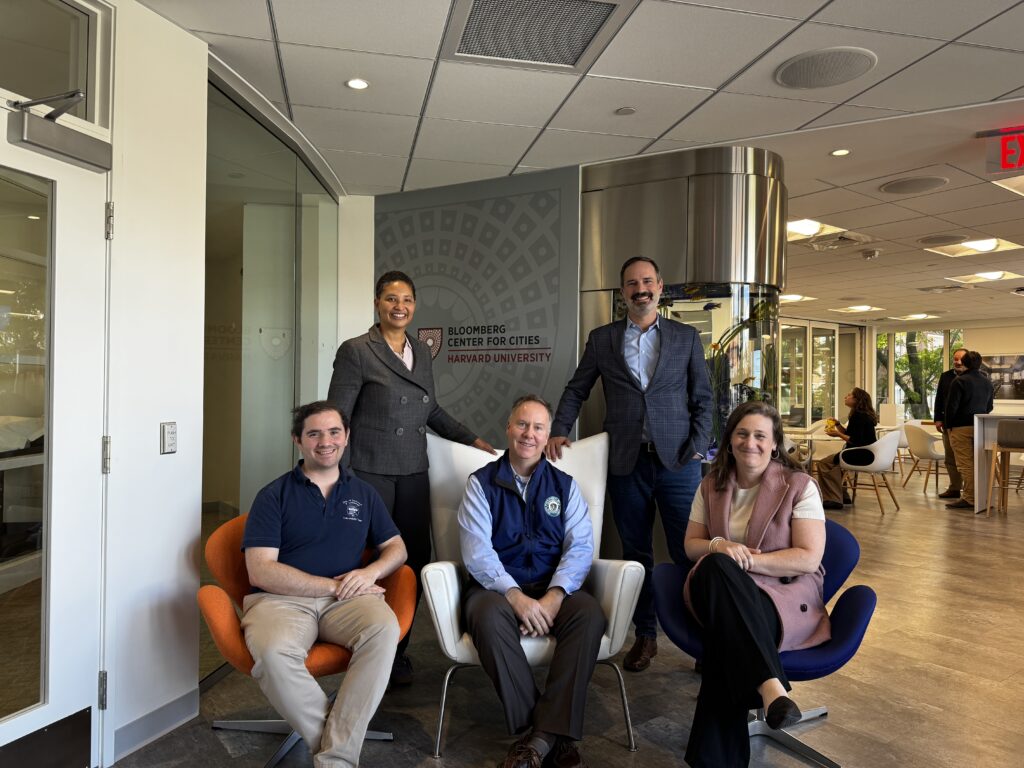
From left to right: (Top) Danielle Allen, Micah Weinberg (Bottom) Santi Garces, Secretary Snyder, Meg Ansara
At a federal level, Anne Meeker from POPVOX discussed their work bridging constituent voices to Congress through various tools and case studies such as legislative co-drafting and increasing the intelligibility of constituent data. Laurel Eckhouse, formerly at USDS, shared lessons on how effective digital delivery can support civic trust and reduce administration burden. Throughout the morning, participants shared their insights across local, state, and federal contexts.
The workshop also provided an opportunity to share findings from our ongoing landscape research of digital civic infrastructure across Massachusetts municipalities. Workshop participants offered valuable feedback and helped guide the next stages of our work. The full landscape report is forthcoming in early 2026.
In the afternoon breakout sessions, participants identified conditions for success when deploying digital civic infrastructure, drawing on their experiences as technology developers and public servants. Some of the conditions for success included:
Participants also shared persistent challenges with the fact that digital civic infrastructure tools can often be easier to incubate and much harder to sustain given funding and resource constraints, as well as the pacing mismatch between technology and government processes.
The Allen Lab will continue to share findings from our research on digital civic infrastructure. If you’re working in this space or would like to continue the conversation, please reach out to Sarah Hubbard at sarah_hubbard@hks.harvard.edu
Additional Resource
In a recent guest essay for The New York Times, Allen Lab Democracy Stack Fellow Beth Noveck argues for putting A.I. behind every public servant.
Media Release

Open Access Resource
With a majority of municipalities publishing their budgets as PDFs, Open Book offers a free alternative that towns own and run themselves.
Additional Resource
In a recent guest essay for The New York Times, Allen Lab Democracy Stack Fellow Beth Noveck argues for putting A.I. behind every public servant.
Media Release

Additional Resource
As public officials increasingly turn to digital tools, this guide helps Massachusetts municipal leaders navigate Open Meeting Law and their everyday digital practice while safeguarding transparency.