Archon Fung: This is Terms of Engagement. I’m Archon Fung, a professor at the Harvard Kennedy School and faculty director of the ASH Center for Democratic Governance and Innovation.
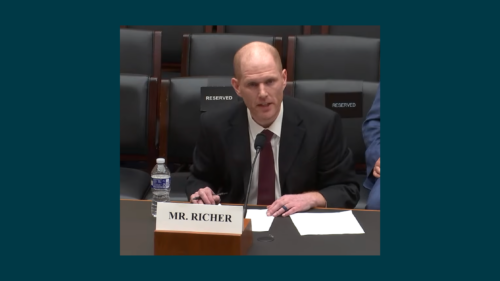
Stephen Richer: And I’m Stephen Richer. I’m the co-host. I’m the former elected Maricopa County recorder, and I am now a fellow at the Ash Center.
Archon Fung: And this week we’re coming at you prerecorded. So you’ll be watching the live stream. It won’t be a live stream. We’re recording this on Monday and then airing on Tuesday, but please put your comments in the chat, and we will try to respond to them. Next Tuesday, we will be coming back to you live once again. So please tune into our conversation live next Tuesday and put your thoughts anytime in email at info@ash.harvard.edu.
Stephen Richer: And I’ll try and join the show tomorrow while it’s airing and answer any of the questions live in the chat box. So that should be fun. And as always, Archon and I and Professor Charles are speaking on behalf of ourselves, not on behalf of the Ash Center, Harvard Kennedy School, Harvard Law School, as is appropriate today, or of course, Harvard University itself. We do look forward to hearing from you next week, but we always, as Archon mentioned, welcome the emails in the meantime.
Archon Fung: Great. And our guest today is Guy Charles, who is the Charles J. Ogletree Jr. Professor of Law at Harvard Law School. And he is also faculty director of the Charles Hamilton-Houston Institute for Race and Justice there. He’s a member of the American Academy of Arts and Sciences. And his scholarship is all about law, political power, and how to address racial subordination to create a equal multiracial democracy. He’s published many articles and is the co-author of two case books, Racial Justice and Law and Election Law in the American Political System. He’s written some of the most precious scholarship on the decline of the VRA, including a 2015 article, Voting Rights Act in Winter, and a February 2026 Yale Law Journal piece that is an anchor for today’s conversation.
Stephen Richer: So welcome, Professor Charles.
Guy-Uriel Charles: Thank you so much. Thank you for having me.
Stephen Richer: So for those of you who aren’t aware, last week, the Supreme Court issued a 6-3 ruling on Section two of the Voting Rights Act of 1965. Now, what section two addressed in, I guess, relevant part for this conversation is the notion of diluting racial minority group’s political power. The 6-3 opinion was written by Justice Alito. We got a concurrence from Justice Thomas, I believe, and we got a dissent from Justice Kagan. This sent the election community and the voting rights community, all a’twitter, not just because of the ruling itself, which has a profound impact on an important part of the Voting Rights Act, which has obviously been very present in American elections for, like I said, since 1965, but also because immediately following the ruling, a number of states, especially in the South, have begun to explore redrawing, maybe yet again, their congressional [inaudible 00:04:00] state legislative lines now consistent with what they feel is now permitted under federal law now that we’ve trimmed back the Voting Rights Act.
So we’re going to get into some of that. We’re going to get into implications for democracy and we’re going to get into what’s next because what Professor Charles has recommended might not be the way that some people in the voting rights community are thinking about how to respond to what we’re calling the Callais Decision.
Archon Fung: Yeah. And just to emphasize what Stephen said, I think it’s fair to say that at least what I’ve been hearing out of much of the voting rights community and the civil rights community is people are kind of losing their minds over Louisiana v. Callais. And regard it as the destruction of the last remaining piece of the Voting Rights Act. Guy, I think it’s fair to say you saw this coming from a long way away and most recently in a kind of crystal ball article that you published in the Yale Law Journal Forum in 2026. And there you said, quote, “In Callais, the court gathered not to interpret Section two of the Voting Rights Act, but to administer its last rights.” And now I think a lot of people would agree with you that that has indeed happened. Now that the actual decision is out, what surprised you, if anything, and what did you think, “Yeah, I definitely saw that coming. No surprise here?”
Guy-Uriel Charles: Sure. So I don’t know that I would say much was surprising. And as we wrote in the article, the only question was exactly what the path the court was going to take to get there. But just to set this up a little bit, at least from the perspective of constitutional law. So what we saw happening way back after the court’s decision in Shelby County versus Holder, in which the court now 10 or 11 years ago or so, in which the Supreme Court struck down section 4A of the Voting Rights Act, which was the part of the act that designated the states in the South for coverage. And then Section five, the pre-clearance provision that said, “Hey, before you change, if you’re one of those covered jurisdictions, before you change, you have to preclear.” So that part depended upon the coverage part, and the court struck down the coverage, which meant that the preclearance part didn’t have any utility.
What was clear then from that case is that the court, at least the conservative majority on the court, no longer believed that racial discrimination was the predominant factor in American political practice. And when you have a statute that is intended to address the problem of racial discrimination, which some of the conservatives believe go beyond the requirements of the Constitution, there was a collision, and it was only a matter of time then before the remainder part of the statute, which is section two of the statute that identified political racial discrimination in voting, and to say to the states, “Hey, you can’t target your voters of color. You can’t target voters period on the basis of their race to diminish their voting power, and the way that you draw districts.”
And if you do, then they’re entitled to a remedy. Now, there are some legal hurdles that you have to jump through, but that’s the basic approach, which is section two of the Voting Rights Act says, if you look at a voting district and it has a disproportionate impact on a group of voters because of their race, then they’re entitled to a remedy and the remedy is usually the drawing of a majority minority district.
From the court’s majority’s perspective, there was a collision that was going to happen between those two things. You could look at the court’s constitutional doctrine, which was basically saying, “Hey, we are increasingly skeptical about race and racial discrimination, and we want to move toward colorblindness.” And then you had a voting rights doctrine that was intended to provide a remedy for racial violations. And from the court’s perspective, those two things were on a collision course.
Stephen Richer: The Shelby County holding was in 2013, and obviously the court had a different composition then. How much do you think it was Shelby County that really tipped its hand versus the affirmative action case that the court took in the university admissions context, which pretty much said that race can no longer be the predominant factor in assessing admission?
Guy-Uriel Charles: Sure. So both of those cases mattered. The affirmative action case was simply, this is SFFA versus Harvard, which basically said, as you said, Stephen, that taking race into account for the purposes of affirmative action is basically unconstitutional. That’s the effectiveness of the ruling. That was basically the endpoint of the court’s affirmative action jurisdiction. So it was slowly walking in that direction and the court’s broader race [inaudible 00:09:38] that was walking in that direction. So you saw a court that was slowly carving, narrowing the VRA, as well as its race jurisdiction that was walking in that direction. By the time you got to SFFA, it was almost predictable. There have been attempts before that in the Grutter versus Bollinger cases as one example to have the court have that same ruling, but every single time it kind of avoided that holding. So you could see that coming both in the court’s [inaudible 00:10:16] students and in its voting rights to the students.
Stephen Richer: So tell me if this is accurate, how I am viewing this case, the Callais case in a post SFFA context, which is that a government or a state legislature or an election administrator can’t do anything affirmative to disenfranchise, say, black voters or disempower black people who are running for state legislature or Congress. But now, conversely, the state legislature or the map makers can’t do anything that places race as the primary motivation for drawing new lines to empower racial minority voting blocks under the Jingles test or to make it likely that a racial minority will win in a particular district. Is that the state [inaudible 00:11:20]?
Guy-Uriel Charles: So basically the court’s conservative majority looks at the Voting Rights Act as if it is affirmative action, right? So you’re right. The rule is, hey, the government can’t intentionally discriminate against voters on the basis of their race, and also the government can’t use race as in an affirmative way to empower voters of color or to provide them with representation. So the court has basically taken its colorblindness jurisprudence and the affirmative action context and is now applying it across the board, including in the voting rights context. So now you have one rule that governs both sides of that equation.
Archon Fung: Right. So Alito and not being a constitutional lawyer and trying to read the decision, Alito writes that, well, one of the big unanswered questions for the history of the Voting Rights Act is whether or not achieving a fair opportunity to elect a candidate of choice is a compelling interest according to the Voting Rights Act and the Constitution and they said the conservative majority ended up, no, it’s not a compelling interest, but I’m wondering, looking at the whole history of the Voting Act Rights Act up to date, I would’ve thought that it was fairly straightforward that it was regarded as a compelling interest.
Guy-Uriel Charles: Okay. So to understand that point, let me just back up a little bit in this case. So you have to sort of think about Callais as being two cases. So Louisiana redistrict following the 2020 census, and it’s entitled, it’s still entitled to the six congressional districts, but there’s malapportionment among its districts, and so it has to rebalance those lines to make them consistent with a 1% one vote requirement. So they do a map. All right. Then voters of color say, “Well, wait a minute, this map, which only has one majority minority district dilute our votes because we’re actually given our population entitled to two majority minority districts and not one.” The district court agrees with those orders of color and the case we’ll call the Robinson case and says, “Yes, as a preliminary matter, those voters will likely be able to show that there is dilution of their votes.” So now the state has to decide what is it going to do, certainly appeals, but eventually decides that it’s going to redraw the lines to add a second majority minority district.
All right. Now, it could have adopted a second majority minority district in a way that the plaintiffs had suggested, but it wanted to protect some of its congressional officials, Speaker of the House, majority leader, one of the important members of the appropriations committee. And so therefore, in order to do that, it drew a very convoluted and non-compact district that took some voters of color on the northwest part of the state and length them, snaked them with voters of [inaudible 00:15:03] voters in the south central part of the state. All right. So now a group of white voters then challenge that and they say, “Okay, this new map is unconstitutional.”
All right. The state defends that map, the second map by saying, “Oh, we had to do it in order to comply with the Voting Rights Act, with the argument being that compliance with the Voting Rights Act is a compelling governmental interest.” So that’s the setup. Now, one way to think about this, as I said, given the setup, is that no, you weren’t complying with the Voting Rights Act. You were trying to achieve your own political objectives while also trying to address the violations that the plaintiffs brought up. But the shape of the map was not the result of complying with the VRA, it was the result of the fact that we were trying to achieve some political objectives. So the court could have addressed it in that way. Instead, what the court said is, “Look, we, the court, have never said that complying with the Voting Rights Act is a compelling governmental interest.” We’ve always assumed it.
Whenever we’ve had to face the decision, we’ve never made a ruling on it. We’ve always said, “Well, we’re going to assume for the purposes of this case that complying with the Voting Rights Act is a compelling governmental interest.” So from Alito’s perspective and the conservative majority’s perspective, then they’re finally squaring up to that case, to that issue. And then the way that they reconciled it, they said, “Look, if we allow you to do what Louisiana did here, that’s essentially what they’re saying. It would be a violation of the Constitution.” So we’re going to reinterpret Section two of the Voting Rights Act, which really meant effectively killing Section two of the Voting Rights Act. We’re going to reinterpret it to make it consistent with our understanding of the Constitution. So now complying with Section two of the Voting Rights Act, as we understand it, as we, the court understand it, is a compelling governmental interest, but not complying with it as it was understood prior to this case.
So they really raised the bar, but they raised it to make it basically almost impossible to file a claim under section two of the VRA.
Stephen Richer: I think it would have to look a lot like intentional discrimination with a smoking gun that would be unconstitutional under the 14th Amendment. And Alito does… They don’t kill Section two, as many commentators thought that Section two would just be deemed facially unconstitutional, but the door that’s left open, I think is pretty much just one footnote saying that to address serious racial grievances of the past, and I guess that will have to be litigated then too, because some people would say, “Well, that’s the entire Voting Rights Act is to address some racial grievances.” And so you could argue that what was happening in Louisiana in this context was to address serious past racial grievances. And so I do think that there’s a bit of complexity and confusion still to come. But do you think, Professor Charles, that people, I mean, within the Voting Rights Act community, I dare see you had some who are freaking out, to use Archon’s term, over the jurisprudence, and then some who are freaking out over what this will mean for representation. And do you have a sense of how you would divide up the community?
Guy-Uriel Charles: Sure. So again, I think you’re 100% right. Even though Justice Alito says, does not make a ruling on the “Constitution”, But really what this does is it effectively kills Section two because what the court says is, look, you have to show us, we’re going to take the factors that we used to use to prove a Section two violation. You have to show us that there is a difference between race and politics or race and partisanship. So given the objectives that the state wants to accomplish, you have to show us that with their map in mind that that objective can be achieved without having the racial impact. That’s essentially what the court is saying. It is trying to get, is saying to the plaintiffs that they have to show a violation of Section two while taking into account both the state’s political objectives and disentangling politics from race. So what that really means is that it’s virtually impossible for a plaintiff to show a Section two violation because the government will say, well, look, the reason why we drew this map is [inaudible 00:20:25].
Archon Fung: Yeah, Republicans do it. Yeah.
Guy-Uriel Charles: Right. All of those things. And so now you got to come up with a map that takes all the government’s criteria into account and be able to show that it’s not going to have the same type of disparate racial effect, which is almost impossible to do.
Stephen Richer: And you need to not write any emails that says, “I’m doing this for racial reasons.”
Archon Fung: Right. Which sometimes happens, but people usually are smarter.
Guy-Uriel Charles: Right. And now you don’t even need to be smart, right? Now you could say, “Hey, we want to protect incumbents. We want to protect this incumbent.” So how do you draw a map When you only have six districts? You don’t have any additional one, how do you draw a map that protects this particular incumbent for one example? Or we wanted to keep this industry within, and here are the five and six things that we had in mind. So now you, the plaintiff have to be able to take the criteria that the government gives as a given and then try to come up with a map that says, okay, you could still protect voters of color while still maintaining your political criteria, virtually impossible.
So this is the reason why the civil rights groups are freaking out because now section two is just about a dead letter. And so the only question left for them is, “Well, what about descriptive representation for voters of color?” And of course, as you both mentioned at the outset, we are seeing a number of states go after the majority minority districts in the south, specifically Southern states, go after the majority minority districts, which then means that that will likely, at least in the short term and those states reduce the descriptive representation for voters of color in those jurisdictions, right? That’s a significant possibility, right? No one’s exactly sure how things are going to go deep into the future, but certainly in the near term, that is the aim of a number of Republican legislatures to redraw their congressional maps and dismantle the Section two majority minority districts.
So now you’ve got two reasons to freak out. One, Section two has gone away, and then also descriptive representation, at least in the South, is going to be severely undermined.
Archon Fung: Right. So what do you think… So in his opinion, the opinion that he wrote, Alito several times mentions the phrase that you just cited is disentangle race and partisanship or race and politics. In a world in which 90% of African Americans and Black people vote for the Democratic Party, what do you think he has in mind there? Is it possible in these current political circuits? He must think it is because he says, “That’s what we need to do. We need to disentangle race on one hand and partisanship or politics on the other.” But how do you do that legally or mathematically in a world in which 90% of black people vote for the Democratic Party?
Guy-Uriel Charles: Right. So I would say this is what Alito then is saying, he’s not making a descriptive claim. He’s not giving a path forward or providing a description. He’s really making a normative claim. So let me, again, step back for one minute. So he says the purpose of the Voting Rights Act is to protect voters of color or Black voters when they are targeted because of their race, right? Not because of anything else, but because of their race, not because they’re Democrats, but because of their race. And so he says, “We, the court, have not been faithful in interpreting section two, and now I want to course correct by saying that only if you can show that there’s been discrimination because you’re black as opposed to…” So the government could have drawn a map and a way that only targets you because you’re black, then that’s a violation, right?
But as you said, Archon, I mean, the fact is that race and politics are deeply intertwined, that’s number one. Number two, the court itself has said that political gerrymandering is non-justiciable, so really then opens up an arbitrage door for state governments like, “Oh, no, no, we’re not worried about race here. We’re really worried about politics.” Or in the other way, we’re trying to protect voters of color and maybe what they might be trying to do is to maximize their partisan advantage. So given how race and politics are deeply intertwined, it is really almost impossible to disentangle race from politics, which is why the court in Gingles, in the Thornburg versus Gingles, which is the first case to interpret section two of the VRA after it was amended in 1982, really didn’t attempt to disentangle race from politics. It basically said, look, if the group of voters are large enough to fit within a single member district, and if there are different preferences between the majority and the minority, different political preferences, that’s enough for you to make a preliminary claim that there’s a section to violation.
But of course, Alito, because he doesn’t really believe that there’s racial discrimination anymore, says, “Okay, well, the purpose of the VRA is to protect against racial discrimination, not to protect you against partisan or political discrimination, and you have to show it before you can show a Section two violation, which as you said, because they’re so intertwined, becomes virtually impossible.”
Stephen Richer: And Archon, you have some statistics on what the rub of this is potentially going to look like, right?
Archon Fung: Yes. So let’s see. So you have different groups saying-
Stephen Richer: Nobody knows for sure, obviously.
Archon Fung: Nobody knows for sure, but it looks like at least 15 House districts from Louisiana to North Carolina are at risk. So a group called Black Voters Matter estimates that maybe 30% of the Congressional Black Caucus, 16 out of 63 members could become vulnerable. And I’m not sure whether that’s probably in 2028, not 2026, because a lot of redistricting has to occur for that many seats, I think. And then the Congressional Black Caucus Pack puts the number even higher at 24 out of 63 members. And if those numbers turn out to be right, it would be the largest decline in the descriptive representation of Black people in the Congress since reconstruction, which is saying a lot if these scenarios play out to be true.
Stephen Richer: Yeah. And so just to make sure that everyone’s following along, one, we’re going to see if this is a 2026 thing or a 2028 thing. As we’re talking today, states are of course considering whether or not they can do this. Even Mississippi, which has already had its primary, is considering going back and redrawing its lines in the wake of the Callais decision.
But the idea here is that now that we no longer have to have some of these minority majority districts to effectuate Section two’s goal of having descriptive representation, fewer constraints are on us as far as partisan gerrymandering or any of the other gerrymandering interests, as long as that’s not prohibited by our state constitution or our state rules, now we can go a whole hog on that, which brings up this interesting dynamic for some on the political right who sort of agree with Alito’s assessment of race and whether it should be a determinative factor for drawing lines, but are apprehensive about the broad effects on democracy that this ruling will have because now it could just be a race to the bottom in terms of partisan gerrymandering.
And even if those types of people didn’t like that it was motivated by race, that was one way that constrained just flat partisan gerrymandering to the greatest extent possible. And so I find this, I don’t know, I find it a curious, an interesting position, and I do think that that is what we could in fact see.
Archon Fung: Yeah. An additional dimension is the rapidity of what’s happening in redistricting following the Callais decision. I was exchanging correspondence with a colleague here and he said, well, that Louisiana and some other states are contemplating redistricting after their primaries have already begun is just a kind of institutional hardball that is surprising. I mean, maybe it’s not surprising because we’re swimming around in the political environment of 2026, but five years ago, 10 years ago, that rapid redistricting for bald political objectives, I mean, conservatives like slow institutional change, not fast institutional change. So it’s both the race to the bottom and then the speed of the race to the bottom post Callais, which is kind of mind-boggling to me.
Guy-Uriel Charles: Well, I mean, look, so two comments, right? So one of the things, and this is something that Stephen mentioned and that we mentioned in the piece in the 2026 piece archive that you referred to earlier, one of the things that section two of the VRA did is that it did impose a limit on what majorities can do and constrained majorities, especially because of the relationship between race and politics. So now once you take that limit off, then it is all bets are off. And in addition to that, what a lot of the Southern states are saying, they’re not simply saying, “Oh, we now have free-reign.” They’re also saying, “We are required by Calais to dismantle those districts.” They’re interpreting the court’s Callais decision in the most aggressive and arguably egregious fashion possible that it is on those districts are unconstitutional and we must act constitutionally and therefore we must dismantle those districts.
Archon Fung: Immediately.
Guy-Uriel Charles: Immediately.
Stephen Richer: And based on your tone, it sounds like you think that’s a bit disingenuous.
Guy-Uriel Charles: And I do think it is a bit disingenuous for a couple of reasons. First of all, the decision does not apply. The court only held that the districts at issue in Louisiana were unconstitutional, not that anything else is unconstitutional. So as a doctrinal matter, it doesn’t apply to them. Okay.
Archon Fung: Right. So ordinarily, just for people in the audience, a state government would just wait for somebody to sue them before they’re redistricted because it’s not clear whether they’re in violation or not.
Guy-Uriel Charles: Precisely. And I think it’s also aggressive and very egregious to hold for them to say that, look, any district in which race was considered is unconstitutional. Now, you could imagine going forward if the argument is you need to draw a new majority minority district, but that’s not the question here. It’s just we’re dealing with existing districts that were likely legal under the existing doctrine at the time. So this is a different version of hard ball.
Archon Fung: Yeah. Wow. I would like to go into what you just mentioned in the 2026 article. You say there are actually two different visions of democracy at stake here and the conservative majority that you predict, you say, “Well, what they have in mind is a majoritarian view of democracy.” And Guy, you’re favoring what you’re calling a power-sharing view of democracy, which you believe the VRA tried to achieve, but there are other ways to achieve it as well, which we’ll get to. But I think a lot of people would say, “Okay, democracy is majority rule. So what’s wrong? What is the majoritarian view? What even is a power-sharing view? And why would you be opposed to the majoritarian interpretation of democracy?”
Stephen Richer: In Louisiana, “Hey, we won the state legislature. Go cry. If you don’t like it, win the state legislature.
Archon Fung: Get more votes. Yeah.
Guy-Uriel Charles: Yeah. Yeah. Okay. So certainly democracy at a minimum requires respect for majoritarian decision making, right? But also, and especially in the American context, we also recognize the importance of limits on majoritarianism. So for example, the Senate is a perfect institutional example of that, whether it is with the filibuster or the fact that each state is entitled to two senators in and of themselves. The Supreme Court has at times acted as a counter-majoritarian institution. The Bill of Rights is counter-majoritarian. The majority doesn’t get to say, “Hey, we won.” Then we get to institute whatever rules that we want.
We say, “No, no, no. There’s some fundamental things that you cannot do to minorities, to political minorities, notwithstanding the fact that you have majoritarian power.” So in many respects, a constitutional republic, which is what we have, is a balance between majoritarianism and respect for minority rights, political minority rights, which can include important substantive rights as well as procedural rights as well.
So it isn’t pure. It could be, this is where we’re headed down, right? Where we’re headed down is a deregulatory, pure majoritarianism, which is I win, I get to use that power to completely change the rules even after an election has started. So you’re going to ask, is this really what democracy is? Even after an election has started to maximize my political power at your expense. Now, one would say, okay, perhaps for a short time that will be a democratic system, but it will not be for long because what people will recognize is I now have to do everything that I can to hold onto power even extra legally because what’s going to happen when you get power, you’re going to retaliate and you’re going to try to do everything that you can to maximize your power at my expense.
So pretty soon you’re not going to have a constitutional democracy anymore. You’re going to have either some oligarchic system or some type of a fascist system, but some system where a smaller and smaller group of people are doing everything that they can to hold on to political power. So if we want to avoid that, we have to then think about some type of a power-sharing arrangement where of course majorities get the disproportionate majoritarian share of power, but political minorities also get some type of representation, not just descriptive, but also substantive representation.
And the last part of this that I’ll say, part of what makes a council democracy work is that there are shifting coalitions and power is alternated so that there’s the possibility that yes, I can convince a majority to grant me power and then they could see how I do. And if they like it, then they’ll re-up. If they don’t, they’ll vote me out. So there are a set of assumptions that we make about a [inaudible 00:37:38] democracy and we’re undermining those assumptions with a pure majoritarian approach, which is the path that we’re headed toward.
Archon Fung: Yeah. And that’s really an important point because you think Callais is a substantial move along that pure majoritarian path, which itself is a little bit kind of not the right way to describe it because it only stays democratically majoritarian for a short time because the whole procedure unwinds into something much, much less good.
Guy-Uriel Charles: That’s right, right?
Archon Fung: Yeah.
Guy-Uriel Charles: Once you start playing a tit-for-tat game and you’re worried about alternation and power, then you really do have to take extra legal steps to maintain your political power.
Archon Fung: Yeah. So I want to move to, I think, a pretty controversial part of your view, which is proportional representation. So I think I’ve got it right, and you’ll certainly correct me if I don’t, that you’ve been a critic of the VRA as an instrument for securing power-sharing for some time and favored proportional representation as a better democratic procedure and process for securing that power-sharing. And then now, if you could say a little bit about why that is and then whether Callais might, will it create the race to the bottom arms race that you talk about, or does it create the possibility for a better future that is power-sharing through proportional representation?
Guy-Uriel Charles: I would say both. It creates both. But then just to go back to your premise for a moment, as you both have mentioned, one could see this problem coming for a very long time, which is how do we deal with the problem of racial gerrymandering in the political process? I think from 1965 through the early 2000s, we had a pretty good way of dealing with it, which is to say, “Okay, look, when we can show you that there is discrimination through the Section two approach, then we’re going to ask the government to draw lines in order to provide a remedy.” All right. Now, in a world though in which you have multiple racial minorities and some of them are pitted against one another, basically that mechanism becomes increasingly untenable because what it means is the government is just picking one group over the other, and you don’t need the Supreme Court to tell you that eventually the court is going to be uncomfortable going down that line, even though we might still say we still need the Section two approach.
So part of what a number of us, myself included, we’re trying to do is trying to provide a different, much more secure alternative. And that secure alternative is a basic understanding of political equality, which is proportional representation. And it’s actually the underlying basis of the litigation that initiate that led to Callais which is like, look, if Black voters are 30% of the jurisdiction and they vote cohesively, then our basic assumption of fairness is that they ought to be entitled to around 30% of the political power. That’s a basic conception of political fairness.
And I think everybody generally shares, right? If Republicans are 60% of a jurisdiction, then we expect that they ought to, and they vote cohesively, we expect that they ought to get about 60% of the share of political power. As opposed to now, the direction that we’re headed is if you are a bare majority, whether you’re a Republican, bare majority or a Democratic bare majority [inaudible 00:41:51].
Stephen Richer: It look like the president. You get 51% of the votes as president, you get a hundred percent [inaudible 00:41:59]. All the power.
Guy-Uriel Charles: 100% of the power. And only do you get 100% of the power, you get 100% of power, then you’re like, okay, now I am going to punish the 49% and reward totally the 51%. Go ahead, Stephen.
Stephen Richer: I understand proportional representation, what you’re saying in the partisan context. Help me out with the racial context. So if Dems 49% of the votes in Louisiana, then they should have about 49% of the representation should be Dems, not 0%.
Archon Fung: And Republicans have a lot to complain about in Virginia and California on this metric right now for sure.
Stephen Richer: And so that cuts both ways, but it almost would be like you would have to have a Black political party in order to ensure that the 33% of Louisiana would translate to 33% Black elected officials.
Guy-Uriel Charles: So two things. First, it would allow voters… So you’re right, by the way, that you’d need more political parties, which I think in the American context, I think as you both really well know, when you’re looking at the splintering that is happening on both political parties, there’s a lot of fragmentation in both political parties, there’s an argument as to whether the two political parties are sufficient to capture the variance and ideology that this country represents, right?
Stephen Richer: Hard agree.
Guy-Uriel Charles: Okay. So certainly we have a problem that we have too few, so we would need more. Now, the other part about this that I think makes it compelling is that it doesn’t compel voters to identify race as their primary political identification. So black voters could say, look, look, here’s what I care about. Or some black voters would say, here’s what I care about. Other black voters might care about different things. And maybe perhaps some of that might be around race, but more than likely it’s going to be around a whole set of ideological partisan, because all voters are complex. And so what our system does is it now creates a mechanism by which the racial identifier and the partisan identifier have to be linked. And what I want to do is to provide a mechanism that announce the nuance of identities to show forth and not having the state pick the identity.
Stephen Richer: Yeah, good. So some people will look at this and you say, “One Supreme Court decision and you want to make us like Europe.” How do you respond to that?
Archon Fung: And say, even if you did, how would we get there? How would we begin to get there?
Guy-Uriel Charles: Well, right. So both of those things. First of all, I think the American Constitutional system is remarkable, it’s exceptional, but there are things that a lot of presidential type systems do, advanced democracies do that we could learn from. They learned from us. Everybody learned from us the one person, one vote conception of political equality. I mean, the court articulated, we articulated, and that became a basic conception of political equality. I do think that we could learn from them a conception of political fairness. So how do we get there? More than likely we’re going to have to start at the local level. And there are many places that are already used, Cambridge, Massachusetts, where many of us spend a lot of our time using alternative mechanism.
There are many places in the US that use alternative mechanisms, semi-proportional systems. We’ll likely have to start at the local level, would likely have to start at the state level before the probability that this is going to happen at the congressional level with Congress amending the statute that requires single member districts for congressional elections is relatively low at this point.
So we will have to use the American experimental approach to get there. And one could see right now to wrap this up, one could see right now dissatisfaction with where we are headed. So this is why to answer your question, Archon, I think it provides an opportunity because there is an option. One option is race to the bottom. But I think there are some people who are starting to say, and we’re starting to hear them and say, “This can’t be the right approach.” What about other alternatives? And one alternative that we have yet to seriously consider is a conception of political fairness, which is proportional representation.
Archon Fung: Yeah. Just mechanically, it’s in your article, but then it appears a little bit in the Supreme Court discussion. There’s a lot of ways to get to some sort of proportionality. A standard mechanism in Europe is to have multi-member districts with some kind of party list.
Guy-Uriel Charles: That’s correct.
Archon Fung: But careful readers out there and listeners should be aware that multi-member districts without a party list has been a classic mechanism to disempower black voters. And this comes up in several of the key cases. Yeah.
Guy-Uriel Charles: Yeah. Right. So if you just do multi-member, then that takes you back to enfranchisement. So you do need some version of multi-member, some fairness mechanism like a party list system, and then some to determine a fair threshold. But once you have those three things together, then you have the right set of ingredients. But if you only have multi-member, you basically have a disenfranchising mechanism for political minorities.
Archon Fung: Yeah. Yeah. And we’ve talked about fusion on this show, which is another way to get to some kind of proportionality. So there are, as with efforts to get to power-sharing, there are different efforts to get to some sort of proportionality.
Guy-Uriel Charles: And really the basic move of the article is to encourage people to say, look, here are some alternatives to begin to have some serious discussions over. That simply because we lost section two does not mean that it is the end. It is, we now have to think about this as the opportunity to innovate and to assure that we have a democracy that works for everyone, not just the bare majority where you happen to be a bare majority.
Archon Fung: Yeah. Very good.
Stephen Richer: And what was the, let’s see, what was the title of that article again? I was trying to look it up.
Archon Fung: It was Callais Confusion. We’ll post it in the comments if we have more.
Stephen Richer: And we do also have a piece on MS Now that also makes sort of like a lay case for proportionality as an alternative.
Archon Fung: That’s less than 40 pages.
Stephen Richer: Precisely. So one, good catch on MSNBC versus MS Now. I saw that. Two, and in 15 to 30 seconds, does this ruling delegitimize the United States Supreme Court? That word’s being used in a lot of what I would call sort of progressive and pro-democracy signal channels and Slack channels.
Archon Fung: Yeah. Some have said it’s this kind of wind in the sails for some sort of court reform moves.
Guy-Uriel Charles: So in 30 seconds, look, I think all three of American institutions need to work better. Congress needs to be like a legislature again, right? We need to limit the role that the executive plays because so much now is being done through executive orders and executive aggrandizement and not through the legislative process. All right. We need a Supreme Court that is attendant to how democracy works. There are aspects. So this Supreme Court has been deregulatory and the consequence of which are some of the types of dysfunction in American democracy that we’re seeing. So that’s a problem, but we need all three of these institutions to function well.
Stephen Richer: Okay. All right. Well, that’s fair. That was a hard question to throw out at the very end, but I appreciate your indulgence of it. And I appreciate you just really both explaining this complex situation that we now find ourselves in. And that is quite frankly, only going to get more complex over the next few weeks. And then how to think about this in the broader representative democracy context and a possibility for where we might go from here. So I recommend Professor Charles’ stuff, both at MS Now and his law review article for those of you who are listening and want to know more. And then we will be back next week taking on a new topic and next week we’re going to jump back to live. So we’ll be at Tuesday, 12:15 PM. Archon, bring us home.
Archon Fung: Yeah. Thanks a lot, Guy, for both laying out the arms race to the bottom future, but then also potentially more positive future. And hopefully we’ll be able to get to that second one. We’ll be back next week, same time Tuesday at 12:15 with the live stream. If you’re watching this on YouTube and you want to go for a run, you can also get the audio version of the show on Apple, Spotify, Google Play, wherever you get your podcasts and a huge thanks to our production team, Colette, Courtney, Ralph, and Evelyn.
Guy-Uriel Charles: Thank you for having me.
Archon Fung: Thanks a lot, Guy.