
Yanilda María González
Ford Foundation Assistant Professor of Public Policy

The Urban Violence and Citizenship Lab seeks to analyze the multidimensional causes and consequences of violence in urban civic life.
The Urban Violence and Citizenship Lab analyzes the multidimensional causes and consequences of violence in urban civic life, with a focus on how criminal and police violence impact access to and delivery of public services; inequalities of class, race, and gender; institutional trust; and civic participation. The Lab aims to generate insights and evidence-based strategies for policymakers and civil society organizations to reduce violence and support affected communities.
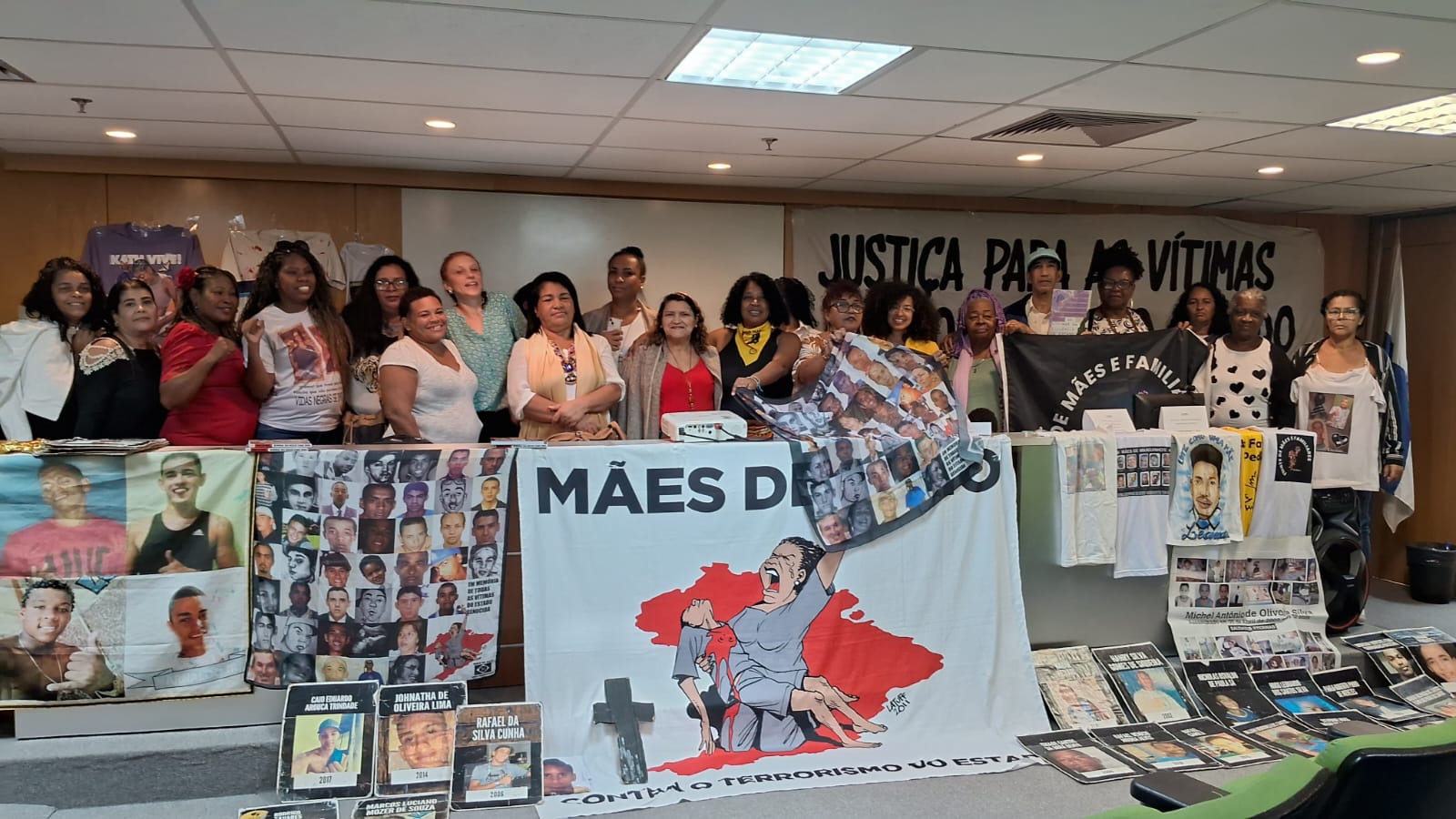
Resilient Citizenships (funded by the Bloomberg Center for Cities, the Center for Public Leadership, and DRCLAS) engages in collaborative research alongside grassroots groups of mothers of victims of state violence, aiming to inform public policies that reduce police violence and protect victim rights. Initial research focused on mothers of victims of police killings in Brazil, who subsequently experienced significant physical and mental health impacts. This led to a July 2024 report published with the Federal University of São Paulo, titled, “Voices of Pain, Struggle and Resistance of Mothers of Victims of State Violence in Brazil.” Findings were presented to Brazil’s Ministry of Human Rights and Ministry of Justice and Public Security, and featured in op-eds in Folha de S.Paulo and Veja.
Political and Social Drivers of Support for Police Killings: Evidence from Survey Experiments in Five Latin American Cities, led by Michael Weintraub, examines cross-national and subnational variation in levels of police violence through an original survey across five Latin American cities. The project explores why Brazil experiences much higher rates of police killings than Colombia despite similar socio-economic conditions. Through survey experiments, the study tests whether public attitudes toward police violence are shaped by contextual factors like crime rates or social identities, political framing, and citizen attitudes toward victims, hypothesizing that the latter is a greater determinant of citizen support.
The lab is led by:
Ford Foundation Assistant Professor of Public Policy