
Q+A
Danielle Allen’s “Radical Duke” reveals an unsung catalyst of history
Allen uncovers the deep—then volatile—friendship between a British duke and Thomas Paine.
Video
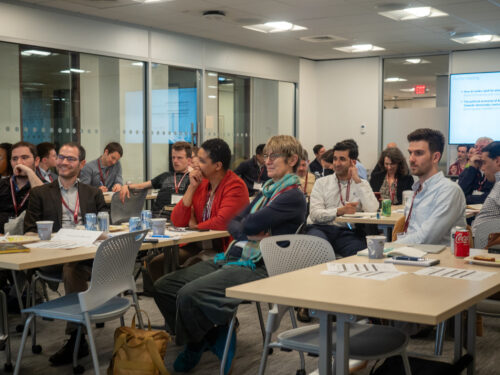
The Political Economy of AI Conference was convened by the GETTING-Plurality Research Network, a project of the Allen Lab for Democracy Renovation, housed at the Harvard Kennedy School’s Ash Center for Democratic Governance and Innovation.
Q+A
Allen uncovers the deep—then volatile—friendship between a British duke and Thomas Paine.
Commentary
Allen Lab member Charlie Covit reflects on the After Neoliberalism conference and examines the intersection of artificial intelligence and the future of work, arguing that AI forces a democratic reckoning with the meaning of labor itself and that an economy which generates abundance while stripping citizens of purpose and dignity undermines the very foundation of democratic life.
Media Release
A new book from Harvard scholar Danielle Allen revisits the forgotten British radical movement that helped shape modern democracy.
Commentary
Allen Lab member Charlie Covit reflects on the After Neoliberalism conference and examines the intersection of artificial intelligence and the future of work, arguing that AI forces a democratic reckoning with the meaning of labor itself and that an economy which generates abundance while stripping citizens of purpose and dignity undermines the very foundation of democratic life.
Media Release
New study published in AI and Ethics introduces a new ethical-moral intelligence framework for AI and finds that leading AI models mimic human moral concern while making decisions that reveal a hidden value hierarchy.
Article
A new chapter in APSA Preprints by Archon Fung, Winthrop Laflin McCormack Professor of Citizenship and Self-Government and Director of the Ash Center, Bailey Flanigan, former postdoctoral fellow at the Ash Center and co-authors explores how generative AI is reshaping four dimensions of democratic practice—political campaigns, election administration, social movements, and citizen deliberation. The authors argue that AI’s ultimate democratic impact will depend less on the technology itself, and more on how institutions and leaders implement and regulate it.