
Erica Chenoweth
Frank Stanton Professor of the First Amendment


Protest is the bedrock of democracy. But why do people take to the streets, and how do protestors achieve change? At the Ash Center, we’re working to answer these questions.
From the Boston Tea Party and the U.S. civil rights movement to contemporary climate action demonstrations, civil protest is a fundamental tool for influencing political change. While protest movements are an indelible part of contemporary political life, little is often understood about what motivates people to take to the streets and how they achieve nonviolent political goals.
Our scholars analyze protest movements, learn from protestors themselves, and develop tools to help understand why some protests succeed and others fail.
Frank Stanton Professor of the First Amendment

Lecturer in Public Policy

Assistant Professor of Public Policy

Research Project Manager, Nonviolent Action Lab
Research Associate, Crowd Counting Consortium

Lead Research Fellow for the Nonviolent Action Lab, AY2025-2026
Commentary
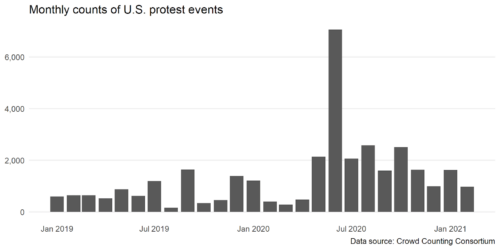
So far, we’ve recorded 980 protest events in the U.S. in February 2021, with about 29,000 to 35,000 reported participants in them.
Commentary
Commentary
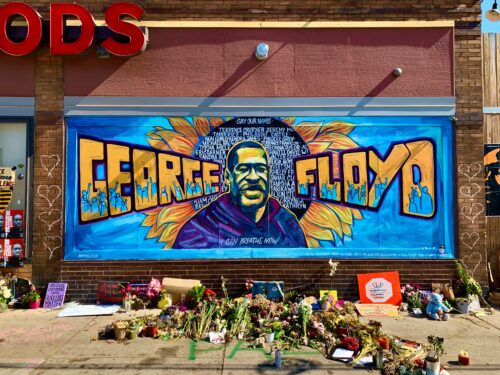
Just how large and broad was that wave of protests after the death of George Floyd? How destructive was it? And how did police and right-wing counter-protesters respond to it?
Commentary
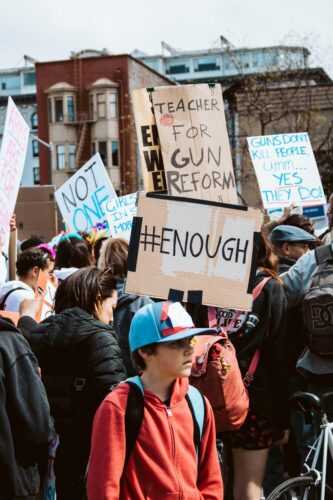
Under the Trump administration, what did Americans protest about?
Feature
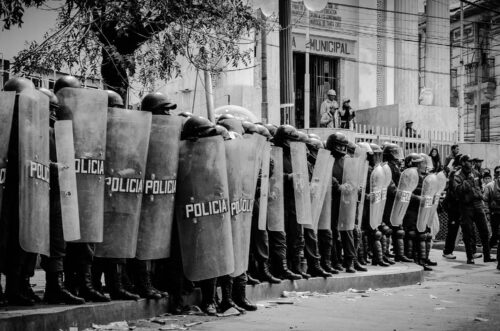
Kennedy School Assistant Professor Yanilda González delves into the roots of police violence in democratic countries in her latest book.
Video
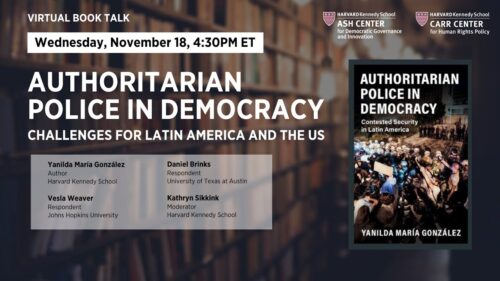
The Ash Center and Carr Center for Human Rights hosted an event for the launch of Authoritarian Police in Democracy: Contested Security in Latin America by HKS Assistant Professor Yanilda María González.
Video
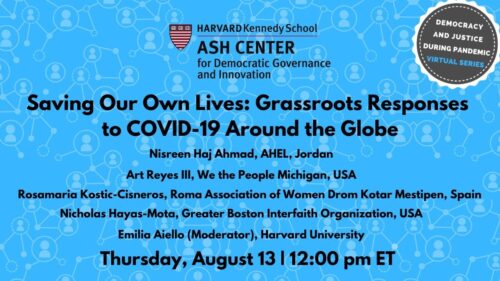
To what extent have these organizations proven better equipped to deal with the pandemic response, and what are the challenges that these associations face when organizing in the age of COVID-19? In addition, how can they seize this moment to turn their organizing into power and influence in political and economic life?
Article
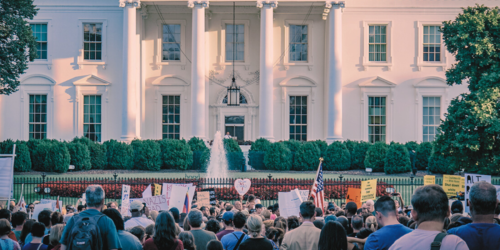
Since the inauguration of Donald Trump, there has been substantial and ongoing protest against the Administration. Street demonstrations are some of the most visible forms of opposition to the Administration and its policies. This article reviews the two most central methods for studying street protest on a large scale: building comprehensive event databases and conducting field surveys of participants at demonstrations.