
Erica Chenoweth
Frank Stanton Professor of the First Amendment


Our team explores how protest and dissent serve as vital forces in democratic societies, shaping public discourse, advancing social change, and informing scholarly research on civic participation and institutional accountability.
Protest and dissent are essential expressions of democratic life, enabling individuals and communities to voice grievances, demand accountability, and advocate for political and social change. Through public demonstration, artistic expression, digital activism, and other forms of collective action, dissent shapes public discourse and influences institutional reform.
Our scholars research on protest and dissent examines their role in strengthening democratic responsiveness, protecting fundamental freedoms, and navigating the tensions between authority and civic participation.
Frank Stanton Professor of the First Amendment

Lecturer in Public Policy

Assistant Professor of Public Policy

Research Project Manager, Nonviolent Action Lab
Research Associate, Crowd Counting Consortium

Lead Research Fellow for the Nonviolent Action Lab, AY2025-2027
Commentary
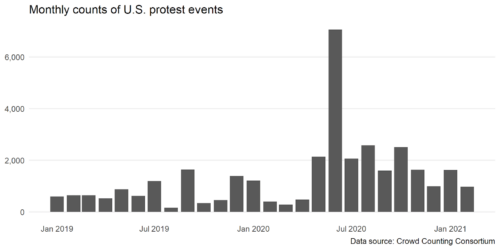
So far, we’ve recorded 980 protest events in the U.S. in February 2021, with about 29,000 to 35,000 reported participants in them.
Commentary
Commentary
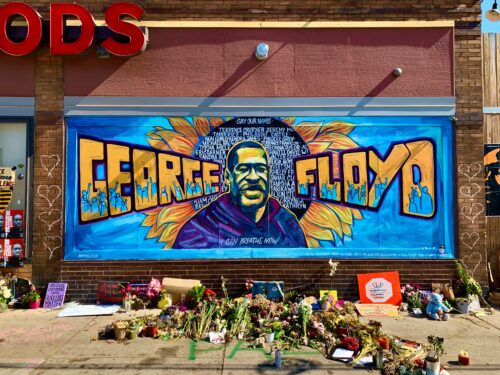
Just how large and broad was that wave of protests after the death of George Floyd? How destructive was it? And how did police and right-wing counter-protesters respond to it?
Commentary
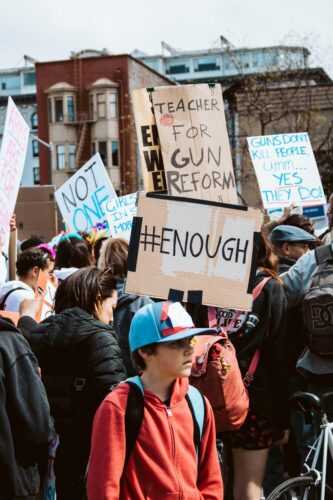
Under the Trump administration, what did Americans protest about?
Feature
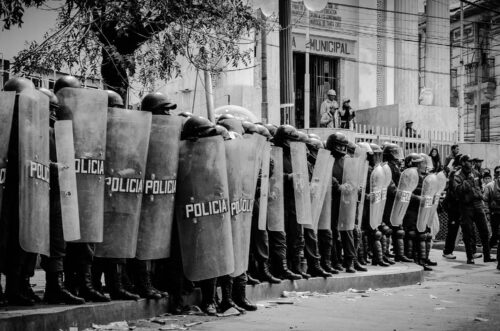
Kennedy School Assistant Professor Yanilda González delves into the roots of police violence in democratic countries in her latest book.
Video
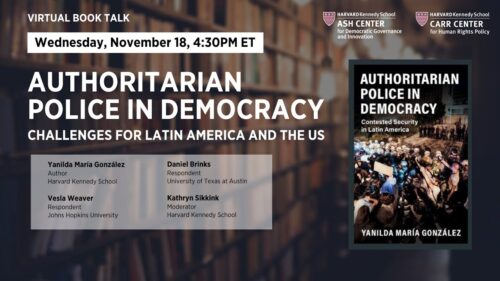
The Ash Center and Carr Center for Human Rights hosted an event for the launch of Authoritarian Police in Democracy: Contested Security in Latin America by HKS Assistant Professor Yanilda María González.
Article
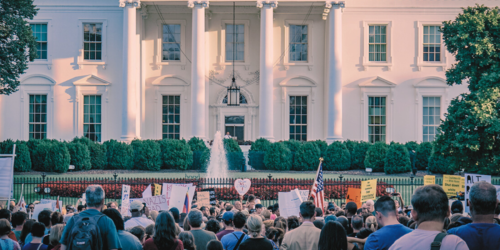
Since the inauguration of Donald Trump, there has been substantial and ongoing protest against the Administration. Street demonstrations are some of the most visible forms of opposition to the Administration and its policies. This article reviews the two most central methods for studying street protest on a large scale: building comprehensive event databases and conducting field surveys of participants at demonstrations.