
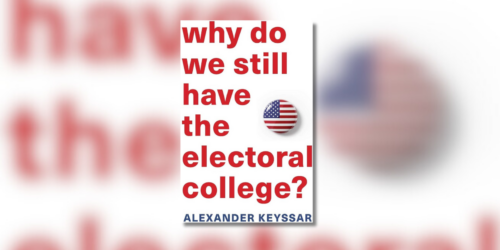

In Why Do We Still Have the Electoral College?, Alexander Keyssar explores the institution’s origins and persistent survival despite widespread public opposition, showing how partisan interests and constitutional barriers have repeatedly derailed reform.
With every presidential election, Americans puzzle over the peculiar mechanism of the Electoral College. The author of the Pulitzer finalist The Right to Vote explains the enduring problem of this controversial institution.
Every four years, millions of Americans wonder why they choose their presidents through the Electoral College, an arcane institution that permits the loser of the popular vote to become president and narrows campaigns to swing states. Most Americans have long preferred a national popular vote, and Congress has attempted on many occasions to alter or scuttle the Electoral College. Several of these efforts—one as recently as 1970—came very close to winning approval. Yet this controversial system remains.
DOCE Beats DOGE: The Case for Meaningful Government Transformation Through Citizen Empowerment
A new policy brief by Jon Alexander, Non-resident Democracy Fellow at the Ash Center, argues for the development of a Department of Citizen Empowerment (DOCE) at all levels of government around the world.
Allen Lab Fellow Hillary Lehr convened a Voter Experience Summit at Harvard’s Ash Center in March, bringing together 25 cross-sector experts to rigorously map the voter journey. This essay explores how that collaborative process could lay the groundwork for new interventions to understand and improve the experience of voting for all.
After Neoliberalism: From Left to Right brought together hundreds of leading economists, political scientists, journalists, writers and thinkers from across the political spectrum to explore and debate emerging visions for the future of the political economy.