
Open Access Resource
Open Book: Open-Source Budget Transparency for Municipalities
With a majority of municipalities publishing their budgets as PDFs, Open Book offers a free alternative that towns own and run themselves.

Through our books, case studies, journal articles, papers, and surveys, the Ash Center is home to some of the world’s most advanced research and publications on issues related to democratic governance and self-governance.
To explore all research authored by Ash Center faculty, please visit the Harvard Kennedy School website. You can view the Ash Center’s open access policy here.
Open Access Resource
With a majority of municipalities publishing their budgets as PDFs, Open Book offers a free alternative that towns own and run themselves.
Newest
Article
In this study, Archon Fung and Stephen Kosack assess the current state of transparency initiatives across the globe. Honing in on interventions with a focus on “transparency for accountability”—which show mixed results—they develop a framework of five “worlds” that helps account for the variation in outcomes.
Book
Policy Brief

Article
In a landmark 2013 Science piece, David Weil, Mary Graham, and Archon Fung coin “targeted transparency”: the idea that governments can hit big policy goals — safer cars, healthier menus, cleaner factories — simply by forcing companies to disclose the right information at the right moment. It’s worked before (think fuel-economy stickers), but the authors warn it can just as easily backfire into empty paperwork. So when does sunlight actually change behavior, and when is it just noise?

Paper
Book
Book
Paper
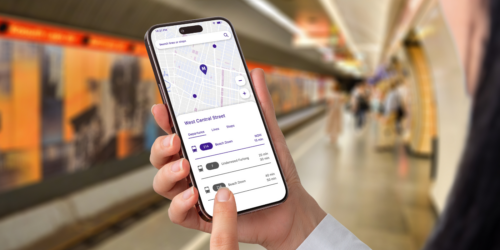
When Portland’s TriMet released its raw bus and train data to the public, it had no idea what would happen next. Francisca M. Rojas traces how that one decision to open the books sparked an entire marketplace of apps — and asks why some transit agencies embraced it while others resisted for years.

Paper
Recovery.gov let anyone track $275 billion in stimulus spending, project by project, in real time — the boldest transparency experiment the federal government had ever tried. Francisca M. Rojas dug into six states to see who actually used all that data, and the answer wasn’t quite the army of “Citizen Inspector Generals” reformers had imagined.