Under the Safe Drinking Water Act of 1974, the federal Environmental Protection Agency (EPA) set maximum safe contaminant levels for drinking water and required water systems to notify customers of violations. However, in practice such notification often did not take place. Public attention focused on the health risks associated with contaminated water in 1993 after the largest outbreak of waterborne disease on record in the United States. In Milwaukee, Wisconsin four hundred thousand people became sick, forty-four hundred were hospitalized, and more than fifty died from drinking water contaminated with a microbe called cryptosporidium.
In response, Congress in 1996 amended the federal Safe Drinking Water Act to require that water suppliers, starting in October 1999, provide customers with annual Consumer Confidence Reports (CCR) on contamination. The annual reports included information on the source of tap water, contaminants found in the water, sources of contamination, and violations of the federal EPA maximum contaminant levels. Their purpose was to allow consumers to make better choices concerning their use of tap water and to encourage water utilities to be more vigilant in minimizing contaminants.
The Milwaukee incident was not the only driver of greater transparency. Americans were losing confidence in their public water supplies. Surveys in the late 1990s found that only three-quarters of Americans regularly drank tap water, and 65 percent increasingly used bottled water or filtered water at the tap. Experts suggested that drinking water contaminants were responsible for as many as one-third of nine hundred thousand “stomach flu” illnesses each year.
Contamination levels varied widely with seasons, rainfall, and waste discharges. Sometimes chemicals and microbes entered systems as water flowed to homes through century old pipes. The federal EPA stated in 2004 that 27 of the 834 water systems serving more than fifty thousand people had exceeded federal safety standards for lead at least once since 2000, which even in small amounts can cause neurological problems in children and high blood pressure in adults. The water system serving the nation’s capital had failed to comply with sampling requirements and had failed to report to consumers that more than 10 percent of tap water samples since 2000 exceeded federal lead levels.
Transparency requirements proved too weak to help residents assess risks or compare the safety of different water systems, however. They did not require consistent protocols, units of measurement, or formats for reporting contaminants. In 2003, an analysis of drinking water reports in nineteen cities by the National Resources Defense Council, an environmental group, found that some cities buried or omitted information about health effects of contamination or warnings to consumers with compromised immune systems, all omitted information about specific polluters, fewer than half offered reports in languages other than English, and many made sweeping and inaccurate claims about water safety despite violations of federal contaminant levels.
Reports had improved little over the years in scope, quality, or use despite expert advice. In 2004, experts convened by the federal Government Accountability Office (GAO) ranked “near real-time monitoring technologies” to detect contaminants as the highest priority in improving drinking water security. Two years earlier, the National Academy of Sciences rated improved monitoring technologies as one of four top security priorities for drinking water supplies.
A 2008 study of Massachusetts’s water system by Bennear and Olmstead found that total contaminant violations went down and severe health violations decreased 40-57% in response to the reporting requirements. But a 2011 GAO report was less optimistic. The report found serious gaps on the water quality data generated by local water utilities and states. The study found that, for a sample of 14 states, 26 percent of health violations and 86 percent of monitoring violations were inaccurately reported or not reported at all, casting doubt on the federal EPA’s ability to enforce safe drinking water regulations.
In 2014, when residents of Flint, Michigan reported their tap water had suddenly turned dark and smelly, state and local officials initially reassured them about its safety but eventually acknowledged serious health risks, including high levels of lead in children and a related outbreak of legionnaires’ disease. The city had started drawing drinking water from the polluted Flint River without adequate treatment while working on a new water system. The outbreak drew national attention and calls for infrastructure improvements and better monitoring. The city eventually spent nearly $100 million replacing old service lines and residents reached a $626 million court settlement with the state.
Other contamination incidents reenforced public concern about inadequate disclosure. In 2016, when public schools in Newark, New Jersey reported elevated lead levels, the city delivered bottled water to schools and agreed to more frequent testing, amid lawsuits and more national publicity. By 2021, most of the city’s lead pipes had been replaced.
High levels of lead and other contaminants in tap water often derived from the aging service lines that connected residences, schools, and businesses to public water mains. As a result, contaminants might test within government limits at filtration plants but reach dangerous levels before water reached customers’ taps. The government estimated that replacing those lines nationwide would cost billions of dollars. Simply identifying lead lines remained a challenge for local governments. Lead had often been used for water service lines until banned by the federal government in 1986. Scientists agreed than even low levels of lead could lead to health problems in adults, and neurological and physical problems in children.
In response to these incidents, Congress attempted in 2018 to improve contaminant disclosure by expanding somewhat circumstances in which contaminants had to be reported, requiring water systems serving more than 10,000 customers to report twice a year and allowing but not requiring consumer reports to be communicated electronically. The federal EPA rulemaking was in progress in 2022.
Meanwhile, advancing science continued to identify new health concerns. Drinking water often contained PFAS (per- and polyfluoroalkyl substances), a class of thousands of man-made chemicals used in manufacturing and household products and known as “forever chemicals” because they broke down only slowly. Some PFAS are linked to potential cancers, impaired immune system, fetal development, and other health dangers. In 2021, the federal EPA proposed to set limits on two common PFAS chemicals by 2023. More than ten states passed legislation requiring PFAS monitoring and/or regulation.
Surveys continued to suggest that many Americans did not trust the safety of their tap water. Eighty per cent of respondents to a 2021 Gallup poll expressed either a great deal or a fair amount of worry about the pollution of drinking water.
Inaccurate, incomplete, or outdated reporting remained a problem. A 2018 research paper from the National Academy of Sciences found that nearly 21 million people were using community water systems that violated federal standards, with an estimated 26–38% of health-based violations unreported or inaccurately reported.
New legislation increased federal financial support for state and local efforts. Congress responded to contamination incidents by sending more funds to the states to finance pipe replacement. In 2021, the Biden administration proposed a 10-year effort to replace all lead lines in the United States and Congress included $15 billion to replace lead pipes in the 2021 $1 trillion infrastructure legislation. Also in 2021, Congress approved a Drinking Water and Wastewater Infrastructure Act that reauthorized funding and prioritized lead abatement.
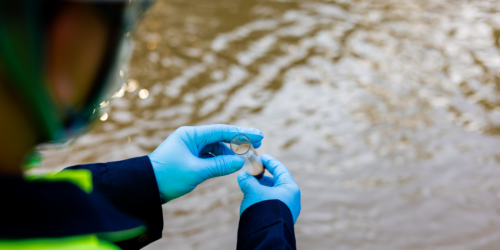
Technology held promise for the future. In 2022, private companies were marketing at-home test kits for lead for under $30.00. To provide information about aging pipes, robotic devices equipped with cameras, sensors, and other devices were tested to explore water-supply pipes.
But information problems persisted, and health risks often remained greatest for low- or moderate-income residents. Testing for multiple contaminants at the tap still required sending samples to laboratories. Current information about system-wide contaminants remained difficult to obtain since federal and state rules still did not require real time disclosure of contaminants. Many customers could not afford to pay the fees for tap water lab tests or the thousands of dollars that cities sometimes charged to replace lead pipes that connected public water mains to homes, schools, and businesses.
Updated May 2022
This case study is drawn from Full Disclosure, Fung, Graham and Weil, 2007.