
Commentary
California Writes Public Deliberation Into Law
Engaged California is the nation’s first state-run deliberation program, and a new law aims to make it last.
Read the latest news, commentary, and analysis from the Ash Center.
Commentary
Engaged California is the nation’s first state-run deliberation program, and a new law aims to make it last.
Newest

Feature
Amid rising threats, harassment, and political polarization, panelists at a recent Ash Center webinar discussed how law enforcement and election officials can collaborate to protect voters and election workers while safeguarding public trust.
Commentary
Engaged California is the nation’s first state-run deliberation program, and a new law aims to make it last.

Video
Social media has become one of the primary ways that families, communities and societies stay connected. As its use becomes increasingly embedded in everyday life, opting out can feel difficult for those who want to remain connected to others. At the same time, critics argue that people may be better off using social media less, or perhaps not at all. Why, then, do people continue to use products they may believe are ultimately harmful to their well-being?
The Program on Democracy and the Informed Public hosted a seminar with Cass Sunstein, Robert Walmsley University Professor at Harvard University and founder and director of the Program on Behavioral Economics and Public Policy at Harvard Law School.

Commentary
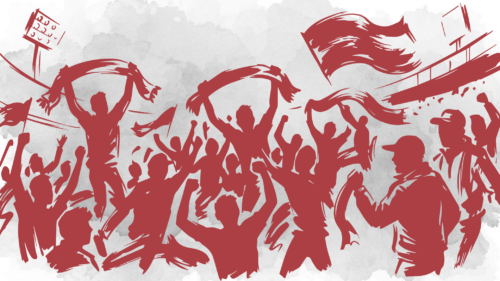
In this opinion piece, Audrey Feldman, Todd Rogers and Ben Valenta — participants in the Sports, Democracy and Civic Health project — describe their findings showing that shared fandom can soften partisan animosity and make political opponents more willing to connect.
Q+A
New research from More in Common explores how sports connect Americans across differences and strengthen their community ties.
Feature
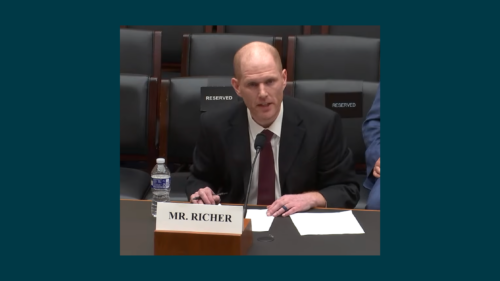
On Tuesday, September 15, 2026, former Maricopa County Recorder Stephen Richer, now an Ash Senior Fellow and election administration expert, testified before the House Judiciary Subcommittee on Oversight. The hearing examined allegations that approximately 6,600 noncitizens were improperly registered to vote in New Jersey between June 2023 and June 2024.

Media Release
The new program brings together scholars, sports leaders, and civic organizations to explore how sports can strengthen American democracy.

Video
In this webinar moderated by Tova Wang, director of democratic research projects at the Ash Center, panelists Julia Angwin, Amanda Yarnell, Tommy Gong, and Brianna Wiggity Weck explore how election officials can leverage social media’s reach to improve public awareness around voter registration, voting, and election integrity. The discussion builds on the Ash Center paper, “Building Capacity to Use Social Media: How Election Officials Can Leverage Content Creation to Provide Accurate Voter Information,” which outlines frameworks for collaboration between election officials and digital content creators.

Q+A
As the United States approaches its 250th anniversary, questions about the nation’s history — and whose stories shape its meaning — have renewed significance. Moderated by journalist and political commentator Eugene Scott, a recent panel discussion explored how Americans’ understanding of the past informs national identity, perceptions of democracy, and civic engagement.