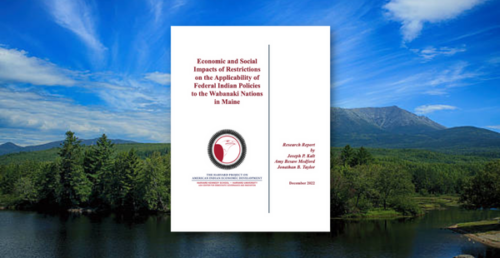
Economic and Social Impacts of Restrictions on the Applicability of Federal Indian Policies to the Wabanaki Nations in Maine
The subjugation of the Wabanaki Nation’s self-governing capacities is blocking economic development to the detriment of both tribal and nontribal citizens, alike.
For at least the last several decades, federal Indian policy in the US has supported tribal self-determination through tribal self-government. The results have been (1) remarkable economic growth across most of Indian Country, and (2) concomitant expansions of the responsibilities and capacities of tribal governments. Hundreds of tribes across the other Lower 48 states now routinely serve their citizens with the full array of governmental functions and services that we expect from non-Indian state and local governments in the US, and increasing numbers of tribes are the economic engines of their regions.
Unique to Maine, the federal Maine Indian Claims Settlement Act of 1980 (MICSA) empowers the state government to block the applicability of federal Indian policy in Maine. As a result, the development of the Wabanaki Nations’ economies and governmental capacities have been stunted. Today, all four of the tribes in Maine—Maliseet, Mi’kmaq, Passamaquoddy, and Penobscot—are stark economic underperformers relative to the other tribes in the Lower 48 states.
The subjugation of the Wabanaki Nation’s self-governing capacities is blocking economic development to the detriment of both tribal and nontribal citizens, alike. For the tribal citizens of Maine held down by MICSA’s restrictions, loosening or removing those restrictions offers them little in the way of downside risks and much in the way of upside payoffs.
Importantly, we find in this study that “nowhere to go but up” also applies to the Maine state government and Maine’s non-tribal citizens. From case after case, the pattern that has emerged under federal policies of tribal self-determination through self-government is one in which tribal economic development spills over positively into neighboring non-tribal communities and improves the abilities of state and local governments to serve their citizens. As is the case with any neighboring governments, conflicts can arise between tribal and non-tribal governments. The overall experience outside of Maine in this regard has been that increasingly capable tribal governments improve state-tribal relations by enabling both parties to come to the table with mature capacities to cooperate. Against these upside prospects is a status quo in which all sides leave economic opportunities on the table and ongoing cycles of intergovernmental conflict, litigation, recrimination, and mistrust continue.
American Indian Casino Operations and Firm Long-Run Employment and Sales
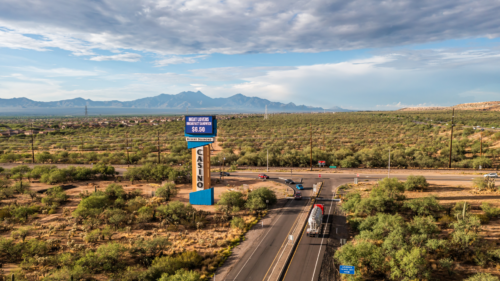
A new working paper by Randy Akee, Julie Johnson Kidd Professor of Indigenous Governance and Development, and co-authors examines the role of The Indian Gaming Regulatory Act of 1988 in facilitating sustained private-sector growth for American Indian reservations through tribal casino development.
The Disproportionate Burden: Health and Economic Outcomes of COVID-19 for Native American Communities
A new research article by Randy Akee, Julie Johnson Kidd Professor of Indigenous Governance and Development and Director of the Project on Indigenous Governance and Development, and co-authors examines enduring consequences of the COVID-19 pandemic among American Indian and Alaska Native (AIAN) populations.
American Indian Casino Operations and Firm Long-Run Employment and Sales
A new working paper by Randy Akee, Julie Johnson Kidd Professor of Indigenous Governance and Development, and co-authors examines the role of The Indian Gaming Regulatory Act of 1988 in facilitating sustained private-sector growth for American Indian reservations through tribal casino development.
The Disproportionate Burden: Health and Economic Outcomes of COVID-19 for Native American Communities
A new research article by Randy Akee, Julie Johnson Kidd Professor of Indigenous Governance and Development and Director of the Project on Indigenous Governance and Development, and co-authors examines enduring consequences of the COVID-19 pandemic among American Indian and Alaska Native (AIAN) populations.