Archon Fung: Hey, this is Terms of Engagement. I’m Archon Fung, a Faculty Member at the Harvard Kennedy School and Faculty Director of the Ash Center for Democratic Governance and Innovation.
Stephen Richer: And I’m Stephen Richer, I’m the former elected Maricopa County Recorder, and I’m now a Senior Fellow at the Ash Center.
Archon Fung: So, we record this show live, so if you’d like to join the conversation and you’re joining us live, please tune in and put your comments in at any time. And if you’re not live, put your comments and thoughts in the chat or send them via email at info@ash.harvard.edu.
Stephen Richer: And we really do, and we really appreciate those comments, and they form part of the conversation. So Archon, what’s going on this week?
Archon Fung: So, I went to the No Kings protest on Saturday in Boston Common, joining 180,000 of my best friends. I’m guessing you didn’t go to the one in Phoenix, or did you make it out?
Stephen Richer: I have such mixed feelings about some of these types of demonstrations, and I’m just so, I don’t know, dispositionally anti-demonstrations. So then this one, and it was in the middle of the afternoon on Saturday, and that’s prime nap time. That’s all a long way of saying that we had a lot of protests in Arizona. I support many of the things associated with that. I hate it when it gets into mission creep and just starts to look like the panoply of left of center values.
Archon Fung: There was a lot of that.
Stephen Richer: Yeah. Well, that’s a long way of saying no, I didn’t.
Archon Fung: Yeah. And this one felt to me more mainstream, it had more of a festival feel than some of the others, which was interesting. And the Dropkick Murphys were there and they played six songs, so that’s felt like almost like a set to me. So, that was good. The other thing, many things in the news, but the other is gas prices. I’m blissfully unaware of those because being East Coast, urban, progressive, I ride my electric bike to work, but I read in the Times that gas is above five bucks a gallon in Arizona. Is that right?
Stephen Richer: Yeah, and we are far from an electric bike riding town of people in the Phoenix metro area, we love our cars. We have big open roads and everyone likes their space, and so it is very impactful here. I think it was part of why President Biden soured in the 2021 to 2024 period, because gas prices were so high, and it’s happening again now. So, normal gasoline is about $5 a gallon. And then premium I think is up to maybe $5.50, and that’s because we don’t have as many refineries in Arizona. We get a lot of our gasoline from California. And basically, hopefully this just means that a lot of people are appreciating the beauty of a lighter regulatory touch in the natural resources sector, which I’m sure you’ve given a lot of thought to.
Archon Fung: Or on the other side, President Trump could be playing a three-dimensional chess in which he’s accelerating the green revolution and the climate transition to a post-carbon future.
Stephen Richer: A lot of people have said he’s not an ideological person. He takes his wins where he can get them, and that he’s totally comfortable with changing positions. That being said, I think that’s a bit of a stretch.
Archon Fung: Yeah, maybe. But we’re not here today to talk about climate or gas prices or protests. We are here to talk about the elections. And we’ve got a fantastic guest, a friend of both of ours, who, a longer term friend of Stephen’s. I’ve had the pleasure of meeting and doing some work with Ben over the last few years.
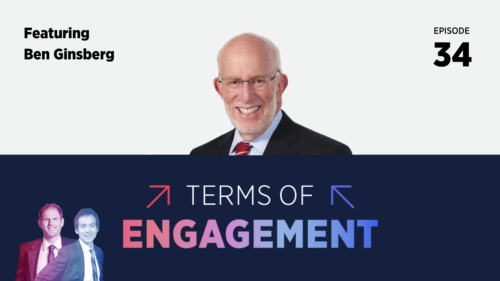
Our guest today is Ben Ginsberg, who’s the Volcker Distinguished Visiting Fellow at the Hoover Institution. He is a longtime and very prominent legal and political advocate. He has served four of the past six Republican presidential nominees and most recently, Mitt Romney. He was the Co-chair of the Bipartisan Presidential Commission on Election Administration, which produced a very impactful and important report on best practices for elections and election officials. And remarkably, notably, he was National Counsel to the 2000 and 2004 Bush-Cheney presidential campaigns, and he played a central role in the 2000 Florida recount legal battles for Team Bush. And in 2012 and 2008, he served as National Council to the Romney campaign for president. So, let’s welcome Ben Ginsburg.
Ben Ginsberg: Hello, fellas. Thanks for having me.
Stephen Richer: Now he’s in sunny California, where the gas prices are high and the corner bakery costs about $30 to have a lunch.
Ben Ginsberg: So, I hate to fact check you, but it’s raining and overcast here today in Palo Alto. And gas is exorbitantly much higher than Arizona.
Stephen Richer: Over $6 a gallon, I would imagine?
Ben Ginsberg: Yeah. Yeah, yeah. Taxes, taxes.
Stephen Richer: Taxes.
Ben Ginsberg: Taxes.
Stephen Richer: There is a corner bakery that’s near Hoover, near Stanford, and I do remember being blown away when I went there recently and ordered what I thought was a pretty normal lunch for both my wife and for me. And I think it was like $55 in total. So between that and the gas price and-
Ben Ginsberg: Owners need to pay for the gas too.
Stephen Richer: No, no, no, no. Absolutely. So markets are a real thing, market send signals. And when global oil is affected, as it is obviously right now, then that has reverberations.
Archon Fung: On the progressive side, gas taxes are a very, very regressive form of taxation.
Stephen Richer: Yeah. No, that’s why I like them.
Ben Ginsberg: Absolutely.
Stephen Richer: Their consumption taxes so they’re fair, actually. But as always, we welcome your comments. So start popping them in. What we’re actually talking about, as Archon mentioned, is there’s been a lot of discussion of, what role does the federal government play in election administration? As Ben will tell you later, Article One, Section Four of the United States Constitution largely delegates both the lawmaking and the administration to the states, who then in turn will delegate it to the local jurisdictions, oftentimes the counties, and it’s they who are administering the elections.
Now, there is a role for Congress, Congress does have some legal oversight and can set broad, legal rules, including the Voter Registration Act, the Voting Rights Act, the National Voter Registration Act, the Help America Vote Act, the UOCAVA Act was also important for military and overseas voters. But now, it’s coming up in some new contexts, specifically with respect to the President’s comments about possibly nationalizing election administration in 15 different states. The President has signed an executive order pertaining to election administration in March of 2025. And of course, right now, the Congress is debating the Save America Act, which would set a bunch of new policies and requirements at the federal level for election administration.
And so, we wanted to talk to Ben because Ben and his colleague, Bob Bauer, have formed a new organization that is aimed at addressing the role of the federal government in election administration and defending the rights of states in election administration. Ben, is that a fair characterization?
Ben Ginsberg: It is a fair characterization. Thank you very much for that, better than I probably could have said it myself. I mean, the overall aim of our group, the Bipartisan American Election Project, is to be able in a bipartisan manner to go into courts and remind judges what the constitutional principles that have undergirded the democracy for so long are. So, we have a very bipartisan group. We do believe in Article One, Section Four, that the states have the time, place, and manner.
I’m an old enough Republican to remember when state’s rights and the 10th Amendment was a cornerstone of Republican and conservative orthodoxy. And in fact, the role of the states was paramount in elections. In fact, as recently as 2018 and ’19, Republicans fought the Democrats in their attempts at revising the election and you misnamed For The People Act, and Republicans argued that it was a federal encroachment into the right of the states. So the talk now, led by the President and some of the legislation, is an exact reversal of that traditional role of the states being closer to the elections.
Archon Fung: And so, Ben, so the President in several different venues, certainly on February 2nd in an interview with Dan Bongino, said, “We want to take over. We should take over the voting, the voting in at least as many as 15 places. The Republicans ought to nationalize voting,” but I mean, that’s a pretty vague word. What do you consider the elements of nationalization that we’re talking about, and which ones of those are you most concerned about?
Ben Ginsberg: Well, when Bob Bauer and I did the Presidential Commission on Election Administration, we were told repeatedly across the board in the hearings we did across the country, that one size does not fit all in elections, and that local knowledge of the way their election should be run is the cornerstone of what has made our democracy so successful. And we did make a policy decision 240 years ago that elections would be really local. And so we now have a number of jurisdictions, somewhere between 8,000 and 10,000, nobody quite knows the exact number, but separate jurisdictions responsible for the casting, counting, and certification of votes because of the fundamental belief that people on the local level know best on how to get their voters out to participate in the democracy.
So, any of the proposals that the president has talked about, whether that’s a uniform ID rule, whether in fact the federal government does know better, is really different from that basic concept that elections should be local. So I look at nationalization of elections as any attempt that would corrode that notion that people on the local level know best.
Stephen Richer: So, I know you don’t have insight into President Trump’s brain and what exactly he was envisioning, but just humor me here a bit. What do you think he, nuts and bolts, was thinking of when he said, “Nationalize 15 jurisdictions”? Do you think he meant sending the DOJ to monitor 15 jurisdictions? Do you think he meant sending federal personnel to actually administer elections? Or do you think he meant passing an executive order or something that was targeting 15 jurisdictions?
Ben Ginsberg: So, probably-
Archon Fung: Towards receipt of mail-in ballots by election day, etc?
Ben Ginsberg: Well, it seemed to me that at one point or another, all three of those were possibilities of things running through his mind. I mean, if you took 15 jurisdictions, you can pretty much guess which ones they are. They’re large urban jurisdictions in key states, where there are either House races that touch on those jurisdictions, or Senate races, or gubernatorial elections. He has repeatedly made the allegations that there are fraudulent votes in there and that the system is rigged.
So I think he could have made any, but I think there’s a fourth possibility too, Stephen, which is in many areas of the president’s approach to issues is to talk a big game, leave people unsure of where he’s going, and impact behavior through the rhetoric. Right? So in Iran, it may be what’s happening with the Strait of Hormuz and whether there’s peace or not. In the election area, it may be trying to impact people’s desire to go out to vote. So that whether he does any of your three levels, there’s the fourth level of what that does to people’s desire to participate in the system.
Archon Fung: A few weeks ago, we were talking about how urgently each of us felt some kind of national action was that threatened the free and fairness of the election. And for Stephen, I remember you said, “Well, Fulton County cranked the alert level up a little bit for you.”
Stephen Richer: Yes.
Archon Fung: And so, then that’s just not a fourth level talking big, that’s actually doing something. That’s seizing ballots in the case of Fulton County, and in Maricopa, I suppose it’s voting machines and equipment. So, does that-
Ben Ginsberg: And Puerto Rico, don’t forget Puerto Rico.
Archon Fung: And Puerto Rico, right. So do those, they’re about 2020, not about ’26 or ’28, but do they presage something like more than talking big for you, Ben?
Ben Ginsberg: Yeah. So, I think you have to look at all the events that have taken place since January of 2025 and looked at what’s happened. There is the executive orders, which had been held back. A hotly rumored second executive order that’s been coming any day now for about the last eight months. And what those things talk about, which is a federalization of elections, I think you have to look at what’s happened to the Department of Justice, which includes seizing those records. It also includes the suits in 30 states over the private personal information on the voter rolls.
I think you have to look at the subtle things within the department, like the change in the mission statement of the civil rights division to much more election focused. You’ve got a national security advisor involved all of a sudden in looking at the election. There’s the threat of polls having a lot of troops around the polls. You need to look at the changes in personnel and who’s in some of the key roles in the administration and many more people who supported Presidents Trump charges about elections are now serving in this administration. I think you have to pay attention to what’s being done or could be done to the United States Postal Service and the delivery of ballots.
And I think certainly last and but not least, you have to look at the stripping down of all the cybersecurity agencies who helped local election official fend off threats. And you see all of those things together in unprecedented fashion in roughly a little over a year, the administration, you hear the rhetoric from the President, and I don’t think you can ignore those smoke signals.
Stephen Richer: Do you think that there is a role for the federal government in election law or in election administration?
Ben Ginsberg: Sure, there can be under some circumstances. I mean, you mentioned UOCAVA and-
Stephen Richer: Oh, right. So, everyone broadly accepts that it’s okay that the federal government said in UOCAVA that military voters have to be sent their ballots 45 days in advance of the general election. Okay, great, that’s federal government telling the states how to administer their elections.
Ben Ginsberg: On behalf of people who are working for the federal government, it’s serving a unique role in the country.
Stephen Richer: But a lot of people are saying right now, the federal government shouldn’t tell states how to do voter identification. The federal government shouldn’t tell states how to confirm that somebody’s a United States citizen. Is this just a line drawing exercise? And if so, do you have a place where you draw the line?
Ben Ginsberg: Well, I draw the line really in what is the time, place, and manner, language in the Constitution.
So, I think you have to put a couple of these issues aside and talk about them separately. ID is one of those issues. It seems to me that a common form of identification, or at least a set of identifiers, is something that would be a positive policy that would give people more confidence in the election. So, something to be looked at. I think the idea of only citizens being able to vote and the citizenship test is sort of a false issue. It is already against the law, we should remember. And in fact, the penalties for being caught are so huge that it would be foolish as somebody in this country, to try and break with that. And despite people looking for fake voters for years and years and years, there just is not evidence of systemic fraud. I mean, even the Heritage Foundation database that has looked for every form of illegal voting that could take place has discovered maybe several hundred non-citizen voting cases since 1979 or 1980. It is a shockingly small percent.
Stephen Richer: Well, what would you say if a congressman came up to you and said, “Ben, I respect the fact that states largely run their elections. But gosh darn it, I want to do something. The Congress, we want to do something.” What would be an appropriate addition to, you mentioned voter confidence or to any of those other topics that you feel? Or is there an appropriate, or would you be very skeptical of any sort of addition from Congress?
Ben Ginsberg: Well, I don’t want to draw a blanket policy and say any addition from Congress, because I think there could be absolutely some situations which we may not be able to think of right now, where it would be appropriate.
I would say if you really want to do something, you might fund elections a little bit more so that the equipment that people use is better. I do think there is a point to be made about the different forms of voting equipment that’s used. Some of it is better than others. It’s not uniform. It’s not uniform within states. You mentioned Bush versus Gore before, there are equal protection problems that could come up in a tense situation because the equipment varies so much from jurisdiction to jurisdiction, even within states. If you wanted to do something as a member of Congress, I would say funding is number one. I would want to take a look at the possibility of making the machines used more uniform so that they’re better. Still run at the local level.
I would actually be in favor, although I’m not sure this is a federal responsibility, of reducing the number of jurisdictions within a state, because some states just have too many and therefore wildly different voting experiences within that state, and that could be included.
Archon Fung: Yeah. The federal government could create some incentives for those kinds of things to happen, whether it’s machine standardization or jurisdiction.
So, Lisa in the chat asks, she’s very concerned about the national emergency possibility. What if President Trump declared a national emergency slightly before or slightly after Election Day? That’s a one form of nationalization. We’ve talked about many others. I’m picking up on this, I don’t know if you want to tip your hand with regard to litigation strategy, but how do you and Bob Bauer think about mapping what’s a priority that you might have to deal with among all of these different aspects of nationalization that we’ve already talked about? And we’ve only talked about a few of them.
Ben Ginsberg: Well, there are a number of groups that are doing very good work in litigation and doing exercises to think through all the different possibilities. The national emergency one is certainly when you go through that list of things that I mentioned, the national emergency powers are certainly one you have to think about and worry about.
Let me just say that the President of the United States declared, for example, that our cybersecurity protections had failed and there was a hacking of the election a few days before the election. I’m not sure what the legal strategy is to take away the president’s emergency powers in a case like that. I think that’s one of the more nettlesome issues to be thought through. But I also think the emergency power declaration goes to what I touched on briefly before, which is the rhetorical club to get people to behave a certain way by threatening a really Draconian response. And so, that could well be where we’re going there.
Stephen Richer: Yeah. And then to the second half of Archon’s question, tell us a little bit about what the new organization’s doing and how you and Bob are thinking, where’s the value add in terms of a legal strategy or in terms of combating federalization of election administration?
Ben Ginsberg: Well, this project is one of three nonprofits that Bob and I are co-chairing, because in our retirements, it’s actually the way we decided to flunk retirement. This one, I think there are many groups doing really excellent litigation work. I think that in the particularly tough constitutionally based cases, we believe it will be important to be able to take a step back and to have senior lawyers from across the political divide talking about the basic constitutional principles that have always guided us. So that judges in particularly hot button political cases will have some support from a traditional constitutional bipartisan place to know that they’re not alone.
That dovetails with a couple of our two other nonprofits. One is the Election Official Legal Defense Network, at one time known as Stephen Richer’s Private Bail Fund. But we provide pro bono legal assistance to election officials who feel the need for some outside counsel, complying, of course, with all the state laws that question whether outside forces can help election officials.
And our other nonprofit is called The Pillars of the Community, where we go into the seven most contentious election jurisdictions in the country. Congratulations, Stephen, Arizona, is still one of them.
Stephen Richer: Still one.
Ben Ginsberg: And our goal is to recruit community leaders from across the political spectrum, not political figures, not former political figures, but people who own hardware stores and support the local Little League and are involved in business and faith and veterans’ organizations. And we ask them to come together and to kick the tires of the election systems in their states about which they have doubts, and to tell us what their findings are after kicking the tires. I mean, I think Bob and I and probably both of you, believe that kicking the tires is a pretty good idea for people who do have questions about elections reliability, because there are safeguards in each and every stage of the process that… I mean, I’ve concluded after 40 years of doing ballot security work for the Republican Party, that the system is active. I mean, goodness knows we have looked for problems for all those years, but you have to be honest about the evidence, and the evidence simply isn’t there to question it.
So, the three groups all blend together, but we felt the need to be able to weigh into some of the constitutional cases from a bipartisan, call balls and strikes perspective.
Stephen Richer: Archon has previously asked one of our guests and me, I think it was a tamale scale?
Archon Fung: The alarm scale, right?
Stephen Richer: Yeah, the alarm scale. So, if five’s the highest alarm-
Archon Fung: And Carolina Reaper, say.
Ben Ginsberg: That’s some hot stuff.
Stephen Richer: Yeah, and one’s the lowest. And so, I’ve always thought it’s silly to say our 2026 midterm elections are going to be canceled and we won’t have them. That being said, I think some alarm is merited, and my alarm scale went up, as Archon mentioned, in the wake of the warrant executed on Fulton County. Where are you, and maybe a little bit, why?
Ben Ginsberg: Well, I love hot peppers. Hot peppers don’t always love me. And I would put this somewhere between a Thai chili and a Scotch Bonnet.
Archon Fung: What? Really? So we were both at three-
Ben Ginsberg: Yeah, because I read the same Gemini chart that you guys read about what peppers are. So, that’s between a three and a four.
Stephen Richer: Okay.
Archon Fung: A three and a four. Okay, so you’re not so different.
Ben Ginsberg: Yes.
Stephen Richer: And what’s driving that?
Ben Ginsberg: Well, all those things that I listed off, the things that have not happened before and have happened since January of ’25. And I think you put all these things together, you can’t blithefully say, “Oh, don’t worry, that won’t happen here.” I think every time somebody says to me, “Oh, don’t be silly, you’re overreacting to these things.” And I don’t believe I’ve been a person who has overreacted to election crises before, but I say, “Look, when I was in March and April of 2020, and somebody had said to me January 6th was going to happen, I would’ve told them they were out of their ever living minds.” And so, I think you have to be informed by history and recognize that the very hot pepper scenario is not crazy and you need to look at what is a step or two beneath that.
Stephen Richer: Yeah.
Archon Fung: So historically, how does this level of uncertainty, alarm, threat to the, I don’t know, stability of the election apparatus, compare to say 2000? I mean, there were protests in the streets in 2000. There were hot feelings on either side, as you know better than on just about everybody. And then of course, some people still don’t agree with many people, still don’t agree with the outcome. So, how do we think about comparatively threats to American democracy, 2000 versus now?
Ben Ginsberg: Well, protests and hot feelings have always been part of close election contests. In 2000, let’s remember it, really was a close election.
Archon Fung: 400 votes, I guess, right? Yeah.
Ben Ginsberg: Well, 537, but who’s counting? And so, people were absolutely right to be on their guard about it. And we’ve talked about elections being the act of millions of people casting ballots and then being counted by other human beings, and so that is a natural pressure boiler situation. In 2000, Al Gore did an amazingly patriotic act in the way he conceded defeat. I was George W. Bush’s council in the recount. I am confident that if he had gone down in the count and lost the election and been certified the other way, he also would’ve conceded and there would not have been riots in the street over it.
I think 2020, it was not really by historical terms, a terribly close election. There were narrow counts in the states. The system worked, in the sense that any candidate has a right to ask for a recount or a contest or litigate as permitted by the state law. The Trump forces did that, 64 different times. They were not successful in any of the challenges except one in Pennsylvania that resulted, that affected 200 votes and so therefore not anywhere close to outcome determined. In all other situations, the candidates involved have accepted the outcome of the recounts, the contests, and the litigation. And in 2020, we had riots in the streets.
And so, despite the lack of substantive evidence being produced, and there is no evidence, you’ve still got the same rhetoric that is telling people, and at least a third of the country believes this, that our election system, a bedrock of democracy, is not credible or reliable. And that is a whole lot different, just in and of itself. And then you go to these warning signs that have taken place since January 2025, and I don’t think you can just shrug that off and say politicians will be rhetoric.
Stephen Richer: So I want to follow, I want to continue this thread, but real quickly, Nancy asked, “Remind me, what is the third group?” She said, “EOLDN, Pillars of the Community…” The new one is the Bipartisan American Election Project, and there was a Politico article about it recently.
Ben, picking up where you left off, how much of this is specific to President Trump or is this mentality now baked into the modern Republican Party, such that in 2028 when there is a new Republican nominee for President of the United States, that this is something that we’re having conversations like this about?
Archon Fung: Is this the new normal, Ben?
Ben Ginsberg: I’m not sure it’s the new normal. It is baked in to the Republican Party as long as it works. And if it stops working electorally, it’s not going to be baked into the Republican Party anymore.
But it is important to draw a distinction between a couple of things. One is the charges that elections aren’t reliable and they’re rigged and the outcomes are fraudulent. On the other hand, it is really important that both parties have people in the polling places and kicking the tires of the election system to be sure that they are confident in the results. So what I’m saying you have to do is be honest about the evidence that’s actually produced. There’s a difference between, I mean, evidence that’s produced and theories that you think may be possible. And I don’t have any problems with people pursuing their theories in recounts, contests, and litigation. It is decreeing the accuracy of the system without any evidence, and I’m afraid that’s where we are now. But the Republican Party, I think will do that until it doesn’t work.
Archon Fung: Right. There’s a couple senses of working, right? One is winning elections, another is mobilizing the base. Maybe a third is winning the right kind of primary. So, I think it’s going to keep working for some of those.
Ben Ginsberg: Both parties these days, and this is really an interesting development that’s been a mission creep over the last 20 years, really since 1985 in the McIntyre-McCloskey recount, but it is Republicans saying there’s fraud, Democrats saying there’s suppression, and using that as a tool to mobilize both bases. I think if you look at the rhetoric coming out of each party and the many, many nonprofit and tax-exempt status only groups that are involved in this, there is a huge amount of rhetoric and money being made on the idea of they’re either stealing votes or taking away the right to vote. And the actual evidence of that happening is much less. The Republicans are worse actors today, but historically, that whole dichotomy is not doing our election system any favor.
Stephen Richer: So, you say that ultimately this is an electoral problem, that this exits the Republican Party when it ceases to be electorally advantageous, whether defined, as we were just discussing, primary, general election, so on and so forth. Does that mean that we are allocating (c)(3) nonprofit dollars at something that’s really a political fundraising and political donation problem?
Ben Ginsberg: Well, there are certainly… Yeah, I mean, I do think that’s the situation. I mean, I think that there are any number of tax-exempt groups out there who do know what the law says about partisan activity and do hue to that, but they will not do anything to hurt their party of choice. There is not a policy or a pronouncement coming out of many of those groups that is antithetical to the party in which most of them believe and get their funding.
Archon Fung: I want to scope back a little bit. I thought it was really interesting when you were explaining what the logic of, the value added of the Bipartisan American Election Project that you’re doing with Bob Bauer is constitutional, it’s stepping back, and it’s very studiously bipartisan. And I want to ask about the politics of localism in elections in that, because for a long time I think the progressive side of the ledger has been more disposed to centralized regulation. Because since the Voting Rights Act and segregation in the South, the central idea has been that local control in democracy but also in many other things, has been a site of discrimination and exclusion, and the federal government is a solution to that. I think now the tables have quickly turned.
But I wonder whether in your work of trying to craft that bipartisan consensus to say, look, the time, manner, and place of election should be determined by state authorities and ultimately locally in many cases, whether you’ve come up against resistance from the colleagues on the Democratic and left side of the ledger who still think, no, we need a federal presence to ensure inclusion and fairness.
Ben Ginsberg: Interesting question. Blissfully in the bipartisan nature of our group, I don’t have to take that incoming fire, but I do think it certainly exists. It’s just a symptom of our times that so much of this is people making pronouncements based on what helps them the most politically and the most-
Archon Fung: Sure.
Ben Ginsberg: I mean, it wouldn’t be a good time for the country as a whole to step back and remember what first principles are.
Archon Fung: Yeah, and so I think maybe your effort opens the door to that.
Ben Ginsberg: Much of it is really outcome, many of those positions that people take are really outcome determinant.
Stephen Richer: Yeah. Has anyone called Bob and said, “One give is going to hurt our future ambitions to remake elections in a very positive way?”
Ben Ginsberg: Well, I love to put words in Bob Bauer’s mouth, that is truly one of my joys in life, that would not be the right thing for me to do.
Stephen Richer: Ben, so I know you have a hard stop, but I wanted to ask one question, a final question from me at least. The 2000 election was probably one of the two most consequential elections, in terms of election administration over the past 50 years. A lot of people know what happened and what the results were in the court case and everything. Was there anything really funny or weird while you were down in Florida overseeing the recount, or a story from that that few people don’t know or few people know?
Ben Ginsberg: Well, it takes on a certain glow in retrospect, but I will tell you one totally unique moment that really restored my faith or really upped my faith in the political system and the way it should work. And it involves the Florida Supreme Court, despite a previous US Supreme Court ruling in Bush versus Palm Beach County, had decided to go ahead with the recount in order to recount the start on a Saturday. On Friday night after we lost in the Florida Supreme Court, we were summoned into a Florida district courtroom to talk about how the recount would be carried out. We made the case that the determination on ballots had to be uniform amongst all the counties that were being recounted, that you couldn’t have different standards for ballots. We lost everything that night. It was a five-hour hearing, we got basically nothing out of it.
And so, the recount was about to start the next morning, about six hours after we left that courtroom. And we were pretty down in the dumps about that. And we walked down the hill from the Leon County Courthouse, and as we were walking down to the Florida Party headquarters, there was this noise, this sort of hung that got louder and louder and louder, and we couldn’t figure out what it was. And as we turned the corner, we saw literally hundreds of people standing in the courtyard outside, because once they had heard the recount was going to start, they summoned volunteers. And in a matter of a few hours, 800 people came from around the country to be able to participate in the recount the next day.
Archon Fung: Wow.
Ben Ginsberg: And that was one of the most incredible demonstrations to me about how politics matter, elections matter. People care about who their leaders are. And so, as tired as we were, we helped with the training of all those folks, got about an hour asleep. And as you know, about 2:00 in the afternoon on that Saturday, the Supreme Court realized the craziness of the whole situation and enjoined the recount. But seeing all those people down there was one of my most enduring memories of Florida 2000.
Stephen Richer: The uplifting moment for those who are feeling a bit nihilistic about politics these days or about the situation.
Archon Fung: Those kinds of people are still there.
Ben Ginsberg: Yes, they are.
Archon Fung: And are all over the country, and we just have to figure out-
Ben Ginsberg: And on both sides.
Archon Fung: Give a little more agency. Yeah, on both sides.
Ben Ginsberg: The real key.
Archon Fung: Yeah, absolutely, absolutely. Well, I got nothing after that. That’s terrific. Ben, thanks for coming on and for sharing-
Ben Ginsberg: Thanks for having me.
Archon Fung: … all your insight both about the dangers, but also the incredible work you’re doing to confront them. And I’m sure we’ll have a lot more to talk about as the midterms approach and maybe after the midterms.
Ben Ginsberg: Great. And if there’s one closing thought I could offer, it’s that to me, one of the biggest challenges that we face today is that the country is so polarized, and that there are essentially two silos right now and people are not talking across the silos. And until that dissipates and MAGA world is going to join progressive world and talking about what’s best for the country, we’re going to continue to have problems. And so, it’s incumbent on all of us in the area to try and recognize that and to reach beyond the silos in which we’re all in.
Stephen Richer: Absolutely. I know that’s something that Archon values greatly. I know it’s something that I used to do more of. I honestly do less of it now because I don’t have to and because it can be challenging, but I do think that it’s important.
Ben, I know that you have three nonprofits now, but as God said to Abraham, “May you be as plentiful as the stars in the sky,” with your nonprofits and keep doing your good work. And thank you as always to the production team of this. Thank you as always to our live listeners who commented. Thank you as always to those who are listening to this on a recording. And as always, if you have any ideas or suggestions for future topics or future guests, please let us know. Just shoot us an email and we look forward to hearing from you and we look forward to seeing you next week. And again, it’s info@ash.harvard.edu.
Archon Fung: Thanks a lot. Have a good week, everyone.