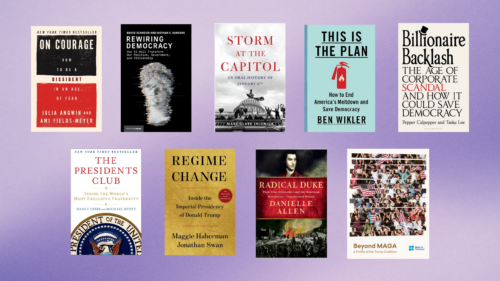
Every week on “Terms of Engagement,” Ash Center Director Archon Fung and former Maricopa County Recorder Stephen Richer bring a live, cross-partisan conversation to listeners around the world. Episodes have featured top researchers, journalists, and practitioners, dissecting breaking news and deep-seated challenges to provide unique insight into U.S. politics and the state of democracy worldwide. Here’s a list of some of the works featured so far in seasons 2 and 3.
Books
Mary Clare Jalonick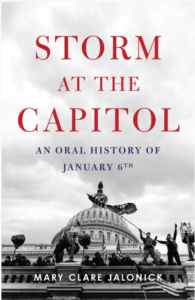
Jalonick, a Congressional reporter for the Associated Press, was in the Capitol building on January 6, 2021, to cover the certification of Joe Biden’s victory. Her book documents the day’s astonishing chain of events as told by those who were there, drawing on original interviews with politicians, law enforcement, and protesters alike. It offers a rare, multi-perspective look at a definitive turning point for American government.
Nancy Gibbs and Michael Duffy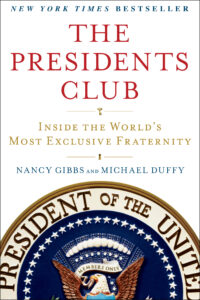
Former TIME editor-in-chief and Shorenstein Center Director Nancy Gibbs joined the podcast to explore how corporate media consolidation and executive pressure threaten press independence. Read her bestselling history, written with Michael Duffy, of the private relationships, rivalries, and rescue deals among the last 13 presidents for a fascinating look at executive power behind closed doors.
Pepper Culpepper and Taeku Lee
Pepper Culpepper joined the show to discuss his new book, co-authored with Taeku Lee, which argues that corporate scandals — from Dieselgate to Cambridge Analytica to Goldman Sachs — are among the few forces capable of breaking through the political gridlock that protects billionaire power. It maps a middle course showing how scandals open windows for reform, culminating in the provocative concept of “good populism” to channel public anger into democratic renewal rather than authoritarian resentment.
Danielle Allen
Featured on a special episode marking America’s 250th milestone, Harvard Professor Danielle Allen joined the podcast to explore why equality is just as essential as individual freedom. Her new book, Radical Duke, is the fascinating story of an 18th-century British aristocrat who helped foment the American Revolution from the other side of the Atlantic.
Bruce Schneier and Nathan E. Sanders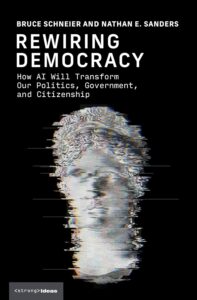
Most conversations about AI and democracy are conversations about fear, but technologist Bruce Schneier wants to explore how AI can widen public participation. His latest book, with Nathan Sanders, examines successful international examples of countries using AI to broaden participation rather than concentrate power, making a case for creating a “public AI option” that serves citizens over shareholders.
Reports
More in Common
Nonprofit More in Common’s landmark study maps out the distinct factions within the pro-Trump electorate. Based on extensive interview data, the report challenges the standard image of a monolithic base by identifying four distinct groups: MAGA Hardliners, Anti-Woke Conservatives, Mainline Republicans, and the Reluctant Right. Understanding these complexities is essential for making sense of American politics today.
Articles
Jonathan Rauch
Journalist Jonathan Rauch sat down with Archon and Stephen to discuss his widely read essay examining why the term “fascism” fits Donald Trump’s approach to governing. The piece looks at what led to this conclusion, how fascism differs from other forms of authoritarian rule, and what it means for the future of democracy.
Mohammad Ali Kadivar
Written following the U.S. and Israeli military strikes in Iran, guest Ali Kadivar joined the podcast to discuss the shifting political landscape in Tehran. His essay outlines why regime decapitation is unlikely to lead to democratic consolidation in Iran, whether the current regime falls or manages to survive.
Guy-Uriel E. Charles, Luis Fuentes-Rohwer, Michael Latner, and Carlos Algara
Written months before the Supreme Court’s 6-3 decision in Louisiana v. Callais, this highly prescient article correctly anticipated the dismantling of Section 2 of the Voting Rights Act. Guest Guy-Uriel Charles came on the show to explain why voting rights advocates should pivot toward proportional representation as the most durable path forward.
Henry Olsen
Washington Post columnist Henry Olsen joined the conversation in an episode exploring whether recent progressive successes signal a lasting political realignment or not. In this piece, Olsen argues that open primary systems make elite policing impossible, leaving parties with no choice but to figure out how to manage grassroots energy.
Future Reading: What’s on Our Radar
As Terms of Engagement kicks off its third season, here are a few upcoming titles, key topics, and potential guests on our radar for future episodes:
Maggie Haberman and Jonathan Swan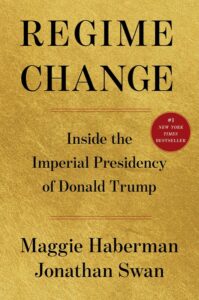
From two veteran reporters who have spent a decade covering Donald Trump comes a portrait of his second White House term, one with none of the institutional guardrails or legal checks that constrained his first. Pulling from extensive reporting, Regime Change documents an imperial presidency that has upended global markets and toppled heads of state.
Julia Angwin and Ami Fields-Meyer
Co-authored by Allen Lab Senior Fellow Ami Fields-Meyer and journalist Julia Angwin, this book expands on their New Yorker essay “So You Want to Be a Dissident?” Drawing on interviews with more than 100 activists, theorists, and dissidents worldwide, it provides a practical, hopeful guide on how citizens can actively build political courage and counter authoritarianism.
Ben Wikler
Building on his work leading the Democratic Party of Wisconsin to victories in a deeply divided state, Ben Wikler distills lessons from the political front lines to outline a concrete plan to prevent democratic decline. The book focuses on practical strategies to protect democratic institutions, defeat MAGA electoral efforts across all ballot levels, and build long-term civic engagement.