Video  

Two Americas Emerging: Voting Rights in the States

In the nearly one year since the November 2020 elections, the diverging directions state legislatures took on expanding or contracting voting rights created a huge fault line in American democracy, described by some as ‘two Americas’. A Voting Rights Lab tracking report as of September 13, 2021, identified 27 states representing 70 million voters that had passed laws to expand voting opportunities, and 13 states with 55 million people that had passed sharply restrictive legislation. And state legislatures were still at work. What’s causing this divergence?

How are voting rights advocates advancing their work in such disparate political environments? What does it mean for upcoming elections and the future of American democracy? Join the Ash Center as voting advocates from two key states that have gone in opposite directions and policy experts evaluated the trends, discussed the present, and looked into the future.

Speakers include:

  • Mimi Marziani, President and CEO Texas civil rights project
  • Henal Patel, Director of the Democracy & Justice Program, New Jersey Institute of Social Justice
  • Randy Perez, Program Director, Voting Rights Lab
  • Jake Grumbach, Assistant Professor of Political Science at the University of Washington
  • Miles Rapoport, Ash Center Senior Practice Fellow in American Democracy, Moderator

Related Resources

Terms of Engagement – Amanda Carpenter on Democracy and Trump’s Golden Age of Corruption

Podcast

Terms of Engagement – Amanda Carpenter on Democracy and Trump’s Golden Age of Corruption

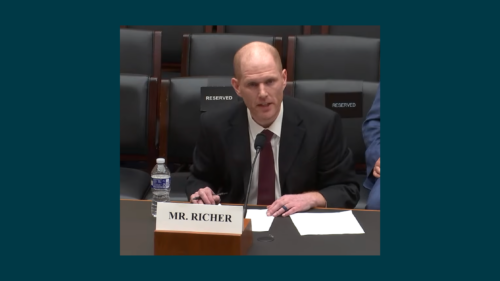
Amanda Carpenter of Protect Democracy joins hosts Archon Fung and Stephen Richer to examine how today’s alarmingly-high levels of political corruption undermine democratic institutions and public trust, distort policymaking, and make citizens increasingly cynical about the democratic process.

Contesting Repression in Divided Democracies: Can Counternarratives Reduce Support for Police Violence?
An image of 4 police officer shields.

Article

Contesting Repression in Divided Democracies: Can Counternarratives Reduce Support for Police Violence?

A new article in the American Journal of Political Science, co-authored by Yanilda María González, Ford Foundation Associate Professor of Public Policy and Ash Center affiliate, examines public attitudes toward police violence in Brazil. The authors find that while police discourse can increase public endorsement of violence, counternarratives from marginalized victims can be effective in reducing citizen support for repressive policing.

Reframing Efficiency: How Public Deliberation Strengthens Public Health Policy
A blue, green, and orange crowd of abstract figures with hospital ceiling lights in the background.

Article

Reframing Efficiency: How Public Deliberation Strengthens Public Health Policy

In a recent American Journal of Public Health essay, Ash Center Director Archon Fung, Democracy Visiting Fellow Aditya S. Pawar, former Non-resident Fellow Jon Alexander, and their co-authors examine how public deliberation and civic engagement can produce more efficient and reliable public health policy.

More on this Issue

Reimagining Democracy 2026 Summer Reading List
A collage of book covers, podcasts, and reports from the Reimagining Democracy summer reading list.

Feature

Reimagining Democracy 2026 Summer Reading List

Tova Wang, director of research projects in democratic practice at the Ash Center, shares her top picks for summer reads focused on making democracy more resilient, responsive, and inclusive.

Building Capacity to Use Social Media: How Election Officials Can Leverage Content Creation to Provide Accurate Voter Information
A content creator with a microphone.

Paper

Building Capacity to Use Social Media: How Election Officials Can Leverage Content Creation to Provide Accurate Voter Information

As traditional news declines, content creators play a growing role as information sources. This paper proposes frameworks for effective collaboration between creators and election officials and offers recommendations for officials to develop their own social media content.

Who’s in Charge of Congressional Elections?
U.S. Capitol Building.

Additional Resource

Who’s in Charge of Congressional Elections?

This resource provides accessible, reliable information on constitutional history and the roles and responsibilities involved in administering congressional elections in the United States, with the goal of advancing civic understanding among government officials, media, civic organizations, and the American public.