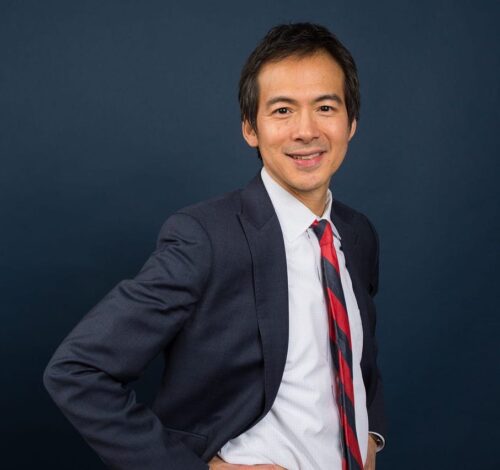
Intro: You’re listening to Terms of Engagement, a weekly show from the Ash Center for Democratic Governance and Innovation at Harvard Kennedy School. Featuring Ash Center Director Archon Fung and Senior Practice Fellow in American Democracy, Stephen Richer. Terms of Engagement is recorded live on Tuesday and available wherever you listen to podcasts on Wednesday. Now let’s get to the show.
Archon Fung: Hey, this is Terms of Engagement. I’m Archon Fung, professor at the Harvard Kennedy School and faculty director of the Ash Center for Democratic Governance and Innovation.
Stephen Richer: And I’m Stephen Richer. I’m a former elected Maricopa County Recorder, and I am now a senior fellow at the Ash Center.
Archon Fung: We record this show live, so if you’d like to join the conversation and you’re watching us live, just enter in your comments in the chat and we try to monitor them. And if you have other thoughts, please send them to info@ash.harvard.edu.
Stephen Richer: And of course, we also record the show and so you can watch it after the show. We do appreciate your feedback even if you’re not watching it live. It is available on YouTube and all major podcasting applications.
Archon Fung: And please bear in mind that both Stephen and I are really drawn to guests and friends and interlocutors that we disagree with. And one of our goals in this show is to explore thinking from very different viewpoints across the political spectrum, and so that’s the point of the show. So hopefully people will learn from that discussion. I know Stephen and I certainly do. And as always, we’re speaking as individuals and not on behalf of Harvard University, the Kennedy School, or the Ash Center.
Stephen Richer: That’s right. And last week we had Speaker Kevin McCarthy on the show. And I think his comments maybe ruffled a few feathers of some of our guests who wrote in with some of their ideas. And it actually made for a really enjoyable email conversation with a number of those guests. We obviously enjoyed having Speaker McCarthy. We obviously have our own individual thoughts. We hope we probed a little bit on some of the things that he touched on, as we hope we do every week when we bring a highly salient public policy topic to the floor, but hopefully in a way that is intellectually rich and honest. And speaking of highly salient public policy topics, today we’re going to be talking about birthright citizenship. And of course, this has been in the news a lot lately because the Supreme Court recently heard oral arguments over the constitutionality of President Trump’s executive order that he signed upon taking office for the second time, which intended to remove birthright citizenship as it had long been understood by the vast majority of the legal academic community and just by American society writ large.
And I will read that text for you real quickly. But the 14th Amendment from 1868 says, “All persons born or naturalized in the United States and subject to the jurisdiction thereof are citizens of the United States and of the state wherein they reside.” Now, that’s more complicated than potentially it sounds, at least according to some legal scholars and legal practitioners. And as mentioned, that is currently the subject of debate in front of the United States Supreme Court, but it’s not the subject of what we’re talking about today. We’re going to be talking more about the public policy of it. And so I want to bring up real quickly a quote from an interview that our guest did with his school, University of Pennsylvania, and he was asked, “What’s the takeaway about birthright citizenship?”
And he said, quote, “A lot of debates get away from the fundamental question of who do we want to be as a people? Too much has been focused on the constitutional interpretation of the 14th Amendment and constitutional scope of presidential powers. What we ought to be examining is the substance of our immigration policies. Having inclusive policies is a great American tradition that has served the country well.” So that question of who do we want to be as a people and how does birthright citizenship factor into that question? So with that, I’ll turn it over to Archon. We’ll introduce the topic a bit more and our guest.
Archon Fung: Great. Excellent. Thanks, Stephen. So I really wanted to talk about this because in discussions that I see on social media and that I’ve had with people on the left of the political spectrum, the response to birthright citizenship is, “Well, just read the 14th Amendment, that ends the debate.” And we’ll talk a little bit about whether the 14th Amendment actually does end the debate or not. But even if it does, I think that’s not a very good reason. So I think it’s a kind of intellectual laziness to rely on a constitutional provision and not think through more deeply, “Well, is that how it should be? Is that the rule set that we should have?” So a trivial example, when I first came to the Kennedy School, everyone was using PCs and I wanted to use a MAC. And so I went to IT and I said, “I’m going to use my Mac.” And they said, “Well, you can’t use a Mac.” And I said, “Well, why not?”
And the response is, “Well, it’s against the rules. We don’t use Macs around here.” And so I just had to use my Mac surreptitiously and now everyone uses Macs around here. And so I just don’t like relying on a rule without knowing what’s behind that rule. And that’s true for an IT policy and it’s also true for the Constitution. And so that’s why I’m really excited for this because we’re going to talk a little bit about the Constitution, but as Stephen said, we’re going to go deeper and talk about what kind of society we want to have and what the kind of pros and cons of different versions of citizenship and inclusion are. And we probably have one of the best academic, maybe the best academic, so the best scholar in the country to talk about that, who is Rogers Smith.
Rogers is the Christopher H. Browne Distinguished Professor of Political Scientist Emeritus at the University of Pennsylvania, where he was also the founding chair of what is now the Andrea Mitchell Center for the Study of Democracy. He’s authored many, many books, but two that are especially important for today’s conversation. One is called Civic Ideals: Conflicting Visions of Citizenship in U.S. History. It was a Pulitzer Prize finalist and another book which was co-authored with Yale Law Professor Peter Shuck is Citizenship Without Consent written back in 1985, but extremely prescient in terms of touching on the debates that are drawing so much attention today. Rogers also served as a president of the American Political Science Association and is a fellow of the American Academy of Arts and Sciences. Rogers, welcome to Terms of Engagement.
Rogers Smith: Delighted to be here.
Stephen Richer: Great. Archon, I’m not in the least bit surprised that you were basically the embodiment of that famous Apple commercial of throwing the sledgehammer into the screen. Although I do want to gently push back on the notion that everyone uses a Mac now.
Archon Fung: Not everyone.
Stephen Richer: I don’t know.
Archon Fung: Yeah. Not everyone, but a lot. Okay, so-
Rogers Smith: I’m using a Mac now.
Archon Fung: There you go.
Rogers Smith: Yeah.
Stephen Richer: Archon, where do you want to start with this?
Archon Fung: Why don’t we just start with a little bit of comparative perspective. So, Ralph, if you could put up the map that I generated with Claude Coworker here, and this is a map of countries that have birthright citizenship, and we can’t see the Terms of Engagement logo is over the use sanguinous, which is citizenship by birth, who your parents are. And it’s most, it’s a hundred and, I don’t know, 120 or something like that in this particular dataset and used solely, which is the green countries, which is what we have right now in terms of public policy, birthright citizenship by where you’re born, are you born in the territory of the country is 31 countries, and then a bunch are mixed and conditional, some combination of both. Here, it’s only 12 listed, but I believe if you dig into it’s probably more that have some mix there.
And so to start, Rogers, almost all of the countries that have birthright citizenship are in the Americas. Most of Europe has moved away from birthright citizenship, especially over the past few decades. What does the comparative picture tell us? Is American birthright citizenship an historical anomaly or is there something and/or do you think there’s something principled about it? Are we behind the times does modernization require something other than birthright citizenship?
Rogers Smith: Well, first a qualification, I would actually classify as a mixed regime because to persons born to US citizens overseas, they have access to citizenship through their parents, which is a use sanguinous provision. And in fact, that’s true of many of the countries that have basically a use solely place birth version of birthright citizenship. But it is very interesting that our birthright citizenship rule is inherited from English common law and dates back to 1608, where in the English common law, it was decided that you owed perpetual allegiance and obtained political membership to the sovereign under which you were born with the understanding that that sovereign gave you protection at birth, and that made you a subject of that sovereign permanently. That is an understanding of the basis of birthright citizenship that in certain respects, the United States rejected at its founding. So that isn’t really our principle.
You don’t gain your political membership because God had you born on this place and subject to the protection of this sovereign. But we have had, like most of the countries of the Western Hemisphere, historically an inclusive immigration policy because in the early days of the country, we were seeking to be settled by more people from Europe, and that was true of Central and South American governments as well. And we adopted a birthright citizenship rule in order to grow the populations, including from immigrant newcomers. And we’ve found it generally to be both administratively practical to have a birthright citizenship rule, and we have benefited in our history from immigration. And so it seemed politically and socially desirable as well.
Stephen Richer: So the birthright citizenship in the United States, which I understand broadly to be if you’re born in the United States territory, then you become a US citizen. Does that flow from the 14th Amendment? It sounds like it predates the 14th Amendment. So is the 14th Amendment in that language that I read at the beginning, the, “All persons born are naturalized in the United States, are citizens of the United States,” so on and so forth, does that incorporate what was commonly understood or was that a new idea when the 14th Amendment was drafted?
Rogers Smith: It was not a new idea. It was the predominant but not uncontested understanding in American courts. The original US Constitution does not define citizenship, and many scholars, including me, believe that that’s so, because defining citizenship was potentially saying who could be a citizen was politically explosive. Were African Americans free African Americans citizens? Well, some Northern states regarded them as citizens. Southern states did not. And just as the issue of slavery was one they felt they had to compromise and finesse at the Constitutional Convention. They also finessed the issue of citizenship. They used the term, but they don’t define it. They don’t say, “Who has it?” That meant that in the antebellum era, there was a lot of contestation in court over whether birthright citizenship was the policy and whether it applied to everyone, and the litigation went back and forth. Most of it favored the common law understanding of citizenship.
If you’re born on the territory, you’re a citizen, but only up to a point. There were always exceptions. And in the infamous Dred Scott decision of 1857, Chief Justice Roger Taney, ruled that persons of African descent were not birthright citizens. He argued that they could not be citizens of the United States at all, because the 1790 Naturalization Act then still in effect said that you had to be white to be naturalized. That was explicit in the law. And he also argued that the only persons who could get birthright citizenship were those who were descended from the original citizens that had founded the country. And he denied that any African Americans were US citizens at the time of the founding of the country, a very disputable claim, but he made that argument and it was to overturn the Dred Scott decision that they wrote the 14th Amendment Citizenship Clause. That was the primary purpose.
But at the same time, they still wanted to continue some of the exceptions to universal territorial birthright citizenship, and that’s why they put in those words, “And subject to the jurisdiction thereof.” And those words are at the center of the legal dispute over how broad the scope of 14th Amendment birthright citizenship is.
Stephen Richer: So I know Archon wants to get us into this ascription versus consent framework, but if I can, just one more question as far as that Claude map that you threw up. I think it was 108 were in the blue countries, by the way. So was this all just sort of an inducement of Western hemisphere countries to populate their lands and therefore citizenship could come by through birthright and therefore it sort of reflected the demographic reality or the demographic needs of the Western hemisphere and-
Archon Fung: Is it a policy expedience, right?
Stephen Richer: Yeah. And you could argue we don’t have that need as much today when Los Angeles metro area has 30 million people.
Rogers Smith: Yes, I do think that the policy benefits as they saw it were a big part of the motivation. And one of the ironies now is that we inherited birthright citizenship from England, but England in the modern era has moved away from strict birthright citizenship, as has much of Northern Europe, as Archon indicated, those moves have occurred because in part, they want to discourage immigration from other countries, at least if it hasn’t been thoroughly vetted in a way that birthright citizenship might undercut. And we do have, in this country now, tremendous concerns about immigration and the pressure to alter the birthright citizenship rule is, or the prevailing understanding of the birthright citizenship rule is a counterpart to those European developments, an effort to discourage some kinds of immigration, get more control over immigration. And unfortunately, in this country, as in Europe, the motivation is partly the same as the original motivation for adopting birthright citizenship.
The truth is that the countries in the Western hemisphere wanted more Europeans to come in as part of expanding the European settler communities that were taking over lands in the Western hemisphere. Now, a lot of the older stock European descended population is concerned that immigration is displacing or diminishing their predominance in American society and in Northern European nations. And so they want birthright citizenship to be limited in some ways.
Archon Fung: Yeah. This is such a complicated issue with so many dimensions. And so we’ve talked a little bit about the policy dimensions, which are surely very, very important and we’ll return to that, but I wanted to back up a little bit and go to the principle dimensions. And so in the 1985 book, you are describing two different principles for citizenship. And so I think it’ll help just to get those two out. So one is ascription, and that’s birthright. If you’re born in the territory of the United States, you get to be a citizen, but then you say, you just said it, that’s not the central principle of American membership, which you lay out as consent. We think of ourselves as part of a compact or a social contract. We agree, the people agree, and then the incoming person who wants to be an American agrees bilaterally that they can be an American.
So can you say a little bit about what that consent alternative, what you have in mind there, what it’s been historically, what would be the ideal here just to lay out the two principles? ‘Cause I hadn’t thought about it very much before, certainly before reading your book, and I’m betting a lot of people watching the show haven’t thought about it.
Rogers Smith: Yes. Well, the term ascriptive here means that membership in a political community is something that’s assigned by some kind of outside force. God will that you be born in a certain place or nature indicates that you are part of this particular people, not something that you yourself have any voice in. And again, the English common law rule was thought to be in accordance with divine and natural law in assigning membership or ascribing membership by the place in which you were born. That really meant by membership was subjectship to the sovereign under which you were born because you were born in that sovereigns’ domains.
Well, the American Revolution was shaped by enlightenment thought that argued for a new understanding of political membership, political membership that was a product of the consent of the governed, including their consent to be members of a political society together. Now, the English philosopher, John Locke took this so far as to say, a child is born a subject of no country or no sovereign, and Americans like other political communities have never thought that was a very practical approach because while in principle, every child might have the opportunity to decide on political membership, when they reach the age of maturity, it’s just much more practical to treat children born to citizens of the community as members of the community.
But the American Revolution rejected the doctrine of perpetual allegiance to the sovereign under which you were born. They said, “We are expatriating ourselves from the British Empire and rejecting the British sovereign. We’re creating new governments by the consent of the governed.” The Massachusetts Constitution of 1780 does say explicitly, “Membership is based on a social compact.” And the idea there is that it is part of free self-governance for people to have choices about which political communities they belong to and who they want to admit to their political communities. Now, the political difficulty comes when some people want to join a community and members in that community don’t want them to join. And then you get conflicts over immigration as we have today, and that is an inevitable product of embracing the view that membership should be based on consent on a kind of mutual compact.
And part of the appeal of a more scripted birthright citizenship rule, which just makes it automatic assigned by your place at birth is that it has the potential to limit some conflicts and some uncertainties of that sort. Right now though, it is instead fueled for political conflict in this country.
Stephen Richer :So social compact, John Locke, some people might be hearing this thinking like, “What are you even talking about? Are you kidding me?” There’s millions of people coming into this country. We don’t even know who’s coming into this country. There’s no agreement by those who are currently in the country. And the people who are coming into the country, I think you wrote in your national affairs article in 2018 about the birth tourism. You wrote about the explosion of people coming into this country. I’m going to say quote right here, “In 1983, the number of illegal immigrants in the United States was estimated at slightly over two million representing just under 1% of the total population.” And then you skip down and it says, “By 2016, the number had risen to 11.3 million representing 3.5% of the population.” And I would imagine it’s exploded even since you wrote that in 2018. So do these principles and ways of thinking about this have even, do they still apply today? Do they still have any bearing or is this just the landscape change so materially that we need to think of it in a different way?
Rogers Smith: I think the principles still apply. I think our institutions are not living up to them very well. The last time we had comprehensive immigration reform in this country was the Immigration Reform and Control Act of 1986, IRCA, which was motivated by the fact that we did have a growth in the unauthorized immigrant population as an unexpected consequence of the 1965 Immigration Act. That set for the first time a ceiling on the number of immigrants that could come in from the Western hemisphere. Before that, they’d had to meet certain qualifications, but there was no overall ceiling on immigrants. And once that ceiling was put there, people came in violation of that ceiling and we began to develop an unauthorized immigrant population. IRCA was an effort to solve that problem by providing a path to citizenship for many of the unauthorized aliens that were already here, but creating stricter enforcement mechanisms that were supposed to prevent the unauthorized immigrant population from growing, they were supposed to shrink it.
The exact opposite happened, as the numbers you indicated show. I don’t happen to think birth tourism is really a very significant part of the problem at all, but it’s a relatively small number, but the number of unauthorized immigrants did grow, very much, and that created a challenge for our political system, whether we were going to be able through our systems of self-government, government by consent, come up with a satisfactory immigration policy that might limit the number of the unauthorized and still provide the immigrants that are so beneficial to our country. The sad reality is that we have failed since 1986, ever to pass comprehensive immigration reform. The growing polarization of American politics has created a gridlock on this as on many other issues. I note that under both George W. Bush’s administration and Barack Obama’s administration, we did have bipartisan support majorities in both houses of Congress for comprehensive immigration bills, but they never got passed.
Under Bush, the bill was killed by a filibuster in the Senate. Under Obama, it was killed because the Republicans were following the rule that no bill should be introduced unless a majority of their caucus supported the bill. And so while a majority of the members of the House supported the comprehensive immigration reform, they couldn’t get it introduced, they couldn’t get it passed. Because of our failure to enact legislation, the immigrant unauthorized population has persisted and grown. Political tensions over that population have increased. It helped Donald Trump get elected president twice by promising to curb immigration, but we still don’t have an immigration policy that satisfies most of the American people. So the problem here is not our principles of commitment to self-governments. It is our failure-
Stephen Richer: To self-govern.
Rogers Smith: … govern ourselves effectively.
Archon Fung: To self-govern.
Stephen Richer: Yeah.
Rogers Smith: Yeah.
Archon Fung: Rogers, would either of those or would versions of comprehensive immigration reform have moved us a little bit away from the descriptive more toward the consent view of who’s an American citizen? It sounds like it would have, but I don’t know. Yeah.
Rogers Smith: Well, of course that depends on the content of that comprehensive immigration reform, what we choose. I have always had the somewhat idiosyncratic position on this issue that the broadly inclusive birthright citizenship rule that we have is a good policy, it is not one that I think was clearly mandated by the 14th Amendment though, I think it would be much better if Congress explicitly adopted an inclusive immigration policy and that way we get both government by consent and government by consent that produces the benefits for the country and the humanitarian benefits of an inclusive immigration policy. So yes, that would be a movement toward government by consent, but it wouldn’t disrupt the current policy of assigning citizenship broadly at birth. It would just be a policy now that we had clearly chosen more so than we have at present.
Archon Fung: Yeah, it’s interesting. So Frank in the chat asks, I want to go to the other side of his speculation also, but I want to put it on the table. He says, “Do you think that because right now illegal immigration is at historic lows, because of the current administration policies, do you think that that could create a less politically charged environment so we could move meaningful immigration reform forward?” Which is a really interesting … I’ve been thinking about the other side, which is that we’re in a very politically polarized environment and the debate is so difficult because I think people on the left worried about movements away from ascription, worry about the abuses of that potential and say, “Oh, well, look, the whole 14th Amendment was in order to enfranchise a whole class of people, formerly enslaved Americans, Black Americans, and without some sort of birthright, we run the risk of some sort of permanent, disenfranchised class of people who never get to be citizens.
And so whatever I think of the principle, I’m going to go for ascription.” And on the other side, the ascription people are worried, as you say, as Stephen pointed out, look at the levels of unauthorized immigration and that’s by nobody’s agreement, that can’t be the right policy. And so we have just this loggerheads, but what do you think is the environment easier or more difficult right now for meaningful immigration reform?
Rogers Smith: Remains to be seen. Like Frank, I’ve wondered whether the Trump administration’s undeniable success in discouraging immigration, we can question the tactics, we can question whether we want to do that, but-
Stephen Richer: But not the results.
Rogers Smith: Yeah, but the results are clear. And it may be that down the road that will create a political space where we can have some serious deliberation on a comprehensive immigration policy that would inevitably involve compromises, but might be broadly satisfactory, I hope that can occur. Right now, I think we’re still too polarized and that in particular, the anti-immigrant forces that are in power now are not going to be receptive to any immigration reform that preserves or enhances substantial legal immigration. So I don’t think we’re in a position to get comprehensive immigration reform for some time to come, but we may be able to do so in the future. My sense of the way that the politics of immigration works is that although immigration is broadly beneficial nationally for the economy, and I think for the culture, if you have a lot of immigration concentrated in particular locations and you have a large amount of immigration period, it is going to create economic and cultural anxieties, particularly in the areas where immigrants are most present and extensive.
And so it’s a political reality that you may need to reduce immigration for a time in order to create a less volatile situation in which you can find satisfactory immigration policies. And I think we may be going through that right now.
Stephen Richer: So I want to go back to the quote that you gave to Penn in an interview, which is, “The fundamental question of who do we want to be as a people?” So say the Supreme Court says the 14th Amendment doesn’t require birthright citizenship, and then the Congress decides as a matter of public policy, we’re not going to have birthright citizenship. How do you think that changes the character, the tenor, the conversation of the American people?
Rogers Smith: I do think that there is a risk currently that narrow conceptions of American citizenship, one that privileges white Christians might shape national policy, but I think it’s a minority viewpoint in this country. And one thing I say to people who favor a script of citizenship because it’s inclusive and who are worried, as Archon was saying, about the choices Congress would make, is that I think that expresses a distrust of democracy that isn’t historically well-founded actually. We have had some immigration policies that I certainly have disapproved of, but when it comes to birthright citizenship, the pattern since the adoption of 14th Amendment is that those issues which have been left up to Congress have repeatedly been decided in ways that have extended citizenship. Sometimes not everybody wanted it, but Congress extended citizenship to Puerto Ricans and then ultimately all the residents at the insular territories who were not viewed as 14th Amendment birthright citizens, it extended citizenship to members of the indigenous tribes who are also not viewed as birthright citizens under the 14th Amendment.
They’re not viewed as subject to the jurisdiction of the United States because they have a measure of their own sovereignty and governance. Congress has extended citizenship, and since Peter Schuck and I wrote in 1985 that Congress could be understood to have the power to modify birthright citizenship rules, legislation has been introduced in Congress repeatedly all through the ’90s, trying to alter birthright citizenship rules over and over again. It was introduced in Trump’s first administration when the Republicans had control of both houses of Congress, Congress has never chosen to alter the inclusive birthright citizenship rule. That’s why Trump acted by executive order in his second term. He doesn’t believe that Congress will do that.
Stephen Richer: If we’ve never decided to put a burden on becoming a citizen, then your former student, Linda Dakin-Grimm asked, “If it’s not at the becoming stage, should we consider putting more obligations on the once you’re a citizen stage? Do we have the right balance of rights and obligations?” As she says in the chat right now?
Rogers Smith: It’s a very important question. Right now, the current administration is moving to increase the requirements of what you have to know to get naturalized to pass the naturalization test. And of course, people who are born here don’t have to pass a test on American government. They do have to go through a mandatory educational system that will provide some content about American history and American government, but they don’t have to take a test on it. I have been of the view that we do ask very little of our citizens. There’s occasional jury service, there can be, although there increasingly isn’t mandatory military service, we have to pay taxes, but then so do non-citizens in this country. And those are basically all the requirements. Historically, there have been arguments for some kinds of national service, not military service necessarily, but service on public projects to benefit this country.
And those countries that do have national service systems of that sort, I think do find them beneficial, and I don’t think it would be wrong for this country to ask more of our citizens perhaps in that fashion. But I also want to say that the demands we place on people to prove that they will be good American citizens haven’t really seemed necessary historically. The vast majority of immigrants that come here are eager to show that they can be good Americans, work hard, be productive, and obey the laws and contribute to society, raise their families in peace and relative prosperity. So while in some ways I support having more obligations for citizens and at least matching those we ask of people applying for citizenship, I don’t think that our real problem is that people come in with no sense of the obligations of citizenship.
Archon Fung: Interesting. So I wanted to go back to a point that you made about Congress and the 14th Amendment, which I think is really important. So I think it’s fair to characterize that some defenders of birthright citizenship who root it in the 14th Amendment as distrusting of democracy. You’ve got to protect people with a constitutional provision because we can’t trust Congress or the President to do the right thing. Look, they denied freed slaves, citizenship for a long time, they’re going to do the wrong thing. That’s why we’ve got to entrench it in the Constitution.
Stephen Richer: Which is true of all constitutional members.
Archon Fung: Which is true of all-
Stephen Richer: The rights of the minority will be trampled upon.
Archon Fung: Yes, yes. Yeah. So that’s a huge worry. And then I think you and I may land in different places in the policy, but we probably have more trust in the Democratic process, whether that’s justified or not. So you’d like to see it, Congress talk about it and develop a comprehensive immigration reform and settle whether it’s more consensual or more ascriptive. But then what’s happening right now is an executive order. That’s why it went before the Supreme Court. So what’s to be said? What’s at stake in how we make this decision? Whether we rely on a constitutional interpretation of the 14th Amendment, that’s one way. A second way is to hash it out through Congress and then whatever they decide is the policy and a third way is through executive order. What’s to be said for those three routes?
Rogers Smith: First, the 14th Amendment, in my view, answers that question. Section five of the 14th Amendment says, “Congress shall enforce this amendment through appropriate legislation.” It doesn’t say, “The president shall enforce this amendment through executive order.” It doesn’t say that, “”The Supreme Court shall enforce this amendment through reflecting on analogies to a group that wasn’t in existence at the time and wasn’t discussed at the time the 14th amendment was enacted.”
Archon Fung: That is unauthorized immigrants.
Stephen Richer: Yes.
Rogers Smith: Yes. Those who are here voluntarily in violation of federal law. At that time, federal law did not have any ban on voluntary immigration to the US. So there is no explicit discussion in the adoption of the 14th amendment of the children of unauthorized aliens. One originalist scholar says, “Looking at the records, that they unintentionally extended citizenship to children of unauthorized aliens.” And I don’t think it’s consistent with self-governance to say that unintended consequences are mandatory on us all. And I also think that good policies are more likely to stand if you have built broad democratic support for them. And I think we can build broad democratic support for inclusive immigration policies.
Stephen Richer: This is going to be my final question. When you wrote this book in 1985, which was a wonderful year for many reasons, not least of which, well, your book, but also my birth.
Rogers Smith: You’re certainly making me feel old.
Stephen Richer: The academic community didn’t universally celebrate it, I think, to put it mildly. And in an excellent article about you in the New Yorker says, “Various academic peers deemed their novel reading, ‘seriously flawed, simply puzzling and morally incoherent.'” Did it jade you about academia and your ability to question established wisdom and have a heterodox opinion or have a heterodox historical take?
Rogers Smith: Well, it didn’t jade me about academia at its best. It did make clear that if you were challenging conventional opinion and especially something that the liberals like myself who are predominant in academia, if you were questioning something that they thought was good, you would get dismissed often without much knowledge of the real issues at stake. But that I think is academics not doing our job very well, just like sometimes Congress doesn’t do its job very well. And all we can do is try to do better.
Stephen Richer: And 40 years later, has it gotten better, worse?
Rogers Smith: The executive order has stimulated a wave of new scholarship so that more people are willing to say the issue is more complicated than I thought than was true in the past. But at the same time, I think that most of the people who thought our book was wildly wrong, still think it’s wildly wrong.
Stephen Richer: Thank you for indulging that little detour.
Archon Fung: Yeah. That is really a terrific discussion. It really makes me think a lot harder and a lot more like, “Why did they put in subject to the jurisdiction of?” I mean, if you think it’s only birthright, then that phrase is simply redundant. And I think we’ve delved into so many dimensions of this complicated debate, from the history, to the constitutionalism, to the changing policy reasons, and then also to the structure of authorization. Is it the Constitution and the court or is it Congress or is it the executive? And we’re just in the middle of this debate as a country. And I think you’ve done an enormous amount to help us all understand and as you say, kind of challenge our preconceptions, but not in just for the sake of irritating way, but for really for the sake of enlightening and coming to a deeper understanding. So thank you very much for that. Thanks for coming on, Rogers.
Rogers Smith: Well, thank you.
Stephen Richer: So for those of you who are not going to have time to read the whole book, I’ll recommend a piece that Professor Smith, along with his colleague, Peter Schuck, wrote in the Summer of 2018 for National Affairs called The Question of Birthright Citizenship. And then the New Yorker piece that I reference is titled The Liberal Scholars Who Influenced Trump’s Attack on Birthright Citizenship. I don’t know if you think that’s a fair headline or not, but it’s a piece from Rachel Morris in November of 2025, so recently. We want to thank you, Professor Smith, for being on today. Thanks to all of our guests who joined us live. Thanks if you are listening to this later. Thanks as always to the production team. And if you have any questions, comments, suggestions, concerns, please email us. We do welcome those and we take those into consideration. And otherwise, we hope to see you back here same time next Tuesday, 12:15 PM Eastern Time. Archon, any closing words of wisdom?
Archon Fung: Nope, just thanks very much. And I’m sure American politics will keep developing very, very quickly. And thanks, Rogers, once again for joining us. Terrific conversation.
Rogers Smith: Thank you both.
Outro: Thank you for listening to Terms of Engagement. Email us your questions, suggestions, or thoughts for future episodes. You can find an email address in the show notes below. See you next time.