Technology and Democracy: What to Read This Summer
This list of resources, curated by the GETTING-Plurality Research Network at the Allen Lab for Democracy Renovation, highlights emerging ideas at the intersection of technology and democracy.
Technology and democracy are at a crucial inflection point. The outcomes of the historic 2024 election year have revealed both the vulnerabilities and resilience of democratic institutions around the world. At the same time, rapid advancements in artificial intelligence are reshaping our lives, with social, economic, environmental, and geopolitical implications.
For those interested in learning more, the reading list below, curated by the GETTING-Plurality Research Network at the Allen Lab for Democracy Renovation, aims to reflect the urgency of the current moment. These books, articles, and videos explore the intersections of technology and democracy across disciplines, including philosophy, political theory, law, ethics, and policy. Together, they highlight the breadth of thought and impact related to technology’s role in our democratic lives, raising warnings and pointing to possibilities for the future.
Hao details AI companies’ quest toward artificial general intelligence, a hypothetical AI that has human-level intelligence, and outlines how they are quickly creating the “modern-day colonial world order.”
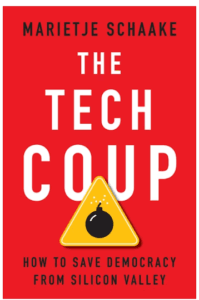
Schaake explains how technology companies’ unchecked power is undermining our democracies and shares potential solutions. To learn more, you can view this recording from the Ash Center’s online book talk with the author.
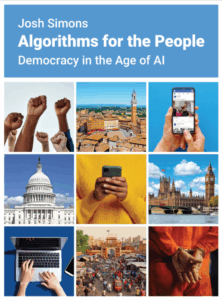
In this collection of essays, leading scholars and experts raise critical questions surrounding power, governance, and democracy as they consider how technology can better serve the public interest.
This report argues that public options for AI, along with utility-style regulation, will strengthen national security by promoting innovation and competition, preventing abuses of power and conflicts of interest, and advancing the public interest and national security goals.
Cohen lays out how tech oligarchs, who wield unprecedented power, are reconfiguring our institutions, hollowing out public capacity, and challenging core democratic norms.
This important document from the Vatican lays out an ethical framework for AI, highlights the importance of human dignity and moral responsibility, and outlines a vision for the responsible development and use of this technology.
This essay series explores how deliberative processes can strengthen democracy, drawing on lessons from citizens’ assemblies and civic technology-enabled tools that are being tested around the world.
At the Paris AI Action Summit, Allen argued that DOGE represents the real-time implementation of an extreme ideological vision that defines the role that technology and a small cohort of its wealthiest leaders should play in the world.
The Allen Lab for Democracy Renovation, Carr Center for Human Rights Policy, Fairbank Center for Chinese Studies, and Institute of Politics hosted the “Building a Digital Democracy” panel in the John F. Kennedy Jr. Forum at Harvard Kennedy School which brought together Audrey Tang, Megan Smith, Danielle Allen, and Mathias Risse for a conversation on how technology is being used to transform our political institutions.
The views expressed in this article are those of the author(s) alone and do not necessarily represent the positions of the Ash Center or its affiliates.
Allen Lab launches new Digital Civic Infrastructure Initiative to help governments strengthen democracy through technology
The new initiative combines municipal partnerships, digital tools, and research to help communities improve transparency, civic participation, and public service delivery.
Allen Lab launches new Digital Civic Infrastructure Initiative to help governments strengthen democracy through technology
The new initiative combines municipal partnerships, digital tools, and research to help communities improve transparency, civic participation, and public service delivery.
Massachusetts Municipal Leader Guide: Open Meeting Law in the Digital Age
As public officials increasingly turn to digital tools, this guide helps Massachusetts municipal leaders navigate Open Meeting Law and their everyday digital practice while safeguarding transparency.
Update Massachusetts Open Meeting Law for the Digital Age
As technology reshapes how public officials communicate with their communities, this policy brief offers recommendations for modernizing Massachusetts Open Meeting Law to protect transparency and accountability while enabling the tools that expand access to government.