
Research & Resources

Through our books, case studies, journal articles, papers, and surveys, the Ash Center is home to some of the world’s most advanced research and publications on issues related to democratic governance and self-governance.

To explore all research authored by Ash Center faculty, please visit the Harvard Kennedy School website. You can view the Ash Center’s open access policy here.

Video

VIDEO—Democracy 250: The Impact of Sports on the History of Civil Rights in America

A recent Ash Center event explored how sports have shaped movements for racial justice, gender equality, religious freedom, LGBTQ+ rights, disability rights, and broader inclusion in the United States. As the fight for civil rights continues to evolve, panelists at this event discussed how sports have reflected and shaped that struggle throughout American history and continue to do so today.

 

Read The Story

Filter by

  • Issue Areas
  • Programs
  • Format

Filters

Close

Filters

Issue Areas
Programs
Format

263 Items

of 30

Newest

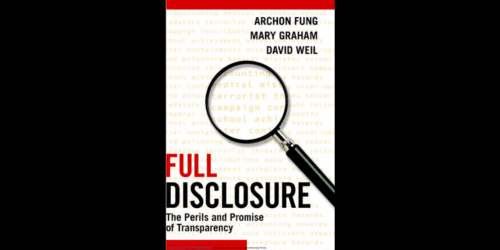
Full Disclosure: The Perils and Promise of Transparency
A photo of the report.

Book

Full Disclosure: The Perils and Promise of Transparency

Full Disclosure explores how transparency policies, like corporate disclosures and nutritional labels, can empower citizens and improve governance, but often fall short due to incomplete or irrelevant information, offering insights into making them more effective.

From Food to Finance: What Makes Disclosure Policies Effective?
Woman looking at grocery product

Policy Brief

From Food to Finance: What Makes Disclosure Policies Effective?

Nutritional labels told dieters to cut calories — so they skipped the fat warning that actually mattered. Archon Fung, Mary Graham, David Weil, and Elena Fagotto studied 15 disclosure laws and found the same pattern again and again: giving people facts doesn’t guarantee they’ll use them the way policymakers intended.

The Political Economy of Transparency : What Makes Disclosure Policies Effective?
A team discussing documents

Paper

The Political Economy of Transparency : What Makes Disclosure Policies Effective?

Restaurant letter grades changed how Los Angeles ate almost overnight. So why did mandatory hospital error reporting go nowhere, even as the death toll climbed past 44,000 a year? Archon Fung, David Weil, Mary Graham, and Elena Fagotto dig into what separates a transparency policy that reshapes an industry from one that just sits on a shelf.

The Political Economy of Transparency: What Makes Disclosure Policies Sustainable?
Person looking closely at a document

Paper

The Political Economy of Transparency: What Makes Disclosure Policies Sustainable?

Enron’s collapse rewrote financial disclosure rules. SUV rollovers rewrote auto safety labels. But not every transparency law ages well — some quietly degrade into empty paperwork exercises. Archon Fung, Mary Graham, and David Weil trace what separates a disclosure system built to last from one built to fail.

Information as Risk Regulation: Lessons from Experience
Person analyzing risk at a scale from low to high

Paper

Information as Risk Regulation: Lessons from Experience

Medical mistakes, tainted tap water, junk food, toxic factories — four of the government’s most ambitious disclosure programs tackled four completely different problems. Mary Graham found they broke down in strikingly similar ways, and the lessons could shape every transparency law that comes after them.

Disclosure of Toxic Releases in the United States
Environmental Worker Inspecting Industrial Hazard Zone During Wastewater Pollution Monitoring

Article

Disclosure of Toxic Releases in the United States

A last-minute rider that even the EPA and environmental groups shrugged off turned into one of the most quietly powerful pollution laws in US history. Mary Graham and Catherine Miller revisit the Toxics Release Inventory’s famous 46 percent decline — and find the real story is a lot messier than the headline number suggests.