Voiceover:
You are listening to Terms of Engagement, a weekly show from the Ash Center for Democratic Governance and Innovation at Harvard Kennedy School, featuring Ash Center Director Archon Fung and senior practice fellow in American Democracy Stephen Richer. Now let’s get to the show.
Archon Fung:
Hey everyone. Welcome to Terms of Engagement. I’m Archon Fung, a faculty member at the Harvard Kennedy School and director of the Ash Center for Democratic Governance and Innovation.
Stephen Richer:
And I’m Stephen Richer. I’m the former elected Maricopa County recorder from Phoenix, Arizona. And now I am in Boston, Massachusetts where I am a fellow at the Ash Center. Cambridge, I suppose, not Boston. I don’t know. Does everyone know? And there’s lots of Cambridges and whatnot.
Archon Fung:
Greater Boston area. Massachusetts. So, we are coming to you live. So, if you’re joining live, please join the conversation by using the comments feature on YouTube or wherever you’re watching from. And if you’re not watching live, we’d love to hear your comments. So, email info@ash.harvard.edu.
Stephen Richer:
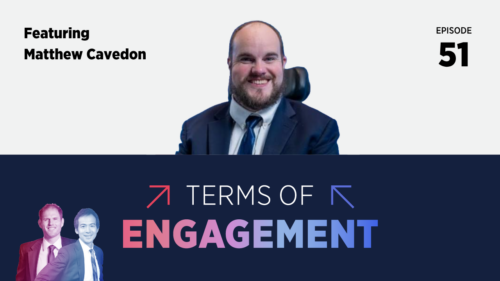
And this is episode 51 and we have all previous 50 episodes archived both on YouTube and all major podcasting platforms, so you can always check them out. And as always today, Archon and I are speaking on behalf of ourselves and only on ourselves, behalf of ourselves, not on behalf of the Ash Center, not on behalf of Harvard Kennedy School and not on behalf of Harvard University. So, what are we talking about? Actually, by popular demand, I am supposed to say, what the Flock is going on?
Archon Fung:
Then somebody on social media.
Stephen Richer:
I won’t name names, but it is by popular demand.
Archon Fung:
What the Flock is going on? That’s the question for today. And so, all over America, there are licensed reader cameras. 83% of them are crack research shows are run by the Flock Company. And so, these are license plate readers all over the place. And there’s a… I’m going to type it in the… is it deFlock.com? Anyway, somebody will get the URL right. There’s a crowdsourced website where people report in the locations of all of the Flock cameras. And so, you can type your zip code or zoom into a map and see if Flock is in your area and maybe zoom and see where all the cameras are.
So, the topic, we’ll get into a little bit about the public policy of whether Flock is a good or bad thing from a public policy perspective, but this is a democracy show, so we’ll focus on the democracy aspects. I think very few people voted for Flock cameras, but they’re everywhere. Some communities have voted to regulate them. They turn out to be pretty slippery to regulate for all sorts of reasons. And then does the presence of this much surveillance, what kind of surveillance is it? Does that have implications for protest, for speech? Does it create a chilling effect? All of these are democracy questions. So, Stephen and I are not Flock experts, but we do have a Flock expert who is?
Stephen Richer:
Indeed, we do. And our guest today is Matthew Cavedon, who has lately done a lot of reading, writing, and talking about Flock cameras, including a recent appearance on the Matt Gaetz Show at the One America News Network, which I think is interesting in its own right and maybe something he can talk about. Matt is a colleague of mine at the Cato Institute where I am a legal fellow, and Matthew is the director of the Institute’s Project on Criminal Justice. His work concerns the rights of the accused, government accountability and the Second Amendment. And as I like to say, Matthew is Cato Institute’s guru on all things relating to juries.
Matthew went to college here at Harvard, but I don’t know if he took any classes at Harvard Kennedy School or with the August Archon Fung. He received his law degree as well as a degree in theology from Emory University and he has clerked for both state and federal courts and he is a former public defender. So, welcome Matthew.
Matthew Cavedon:
Thank you very much. Good to be here. I hung out at the Institute of Politics quite a bit. I was a secondary concentrator in government, so spent some time around HKS and it’s nice to be able to be here now.
Stephen Richer:
Did you take any Kennedy School classes? Are students in the college even allowed to take classes at the Kennedy School?
Matthew Cavedon:
I didn’t take any Kennedy School classes proper, but I did take the Politics of Congress and we had an all night mock legislative session on the floor of the Kennedy School where at one point there was a motion to breathalyze the senior class.
Archon Fung:
Undergraduates are definitely allowed to cross register, but not so many do. I’ve had a handful over the years.
Stephen Richer:
Because most of them just take classes in the School of Government, right?
Archon Fung:
Yeah. Yeah, yeah.
Stephen Richer:
Which is the political science department at most other schools. Okay. So, setting that aside, very important though it is. Matt, what’s going on with Flock cameras? Why did everyone start hearing about this two or three weeks?
Archon Fung:
What is a Flock camera? Just where does it sit in your community? What does it do? I mean it probably doesn’t film me all the time. I mean what is it? What does it do?
Stephen Richer:
I finally understood what was going on in Walmart parking lots because they would have that blue base and then I thought it was like a solar energy thing and maybe it is, but I think it was powering the Flock cameras that were in the parking lot. Okay.
Archon Fung:
Oh, really?
Stephen Richer:
So, set it straight.
Matthew Cavedon:
Yeah. So, let me start with what these things are. They’re called automated license plate readers or ALPRs a lot. That’s not a good name for them anymore. It used to be 10, 15 years ago that you would have this little camera when you were driving past it would read your tag. It would say letters and numbers, it would record that information. That’s not what these bad boys are doing nowadays. Wired just had a major story last week about the capacities that these things now have. They do so much more. They can read who is inside of a vehicle. They look out for bumper stickers, make, models, scratches. They can actually develop what’s called a vehicle fingerprint.
And so, when an officer goes into a database, they can say not just, I want to see WXY123 Massachusetts license plate. Rather they can say, I want to know where Robert Smith with this photograph has been in town. Pull up any vehicle that he has been spotted in. Tell me all about that. Tell me about who his associates are. What other vehicles passed by your system around the same time? What sort of a neighborhood does he live in? And by the way, connect with AI and other computers to tell me about any business licenses he has, public records information, arrest history, all of this. These are not license plate readers. They are people readers at this point.
Stephen Richer:
Okay. So, before we get, I want to get with the mechanics a little bit of this. How long was just the license plate reading bit going on for? Is that something that’s been done for 10 years or 20 years or just two years?
Matthew Cavedon:
It’s hard to tell. These devices started being adopted in different places about 10 or 15 years ago in Ernst. When did they make this quantum leap? We don’t know because Flock denied that it had these capacities until quite recently.
Archon Fung:
So, it was sold for a long time, marketed as license plate readers, and then at some point, it became more than that for… Were people asking it for to be more than that or was Flock saying, “Oh, we believe there’s a market for this, but we don’t want to trigger people too early, so we’re just going to say they’re license plate readers”?
Matthew Cavedon:
It’s hard to tell Archon. And back to your earlier question, why are we all talking about this now? Because democracy is happening. Good reporting has started to uncover the capacities and the spread of these things as well as their misuse. The New York Times two weeks ago had a story about the 41 police officers nationwide who’ve been indicted for using these systems to do things like stalking their exes and people they find attractive. 41.
Archon Fung:
Wow.
Stephen Richer:
Okay. So, before we get into the salacious or something that we all did when Facebook first came out, which was look up people that we were potentially romantically interested in, but we won’t get into that. Who actually buys these? Is this police departments? Is this state government? Is this Walmart?
Matthew Cavedon:
Flock actually serves a variety of customers. They serve the federal government, state, local authorities. They also do serve private businesses, like you said, Stephen, with Walmart. One of the creepiest examples of the interconnectedness of all this, there was a sales demonstration going on and Flock said, “Look what we can do to a prospective buyer.” They turned on live feed inside of the changing room at a children’s gym. Inside of there at the time, but it creeped out the potential customer enough where the news ended up breaking.
Archon Fung:
Wow. So, there’s so many dimensions of this. One dimension is, I don’t know, at a university you’d call it a data use agreement, right? So, say Walmart has a contract with Flock, it thinks I’ve shoplifted something. Can it query the other cameras in my town or databases that it doesn’t actually buy? Or say I go to a neighboring state, so I go to New Hampshire and say I’m in a community where there are Flock cameras. Do we know whether the Walmart user could say, “Hey, we think Archon with his Toyota RAV4 shoplifted in this parking lot, but he’s probably out of state now. Tell me where he is.”
Matthew Cavedon:
We have to law and contract the heck out of this to even get the answer. So, there’s the agreement that whatever the buyer has with Flock, that’s a contract, but then there’s also sharing agreements. So, Walmart might have an agreement to share this information with their local law enforcement. Local law enforcement might have an agreement with the FBI to share it with them or, and this has been particularly controversial, with ICE and the Department of Homeland Security. So, it is entirely possible that Walmart might have nothing to do with immigration enforcement, but they’re sharing it with somebody who’s sharing it with somebody, sharing it with somebody who is.
And then let’s add out a whole other layer, third party data brokers, which are private companies that buy this data and sell it for commercial purposes. They also might have all kinds of other sidebar agreements. So, even mapping this thing is a hot mess and something that folks like the Harvard Kennedy School would be very well suited to do.
Archon Fung:
So, you guys have both worked in local government. So, say I’m a county sheriff and I want to install some Flock cameras and the Flock company puts a 300-page data use agreement, privacy agreement in front of me, and their interest obviously is in using as much of this data as they can and putting together mosaics from everywhere. Can I expect a local level official even to have the bandwidth or the expertise to say I’m the sheriff who’s trying to protect privacy of my people in my jurisdiction as much as I can and limit the use to strict law enforcement? Can we count on the local official even to be able to be kind of competent to approve these constraints?
Stephen Richer:
I think they would receive counsel. So, if you were the Maricopa County Sheriff’s Office and you said we wanted to install 1000 of these around Maricopa County, then what Matthew’s saying is it sounds like it might not be limited to just those 1000 cameras in terms of accessing data. But in terms of what you can and cannot do, the county attorney’s office has likely had this come across their desk and they have had to advise the sheriff’s office on what is permitted and what is not permitted. Now, I think Matthew would say, well, sometimes that’s only as good as the people who are then acting on that legal recommendation or that legal advice.
And clearly, I don’t think that there’s any doubt that these police officers who were stalking ex-lovers were saying like, “Oh no, that’s what my county attorney advised me.” I assume they probably knew that was unlawful. I assume that they knew that was unlawful. I hope that they knew that was lawful. Yeah.
Archon Fung:
Or didn’t think about it too hard, right? Yeah.
Stephen Richer:
But some of this gets into is this unlawful? And I know that Matthew’s been doing a lot of thinking of that because a lot of people would say, “You’re out and about in public. Look, I can take a picture of you if you’re at Walmart.” That’s how this Twitter account of people at Walmart got really famous is like, “You can take pictures of people at Walmart. You’re not entitled to privacy there.” But Matthew, I think you would say that when it goes to this level, it changes, right?
Archon Fung:
Yeah. There’s no expectation of privacy if I’m on my sidewalk, whatever, right?
Matthew Cavedon:
So, let me start by just touching briefly on the governance issue here, which is to say bureaucracy is supposed to put some limits on this stuff. It doesn’t always work. My state of South Carolina, for example, there’s a state law that if you’re going to put any kind of device monitoring a public Wayfair, you’re supposed to get permission from the Department of Transportation. The head of the state DOT had to come out and say, “We found out that the state law enforcement division has this big network of cameras. We never signed off on this, so this didn’t follow what we believe to be within our wheelhouse here.”
So, it might just be a matter of lots of different cooks in the kitchen and figuring out who’s got to sign off on the paperwork. I don’t know where the breakdown was, but I know that it was a concern and that makes it really hard to have democratic accountability and transparency when you don’t even know who to complain to. Is it that the DOT failed? Is it that the law enforcement failed? Is it city council? Who is it?
Archon Fung:
That’s a difficult one. Maybe it’s a weakest link thing if you’re anti-Flock in that whoever’s got the budget and a little bit of desire to set up the cameras gets to set up the cameras, and then there’s this externality on everybody else like the DOT or whoever it is.
Matthew Cavedon:
And the externality is this, this is more than just people of Walmart at the end of the day. To come back to Stephen’s point, the difference between this and people of Walmart. To take an image I want from a Supreme Court opinion, it’s like comparing a horseback ride to a rocket to the moon. The amount of information that you are getting about people, the kind of comprehensive picture that you get about somebody’s life, this isn’t a one-off snapshot. This isn’t even what a really good undercover detective could do by following you around town. This is the sort of comprehensive surveillance, and again, linked up with all these other AI systems that no human being would be capable of doing.
The amount of data storage involved here by itself is just extraordinary. The Supreme Court recently decided this case called Chatrie, which is about your Google geolocation data. And the Supreme Court said, even if it’s just for a short amount of time, the kind of location data that your phone gets about you is private, is sensitive. There’s other ways that the law keeps your whereabouts at all times, even if you’re in public, private. So, if I followed you around Cambridge, Massachusetts for three months at a time and took photographs of everywhere that you were, you could sue me for invading your privacy. You might be able to get it released.
Archon Fung:
Yeah, you’re stalking me, right? Yeah.
Matthew Cavedon:
Bingo. We say that that should be relevant to how the Fourth Amendment is interpreted.
Archon Fung:
Yeah. I mean, it’s conceptually interesting in that each slice might be acceptable and legal, but if you have the power to assemble all the slices over every moment in time, what you’re saying is that’s just a quantum leap in invasiveness. And Monte McMurtry said it’s the aggregation that we should be thinking about and focusing on, and we might not have the conceptual or legal kind of tools clearly to think about that. If every piece is okay, then isn’t the aggregate okay? Maybe not.
Matthew Cavedon:
We think that the expectation of privacy test, which you referred to, which the Supreme Court used in Chatrie and has used for a long time, we think it’s too much in the eye of the beholder that asking a couple of judges to figure out what does society expect to be private is kind of circular and kind of messy. Just as Gorsuch has pointed out that the Supreme Court said you don’t have an expectation of privacy in your garbage once you wheel it down to the curb, and it doesn’t violate the expectation of privacy, got a helicopter 300 feet above your property zooming in with a camera. He said, “This isn’t the kind of stuff you can do to your neighbors. What on earth are we doing?”
What we’ve said is being good originalists, let’s just get back to basics here. Search at the time that the Fourth Amendment was passed meant something intentional that reveals something hidden. Let’s just use that and then look at not free-floating social expectations, but at contracts, at laws to protect privacy, things like that, and use those to inform what’s protected by the Fourth Amendment.
Stephen Richer:
So, one good reminder that you’re welcome to put comments into the chat box. We’ll try to integrate them into the conversation. We really do appreciate you seeing what you’re thinking about as well. So, thank you, Monte, and we’ll look forward to getting others. But is your solution then that this is a search anytime this is performed? So, let’s take a very real situation that Flock has assisted with, which is a kidnapping. So, Jim kidnaps six-year-old Sally off of the street.
Are you saying that before the local police office can run a search for Jim or they would search for the kid through all their cameras, they would have to go get a warrant from a magistrate judge or whoever in order to be able to perform that search?
Matthew Cavedon:
No, but not because it isn’t a search. The Fourth Amendment has exceptions to the warrant requirement for emergencies. A police officer can kick in the door if there’s someone screaming bloody murder at their house. An officer doesn’t, in fact, shouldn’t wait to call a judge before
Stephen Richer:
Getting a warranty. But for those exigent circumstances, you would say yes, right?
Matthew Cavedon:
Yes. We would say that accessing certainly historical data, so anything that happened in the past, that is something that should be considered a search. As far as turning it on in real time to see what’s happening somewhere, there should either be some sort of exigent circumstance or it should be this kind of situation where nobody would bat an eye if you just sent a police officer out to the scene. So, I’m a little bit less skeptical of these cameras existing than some folks because there are emergencies where they can be really helpful. There’s even routine public order concerns where they can be helpful.
But before you use them to do what no human being can do, to go back in time, to comprehensively surveil somebody as they’re going about their business, those kinds of things, that’s where we would say, call a judge, get on the road.
Archon Fung:
Right. So, that’s really interesting. So, there’s maybe a couple issues. One is the existence of this technology and the ability to query it all over the place to track people, et cetera. And then there’s the safeguards and the use of that technology, whether you should have to get a search warrant from a judge in order to execute that query. So, on the first part, why is it that Flock spread or this technology spread so quickly, so broadly, 120,000 cameras right now? What’s the driver of that? And then do you think that that driver is on the up and up? Is it democratically, I don’t know, warranted to have that spread of the technology or is even the spread itself problematic?
Matthew Cavedon:
We’re actually up to about 135,000 cameras. Seek them out in proliferation, that number brailing even as we speak. A lot of this was done initially, I think just piecemeal. I think it was, “Hey, look, we’ve got this cool tool. I can read these license plates, sign up, it’ll be useful for you.” And then it was, “Oh look, we have a software update. We can do a little bit more. We can tell you about make and model of the car. Hey, you got an abduction underway? Turns out we can actually scale up a little bit.” I think over the past 10, 15 years-
Archon Fung:
Wow.
Matthew Cavedon:
… piece, these things just got better and better, the existing agreements or even just sign on the dotted line, “Here’s a new contract for this year.” It just grew and grew and grew. To come back to the big picture of the Ash Center though, a lot of that was done without democratic transparency, without accountability. Part of the problem is the bureaucracy is growing to meet the needs of the bureaucracy, right? So, you have, again, who do you even call? Do you call the Department of Transportation, local law enforcement, the feds, the state? Is this a law enforcement concern? Who even is it that’s doing this?
And number two, sort of the phenomenon of the frog boiling in water. If you just turn it up one degree at a time, nobody quite pays attention until suddenly it’s quite hot. But the heat is here now. Now we have police officers getting indicted for doing really bad things with this. We have debates around immigration and the Trump administration’s approach to enforcing immigration laws that has spurred a lot of concern. Now is the time when the public is here and the public is looking for answers and for guidance as far as what to do.
Stephen Richer:
So, isn’t this the ultimate testament to the still functioning democracy of the United States in that this was done by elected bureaucrats? And look, we don’t vote for everything that happens in society. It’s not like every single decision that the local police departments is making goes to a referendum of the city of Cambridge or something like that or the city of Charleston. Are you in Charleston, South Carolina?
Matthew Cavedon:
North Augusta.
Stephen Richer:
Okay. North Augusta. You’re not voting on that, but this is an instance in which the media seemingly was operating effectively, giving information to broad constituencies who have made their voices known. And now we’re seeing, despite the continued proliferation, we’re also seeing some jurisdictions roll back, take down their Flock cameras, think about how do we want to be policing this? How do we want to be regulating this? And I suspect we’re probably going to get some case law here maybe in the future too about the use of these. I don’t know. Am I wrong or does this make you. Archon, what’s your democracy read on this? Is this like a yay moment for democracy?
Archon Fung:
I think it is a yay moment in the sense that yeah, stuff goes on, some of it bottom up, like you’re saying, and has these consequences. Some of it just natural, maybe weather changes or there’s a war, and then democracy has to respond to that, and maybe this is a good instance of democracy responding to it. And I think we’ll get to this in a while in just a couple minutes, but I guess I’m worried, can democracy reign this in or is it just too easy to use this technology by somebody querying or we’ve seen all sorts of this hydraulic effect like, “Oh, you don’t let me use it in Austin, but I guess I’ll just ask my buddy in Fort Worth to do a query and they’ll do it because you can still do it in Fort Worth.”
So, I’m just wondering, can democracy, even at the city level or county level, wrap its arms around this technology to control it?
Matthew Cavedon:
I see signs of encouragement and signs of discouragement on that front. Sign of encouragement. Folks might remember the Super Bowl last year. There was a commercial from Flock and Ring for a new feature called Search Party. This kitty goes missing. All the neighbors can work together their doorbell cameras and create a search party and find this kitty. There was such about this. This was way before the conversations we’re having about Flock now that the company’s actually backed down and said, all right, we’re not going to do this feature, because people were creeped out by the idea that you could just turn on everybody’s cameras in the neighborhood and watch them up.
Archon Fung:
Yeah.
Matthew Cavedon:
That’s encouraging. The people were able to stand up and say no and indeed, indeed yield results. The discouraging side is some of the ways that this current debate is being met. There’s been reporting that a number of law enforcement agencies have started to monitor anti-Flock social media accounts. Flock CEO actually called DeFlock a terroristic organization. He backed down from that after Tucker Carlson and some other folks made hay of it. But to talk about that ratchet effect, when you’re losing the public debate, and at the moment I think Flock is losing the public debate, the question is what do you do to try to sway politics back?
Do you meet it with persuasion or do you use underhanded means and surveillance to pressure people?
Stephen Richer:
Okay. So, I want to parse out the two different debates because there’s one debate that’s sort of a timeless debate, which is between security and individual liberty. And there might just be a lot of people who say, “Look, I value security and the safety of our community more than I do our privacy rights on the periphery.” I think the Flock CEO recently came out and said that Savannah Guthrie’s mom, Nancy Guthrie, Arizona, so it matters to me, they probably would’ve been able to solve that situation if they had Flock cameras in the area. I think that there are a lot of people who hear these very amazing stories of crimes being solved and say, “You know what? I’ll take that trade off.”
And then there’s the other debate, which is assuming that we all say, “We don’t want it to go this far,” are we able to effectively police that? Are we able to turn the democratic levers so that in fact it conforms to what the populist wants? And I guess I’m even. Yeah, now that you mention this, Archon, in some of the ways that you’re talking about, Matthew, that seems challenging. Yeah.
Matthew Cavedon:
There’s three pressure points that we’ve identified where reforms can work. One is recording. So, where are you putting these cameras? Are you leaving them on all the time? What sorts of purposes? Are you only using them to enforce traffic laws and tolls or are you doing other things? Number two is retention. All right, let’s say that they have this data being recorded. How long do you hold onto it and who does the holding on? Are you going to just keep it for 30 days?
And you’re right, if an abduction turns up, you’ve got that data handy, or are you going to hold onto it for like South Carolina’s law enforcement division did three years, all of it, and we’ll just figure out if we want to use any of it down the road. And then the third is access. Who gets to look and under what circumstances? That is where there’s really not great safeguards yet. Flock has said, especially after some of these cases of stalking, we’re going to require officers to put in a case number and some kind of law enforcement purpose when they do a query.
Unfortunately, accepted law enforcement purposes include monitoring protests, looking into suspicious activity, very vague and broad things that really don’t search as effectively. Still, those are three areas where we try to focus on, there’s ways to do policy smarter so that the debate’s not just about more versus less cameras, but about how do we try to do this better if they are going to be here?
Archon Fung:
That’s so interesting. So, the number three is the company policy is in order to query our database, you need to put in a purpose. That’s not really a public policy, but a private policy, which pretty interesting. And then the first one, how much success has there been of putting the figurative cameras on Flock to make them more transparent about where the cameras are, what they’re doing, how they’re being used? Do we know? You can’t FOIA, presumably Flock, because it’s a private company. So, how much do we know about what they’re doing? And do we know more now than we did a year ago?
Stephen Richer:
[inaudible 00:30:27] I’m sorry, go ahead.
Matthew Cavedon:
No, go ahead, please.
Stephen Richer:
I was going to say you could try to FOIA whether or not your name has been queried by the public official.
Archon Fung:
That would be great. Yeah.
Stephen Richer:
And maybe the data to the extent that it’s held in custody of the public office, but otherwise you certainly can FOIA them for their internal conversations within the workplace of just Flock about whether or not they should develop this new widget.
Matthew Cavedon:
Right, right. And so, that’s part of the concern is the numbers that we threw out earlier, 120,000, 135,000, those come from DeFlock, which is a grassroots non-government organization. That’s actually a very participatory form of democracy. They just have a big old web database saying, “Look, if you see one of these, tag it.” Granted, you got to know where to look. They put these things inside of traffic cones and other things sometimes, but it is a place of people trying to gather that data on their own from the grassroots.
Archon Fung:
And so, it’s not like Flock is telling us voluntarily all of these things. And what about different legislators like city councils and state legislatures? Have they tried to pass transparency requirements on Flock to get more information out? Do you know?
Matthew Cavedon:
I haven’t seen a whole lot of measures aimed at transparency specifically. There have been some legislators who have put limits on how these can be used. A really big one that comes up a lot is sharing with ICE and Homeland Security for immigration purposes. So, Illinois, California, several other states have laws that no government agency is supposed to share any of this data with ICE because then it could be used to track potential undocumented people and things like that. Two big problems. One, first of all, a number of law enforcement agencies locally have gone ahead and done it anyways.
And two, if you have an agreement with some other agency in another state, if Illinois’s agency bordering Indiana’s has a data sharing agreement and Indiana’s agency can share with ICE, they just go ahead and do it that way. We often believe ICE is probably buying data from data brokers on the private markets. Not entirely clear how much that’s happening or who’s doing it, but like I said, it’s a leaky sieve. Even figuring out the web of different agreements here is really hard. And so, that makes it hard to have genuine democratic accountability here.
Archon Fung:
Right. So, that’s the leakiness issue. The whack-a-mole problem that I was worried about earlier is say you’re concerned about using ICE data or on the other side of the political spectrum, say you’re worried about somebody violating somebody’s Second Amendment rights through this surveillance and there’s a local ordinance that prevents querying based on that, just go to the next jurisdiction over. Or if Walmart has the right kind of data use agreement, go to a private party that interacts with Flock. It seems like it’s very difficult to plug all of the holes regulatory in terms of a statute or something like that.
Matthew Cavedon:
So, to come back to Stephen’s question earlier, we need some case law on these things too. We need constitutional rules. We need the courts to spell out what’s allowed and what’s not. The Institute for Justice, which is a libertarian public interest litigation place, they have suits right now in Marco Island, Florida and Norfolk, Virginia challenging the Flock systems on behalf of local residents using the Fourth Amendment.
So, rather than waiting for somebody to get charged with a crime and then trying to do it that way, these are proactive civil rights suits saying, “This is a search and without a warrant, we’re just being monitored all the time. This is not constitutionally appropriate.” We’ll see what the courts say.
Stephen Richer:
Tell us about the comparative angle of this because while we’re having this, I think healthy tension in the United States about the extent to which Flock cameras should be used, I would imagine a lot of other countries, they did not have a democratic republic, might say, “This sounds great.” And to Greg’s point in the comments, “This is the best tool ever for keeping my people in order.” Have other countries been deploying these for years and just nobody’s complained because that’s how they do things?
Archon Fung:
Like England, problematic non-democracies like London where there’s CCTV cameras out the wazoo, right?
Matthew Cavedon:
Well, actually on the note of England in particular, one of the big questions is the United States has intelligence sharing agreements with a number of other countries. Under the IBIS agreement, we share a lot of surveillance in New Zealand, Australia, Canada. What does that mean? Is Flock data a part of that? We actually don’t know whether or not Homeland Security or the FBI, the NSA, no idea if any of these may be shared.
Archon Fung:
We don’t know that?
Matthew Cavedon:
Or intelligence. I don’t, and I’ve asked. So, if somebody else does, please do let us know.
Archon Fung:
Let me know.
Matthew Cavedon:
No. No, we don’t know. We know that there’s data and intelligence sharing agreements. We don’t know whether or not this kind of surveillance is linked up with it. Absolutely. I mean, to take the elephants in the room, China has been engaging in this kind of surveillance for a really long time. The whole idea of social credits is based on a degree of profiling of people that we’re not used to in America. It’s the ability to know where does somebody work? What are their health records? Where do they live? Who are their associates? All of those things which used to not be available or at least not easily available in the United States, we’re there.
Because of artificial intelligence, they can now generate enough data and store it to make this stuff searchable where you can pull up a really comprehensive picture of somebody just based on a few keystrokes and learn an awful, awful lot about them. To get even a little bit creepier, there’s a lawsuit we just filed a friend at the court brief in New York City. NYPD has been secretly collecting DNA by handing out drinks inside of interview rooms, even to people who aren’t criminal suspects and then swabbing those later on. How is that not
Archon Fung:
An illegal search?
Matthew Cavedon:
We believe it is.
Archon Fung:
Wow. So, was it George? No, somebody… Yeah, George in the chat said, “Well, it seems to be a national issue, so I want to raise what level any sort of democratic or libertarian control levers are over Flock,” right? So, I think one idea is if there’s a right, a set of Fourth Amendment rights, that’s not congressional, but it’s legal and it’s constitutional. It would apply everywhere, right? So, that’s national through a court strategy. Any congressional action? And then how does the national level levers compare to state and local, which I know you’ve been very active on?
Matthew Cavedon:
Yeah, Congress has plenty of options for restricting certainly how much federal agencies are collecting this.
Archon Fung:
Yeah, that would be.
Matthew Cavedon:
There’s actually been a proposal called the Privacy Act that would create a list of technologies that presumably need a warrant in order to go out and get. Regardless of what the courts say about the Fourth Amendment, Congress can pass laws requiring federal agencies to get warrants and other things. That’s how we handle wiretapping. The warrant requirement actually isn’t from the courts. It’s because Congress has passed a statute that says before you wiretap phones, you got to go get a warrant. Congress has limited ability to regulate state and local agencies, but they’ve got the power of the purse.
Every local law enforcement agency, every state agency is getting federal grants for a lot of stuff, including in the surveillance space. Congress could absolutely say that we’re not going to fund any sort of recording or we’re going to require you to have X, Y, Z safeguards in place if you want to qualify for a federal grant and we’re going to cut off your funding if you don’t. So, there are options here. Another really big one and one that gets overlooked a lot is lawmakers at any level can pass statutes letting people sue for violations of their rights.
Right now under federal law, if you want to sue a state or local officer for violating your rights, you have to overcome qualified immunity, which means you have to be able to point to a court case clearly establishing that what the government official did was a no-no. That’s really hard to do when the technology is still emerging because by the time the courts get a case, the technology’s going to be outdated. Any precedent they establish is going to be useless going forward. We have urged Congress and the courts to get rid of qualified immunity and just let people sue. They can certainly do that and that would allow for redress when things go wrong.
Stephen Richer:
Yeah. Just looking at it broadly, do you think Flock is a net positive for the United States right now? And if not, do you think it can become a net positive with the right legal and regulatory framework?
Matthew Cavedon:
Flock is a fact and given the incentives to have it, given the concerns about yes, the Amber Alert case that goes wrong, I don’t think we’re really at the point where it’s going to be a national debate over whether to abolish these. Communities should have a choice to weigh the pros and cons for themselves and decide that. But realistically, I think that they’re going to be a part of the tapestry that we have for law enforcement. Then the question becomes, yes, how do we mitigate harm? How do we provide for some sort of relief for people who are abused? Those kinds of things. Under those circumstances, it can be corralled some.
I talked about how the amount of bureaucracy and number of different policies and agencies and agreements that go in is a challenge from the accountability perspective, but it also holds opportunity. It means that creative advocates have a lot of different places where they can try to put pressure on and make things better. And if they don’t convince Flock to change corporate policies, well then go to your state legislators and if they won’t do anything, get involved in the race for sheriff. If they won’t do anything, hit Congress up. So, there are also opportunities in that complexity.
Archon Fung:
Yeah. So, that question is really interesting, the one that Stephen raised and you just answered and John in the chat just put in, I feel like even if a warrant were required to search Flock, there’d still be big issues. It would be like cutting open all of our mail and scanning it just in case. And then you have to maybe have a warrant to read that scan. That’s on the one hand. I think John, the implication is maybe the technology itself is just too hard to control and so we should try to shrink, I don’t know, the extent of that technology or its deployment. And then I think where Matthew, you and Stephen might be landing is no, no, the technology’s going to be there.
Plus, it can help us out with amber alerts, et cetera. But what we need is a regulatory envelope around that technology, whether it’s warrant, probably a whole layer of very complicated patchwork things that would mitigate bad uses, reduce the bad uses of it.
Matthew Cavedon:
And the difficulties that emerge here are ones that affect criminal justice more regularly. I’ve mentioned the warrant requirement. It would be a great theoretical win to get that. The reality is judges need to do a much better job of vetting warrant applications too. A lot of them get signed based on pretty flimsy evidence without live sworn testimony from an officer. Those are concerns that go beyond just Flock. But yeah, they do mean that the best I can imagine is still just not that great. Still a warrant requirement, a 30-day limit on retaining data without some sort of extraordinary reason and good safeguards, independent safeguards on who gets to access that data. Those are at least steps forward.
Stephen Richer:
Okay. My last major question is, somebody’s listening to this and they’re pretty freaked out now.
Archon Fung:
I’m more freaked out than it was an hour ago.
Stephen Richer:
Because they came into this and they’re like, “Hey, I thought this was just a few cameras that were around the city and police officers were using them and that’s about all they could do is pull license plates.” And now they learn from Matthew that it can do a whole lot more. And so, if that person is freaked out, are there any steps that an individual can take to shield himself from privacy concerns or from misapprehension by law enforcement or simply from being identified as a protestor at a university? I don’t know. Somebody said, “Will Harvard put him up here?” I don’t think so.
And certainly I would be one of the last to know, but just sort of identifying protestors or disruptors on a campus even. So, are there steps an individual can take?
Archon Fung:
Yeah, right. So, I was listening to another podcast. They call this the Michael Pollan question. He writes about food systems, but he has this advice like shop on the outside of the store, eat produce, don’t buy too many processed things inside the store. So, do you have Michael Pollan advice vis-a-vis Flock and mass surveillance?
Matthew Cavedon:
It depends on how far you want to go because we’ve seen people get wrongly pulled over because on their license plate, it’s a C look like a G, and that’s what tag they’re looking for. So, I don’t have great answers for that, unfortunately. Educate yourself. Go to DeFlock, take a look at the maps, see where cameras are that are near you. I am not recommending the vigilante actions. We’ve seen some people grabbing chainsaws and taking things into their own hands. That’s likelier, I think, to cause a backlash.
Archon Fung:
Yeah, that’s crazy to me that people are so angry that they’ve actually destroyed Flock cameras. I mean, they’re kind of.
Matthew Cavedon:
There’s talk about developing clothing and you wearing that stuff anytime soon, but educate yourself and educate other people in your community. Start these conversations. We’ve had several weeks now of really prolonged intense public conversation about this. That itself is a really, really good start.
Archon Fung:
In media and conversations like this, et cetera, is that what you’re thinking of?
Matthew Cavedon:
Ask questions, go to a town hall meeting, send an open records request to your local law enforcement agency. Write a letter to the editor. Get out there, put things on social media, try to educate each other and just create this pressure. People can’t stop what they don’t know and people don’t know and they don’t ask questions. So, do that and get your neighbors involved.
Archon Fung:
That’s great. I have a political question for you. So, I mean, this feels to me very much like not a left, right issue. You get people across who are very concerned about Flock from the Cato Institute, from me thinking about protestors being wrongly surveilled. And Tucker Carlson. Yeah, and Tucker Carlson, exactly. So, if you could talk a little bit about the political alliances and unlikely bedfellows in your efforts here, but then also who’s defending Flock? I know the CEO of Flock is defending Flock. Probably there are some law enforcement people who really like the capabilities they get from it. What are the political kind of forces on the other side to say, “Yeah, let’s do this thing”?
Matthew Cavedon:
Part of the reason why people feel a stake in this is, look, these things are paid for by our tax dollars. The rules that govern them are set by our elected officials. And also, I know this sounds crazy, but law enforcement is there to serve us. We’re their problems as the citizens, as the public, right? So, that is why people do feel a sense of ownership in this. Add in the fact that, yeah, people in a lot of different parts of the political spectrum feel like they’ve gotten a raw deal from the government at some point. Older folks might remember in the 1990s, alcohol, tobacco, and firearms really aggressively enforcing gun control laws, right? That spurred a lot of concerns on the right about civil liberties.
Now you’ve got a lot of immigration surveillance that’s concerning folks on the left. There’s this breaking news out of Minnesota about indictments of labor activists and progressives by the Trump administration. There’s this feeling that on some level people understand the boot may be on the other foot at some point and we all need to stand together, otherwise we’re going to fall apart. As far as who we’ve seen getting involved in this, you’re right. I was on Matt Gaetz show. Tucker Carlson has brought this up. The ACLU’s been monitoring this for a long time. So, who on the other side?
Archon Fung:
I mean, that’s a broad political coalition, right?
Stephen Richer:
I think that there are a lot of, maybe I’ll speak for the suburbs here. There are a lot of people who have a little bit more of an ordinal bone in their body than maybe the two of you do, who are a little more, I would say I’m probably the most disposed to think well of law enforcement, maybe of the three of us. And they know that there are places in the United States that are fundamentally unsafe. They know that every single day law enforcement is faced with far more cases than they can possibly investigate and lawfully charge.
And so, here that they’re given this brilliant new tool that yes, we’re talking about a lot of really ugly stuff, but I think that a defender would say we’re still talking about the exception, not the norm. And that for every one case where a police officer is stalking a former romantic interest, there are, I don’t know, more than one case in which they’re using it to lawfully unravel crime.
Matthew Cavedon:
I agree. I come from a law enforcement family and I do think that’s a concern is public safety. There’s also a sense usually that whatever abuses there are can be reformed away, which I don’t entirely disagree with that perspective. I just feel it fairly urgently. So, the Manhattan Institute, a couple of the folks there have been pretty prominent defenders of this, although they’ve conceded that there needs to be reasonable regulation. Law enforcement officials also often have come out to the defensive lock on this.
Archon Fung:
Yeah. I wonder if a relatively less controversial position would be something you talked about, which is let’s just have more transparency so society can understand what’s going on with the surveillance, and then we can continue to have a deeper conversation about what the balance is between privacy and security, et cetera. But you can’t reasonably have that conversation unless you know what’s actually going on with these things, right? Hopefully, maybe we can get some consensus around that.
Stephen Richer:
I should say that one of Archon’s areas of academic expertise is in disclosure and information and then consumers or the general public being able to make decisions based off of that public information.
Archon Fung:
Yeah, better to help-
Stephen Richer:
It maybe even plays in a little bit to the new project with Dave.
Archon Fung:
Yeah, absolutely. Absolutely.
Matthew Cavedon:
And of course for federalism too, for different laboratories of democracy trying different answers to this, attempting different things. What works in rural Kentucky may not be the same as Manhattan and to some extent, that’s okay.
Archon Fung:
Yeah, absolutely. And I do want to point out in the chat, KMHP4 says, “Defenders of Flock in my community, police department is bombarding town council with pro Flock. Some people in neighborhoods worried about break-ins were supportive.” So, on Stephen’s suburban security point.
Matthew Cavedon:
Yeah, we saw a round hall meeting not too long ago where the city canceled this Flock contract. Two officers in the audience stood up and quit the force on the spot because they said that they-
Archon Fung:
What?
Matthew Cavedon:
Yep. Because they said that they wanted to continue to have access to this technology.
Archon Fung:
Wow. Wow.
Stephen Richer:
It will continue to unfold. We appreciate you greatly, Matthew, making the time for us today. I dare say we can invite you back in four weeks and it would be a materially different conversation.
Archon Fung:
150,000 Flock cameras.
Stephen Richer:
Yeah, just because of how quickly this is unfolding, both the regulatory landscape, the popular opinion landscape, and then the usage landscape is probably the thing that can move the fastest as far as what these devices can actually do. But hopefully, this gives people a nice overview of some of the tensions in play here, and we really appreciate everyone who’s listening live. We also appreciate if you’re listening to this later. As mentioned, this will be available on our YouTube channel as well as all major podcasting platforms. And we appreciate, as always, the team that goes into producing this. That’s Ralph, Collette, Courtney, and Evelyn. Thank you very much. Archon, final words.
Archon Fung:
Yeah. Thanks, Matthew, for coming on and really educating all of us about. I think you really have to know how the technology works in order to have the next stages of conversation about the timeless debates between these conflicting values like privacy and security, and then also to wrap your arms around so we can all wrap our arms around it democratically speaking. So, thanks for that education and enlightenment.
Matthew Cavedon:
They’re automated people readers, not automated license.
Archon Fung:
Right.
Stephen Richer:
Very good. All right. Thanks all. See you next time.
Archon Fung:
All right. See you guys soon. Take care. Bye-bye.
Voiceover:
Thank you for listening to Terms of Engagement. Email us your questions, suggestions, or thoughts for future episodes. You can find an email address in the show notes below. See you next time.